
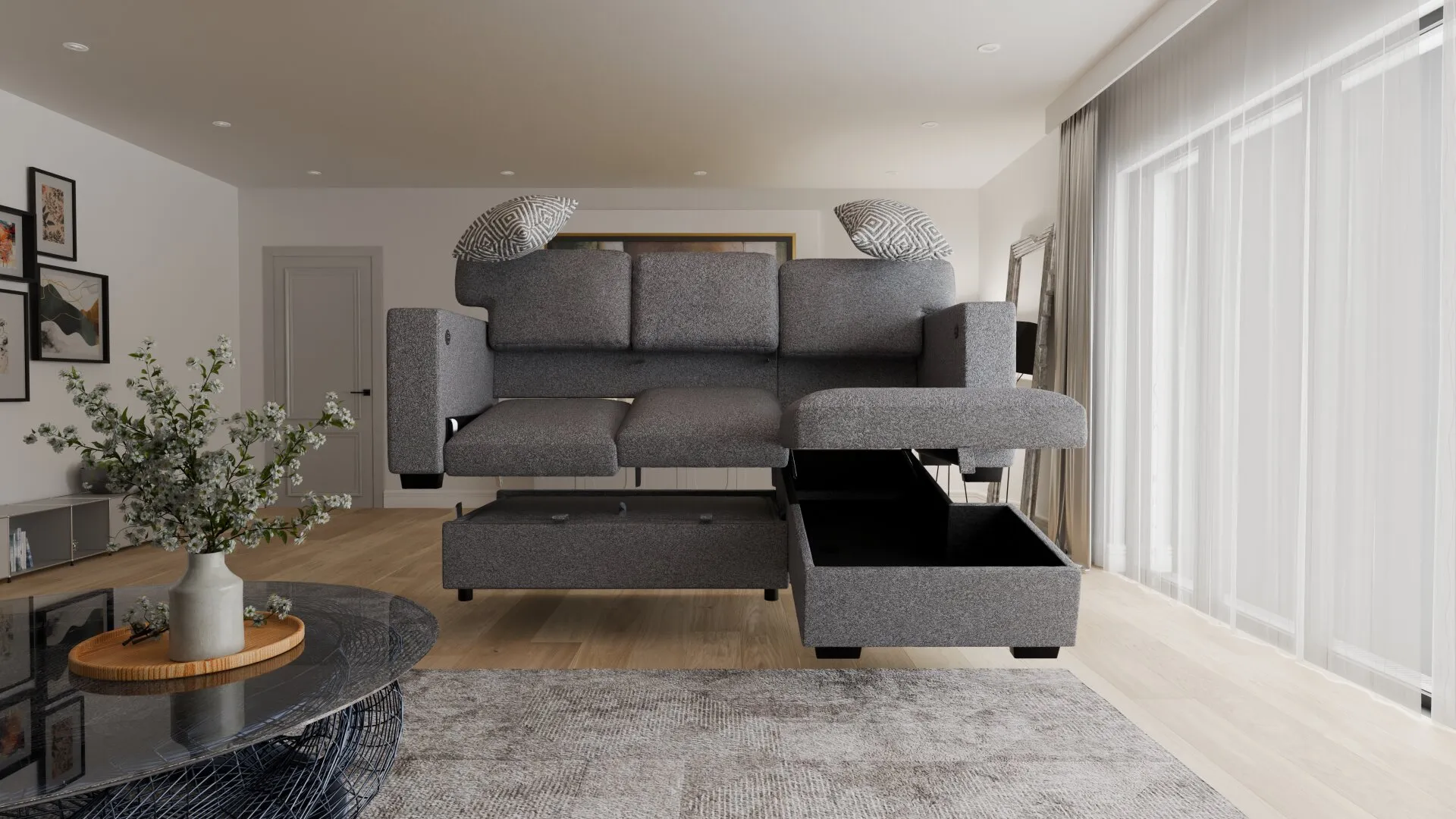
Client: Global Furniture USA, a home furnishings importer and wholesaler serving over 2,000 retailers nationwide, with warehouses in New Jersey, Florida, Vietnam and Malaysia Timeline: December 2024 to July 2026 Deliverables: 15+ 3D product and assembly animations across upholstery and bedroom collections, several hundred room-scene product images, a 3D-built virtual showroom, and a narrated brand film in two cuts Services: 3D product animation, 3D lifestyle and e-commerce renders, virtual showroom environments, brand video and voiceover production
The Challenge
Global Furniture USA sells through more than 2,000 retail partners, and every collection they import needs visual support before it can reach a product page, a catalog or a showroom floor, on a schedule set by factories overseas rather than by a marketing calendar.
The first brief was a single product film, and it was a hard one. The product was a loveseat in a fur-like upholstery with a built-in surround sound system, a fold-down centre console with cup holders and USB charging. The fabric alone was the most technically demanding material we’d been asked to build: an organic, uniform surface of fine hairs that has to read as soft and consistent from every angle. We said so at the quoting stage rather than after.
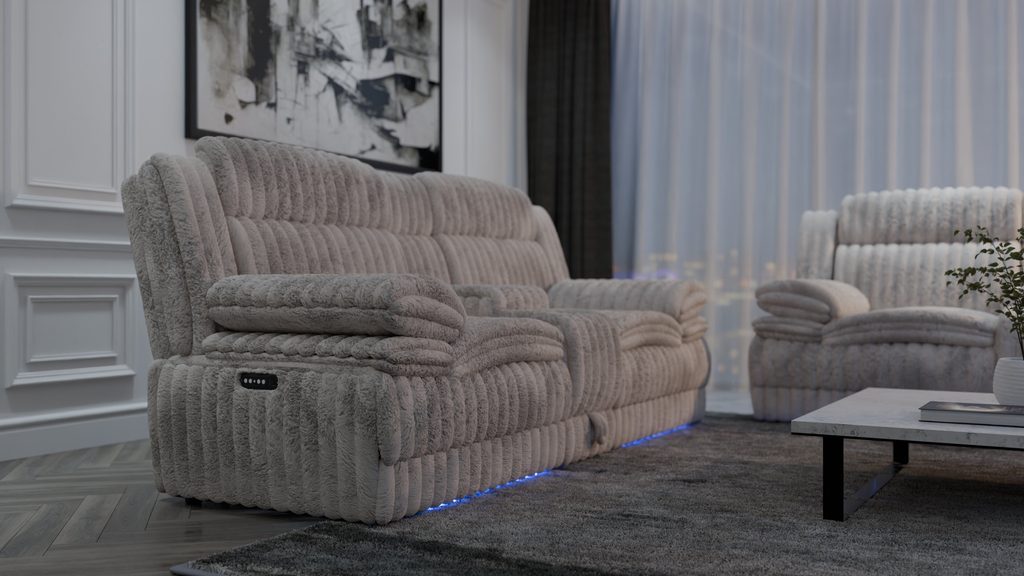
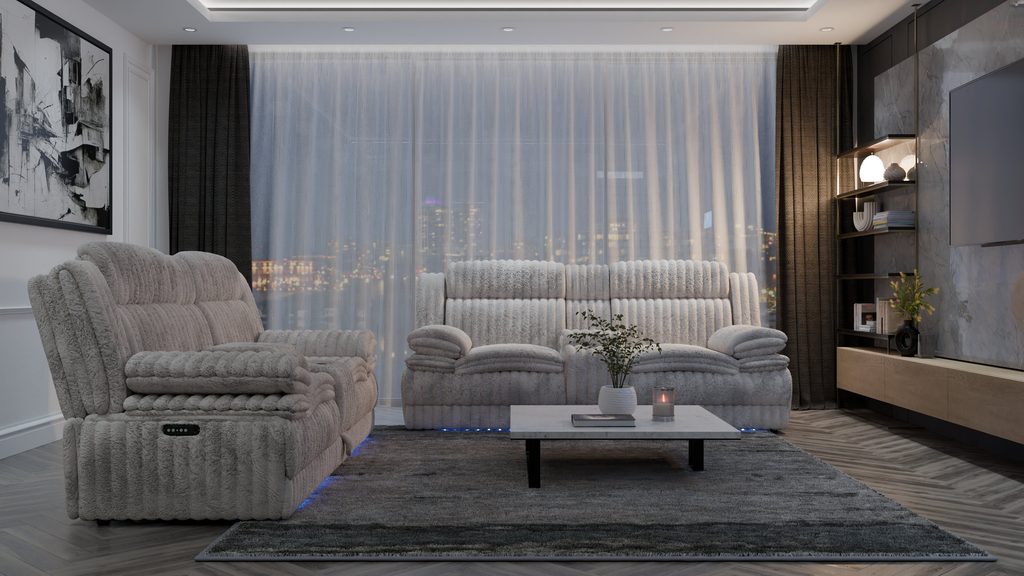
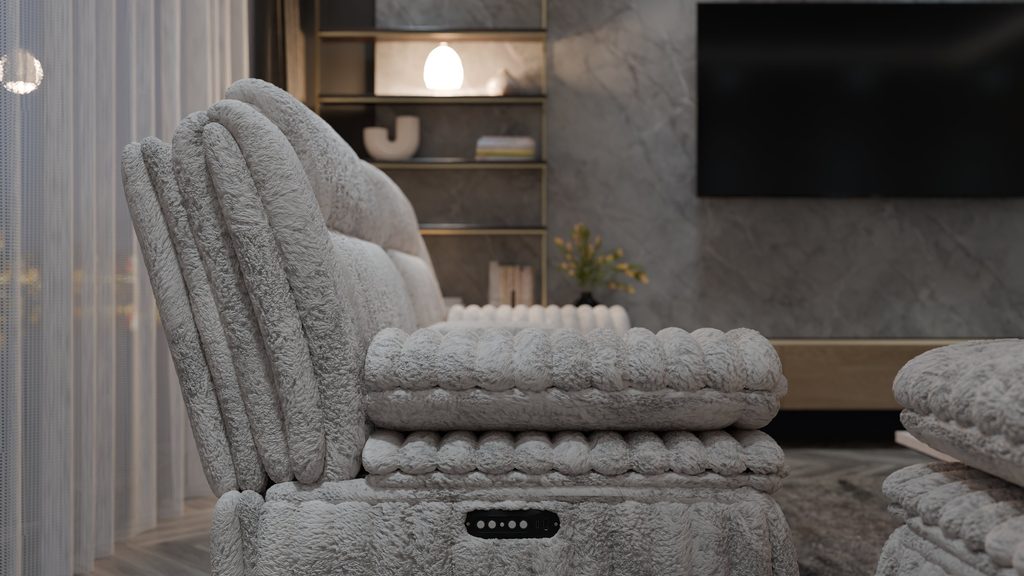
What followed turned into three problems running at once. Product film, at a pace matching the client’s release cadence. Volume imagery, hundreds of white-background product shots needing believable interiors at print-ready resolution, across dozens of collections in multiple colourways. And coordination, with work arriving from factories, the client’s merchandising team and the retailers themselves, all of which needed to run inside the client’s own systems rather than adding another layer of back-and-forth.
Our Process
The relationship began in December 2024 with a call and an honest quote: separate figures for the 3D model and the animation, a stated 20–30 days for each, two revision rounds per milestone included, and an hourly rate for anything beyond that. We flagged the fabric difficulty up front and set the schedule around it.
From there a rhythm emerged that carried the entire partnership: CAD, line drawings and factory photography in; 3D models out for approval on geometry and finish; models placed into the scene and confirmed; a grayscale animatic to lock pacing and structure; a half- or low-resolution render for feedback; then the full render. Nothing expensive was committed to until the cheap version had been approved, which mattered on a project where a single full-quality pass ran into days.
That first film ran from December to April, absorbing a mid-project scope addition when the client’s owner asked to add the matching sofa, and several rounds of specific feedback: fabric tone against the factory reference, shadow density under the loveseat so it didn’t read as floating, and a sound-graphic that had to appear on the loveseat only, because only that piece carries the speakers. It was delivered, approved, and immediately followed by a request for the same film in two more colourways.
In July 2025 the client asked us to take on a large volume of room-scene imagery, compositing existing white-background product photography into interiors, thirty or forty pieces to start. We looked at it and said no. Working from photographs alone, we couldn’t guarantee the consistency and finish we hold ourselves to, and we told the client plainly that unless we were building the scenes in 3D ourselves they would be better served by a specialist in that kind of post-production. We turned down volume work from a client who wanted to give it to us. We also asked to keep the engagement on the original platform rather than moving it off, to protect both sides.
Two months later we solved it. Rather than re-quote on a promise, we tested it first, compositing a render already in production into several interiors including one matching the client’s own reference, sending results the same day, then repeating the exercise with a white-background photograph they supplied to prove the workflow held for photography too. We were transparent about how the results were produced, what resolution they came out at, and that interiors would be reference-accurate rather than exact. The client moved within a day to scope a recurring monthly volume, and the programme ran for five months across dozens of collections.
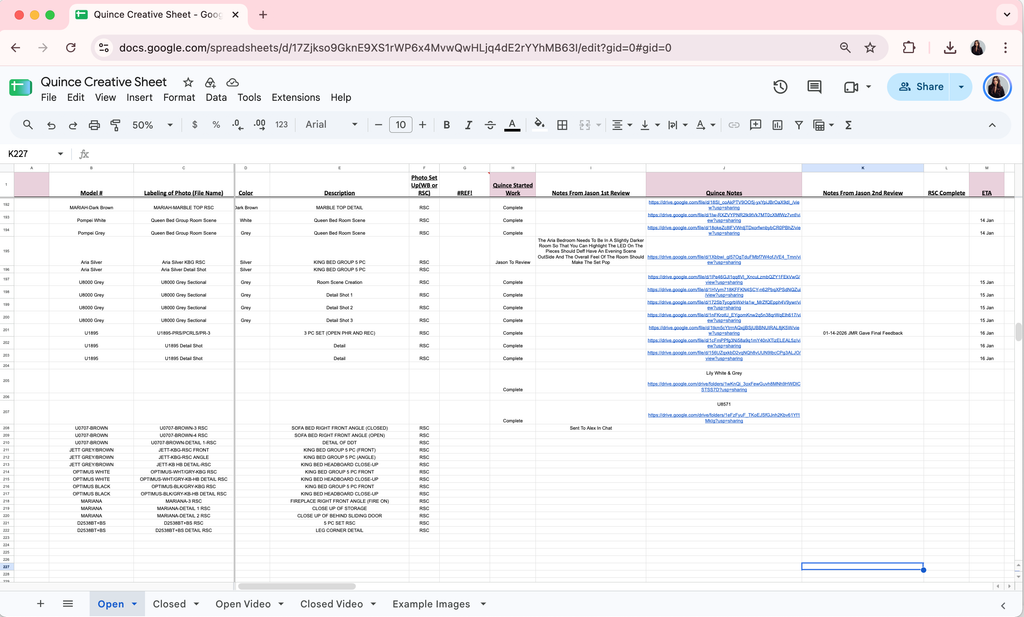
The method matured into something more exacting than straight AI generation, because straight AI generation has a fatal flaw for a furniture wholesaler: it invents the product. Fabric weave drifts, hardware changes shape, a colourway shifts a few degrees brown. None of that is acceptable when the image has to sell the actual item a retailer will ship. So the final workflow inverted the usual order. We generated the interior with AI, built or adapted the room scene to mirror the angle and perspective of the client’s own white-background studio photography, then layered that original product photograph back over the generated scene in Photoshop and upscaled the composite to catalog specification. The environment is generated; the furniture in the finished image is the real product shot, pixel for pixel.
That kept fidelity and print resolution intact, the client’s catalog studio required a specific crop ratio and print-grade output, at the cost of speed, and we said so plainly: the layered method produced fewer images per day than the generated-only version, because each one needed careful alignment, perspective matching and cleanup. Where perspective differences were too great, pieces were cut and stitched by hand. We also flagged the one thing the technique can’t fully solve, a real product photographed under studio lighting will never sit perfectly inside a generated room’s lighting, rather than let the client discover it in a proof. To keep the volume affordable we proposed reusing room scenes already approved and adapting them to new sets, instead of generating fresh interiors for every product. The client’s own overseas catalog studio reviewed a sample built the new way and confirmed the quality was there.
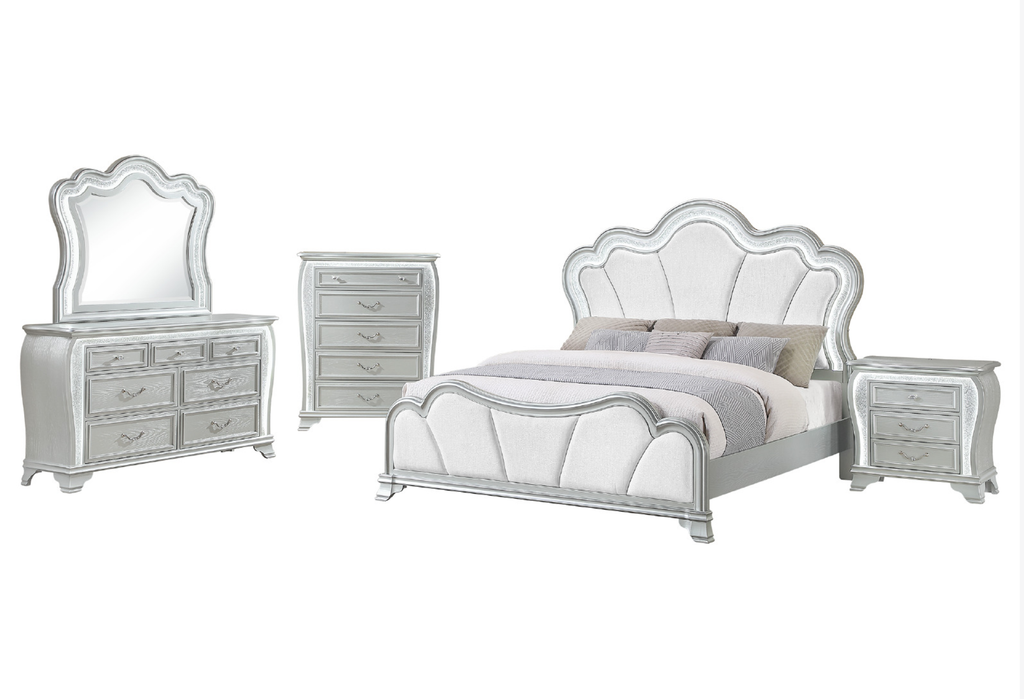
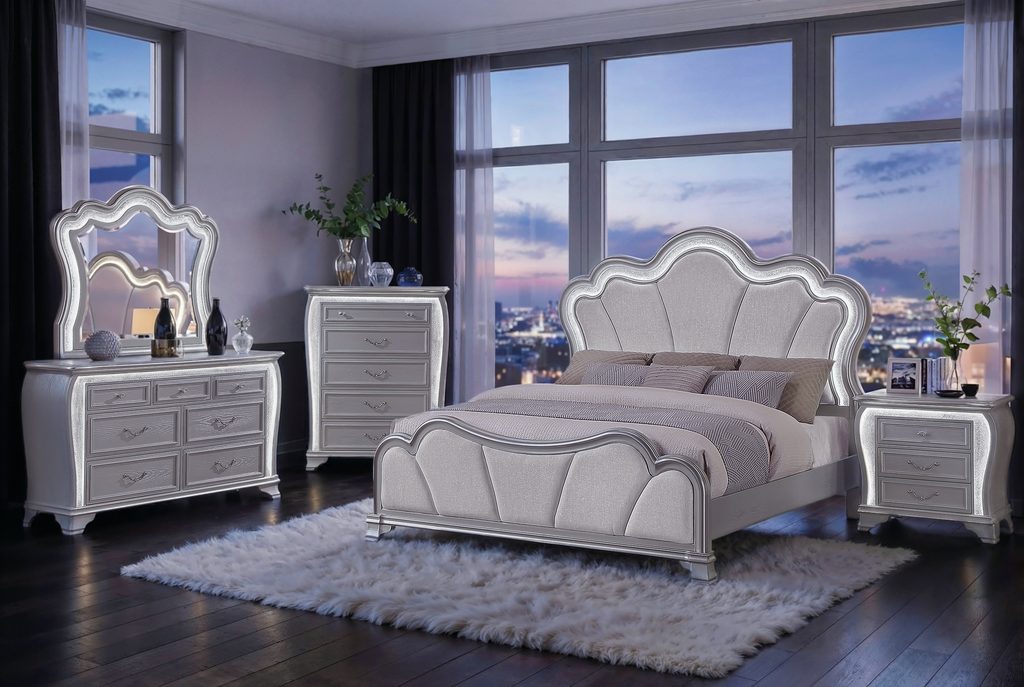
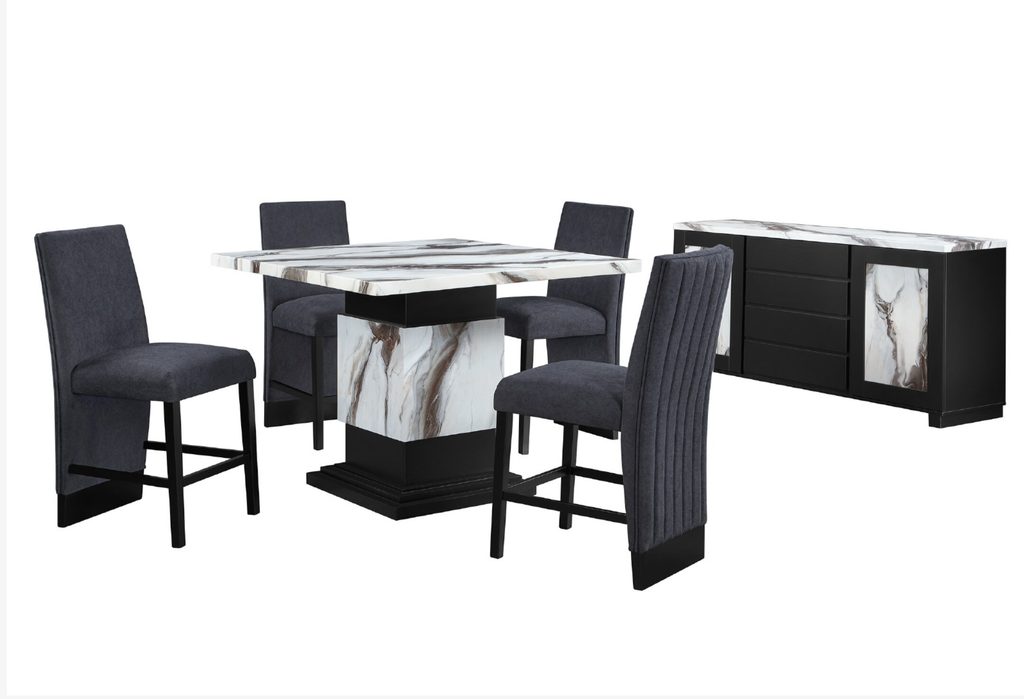
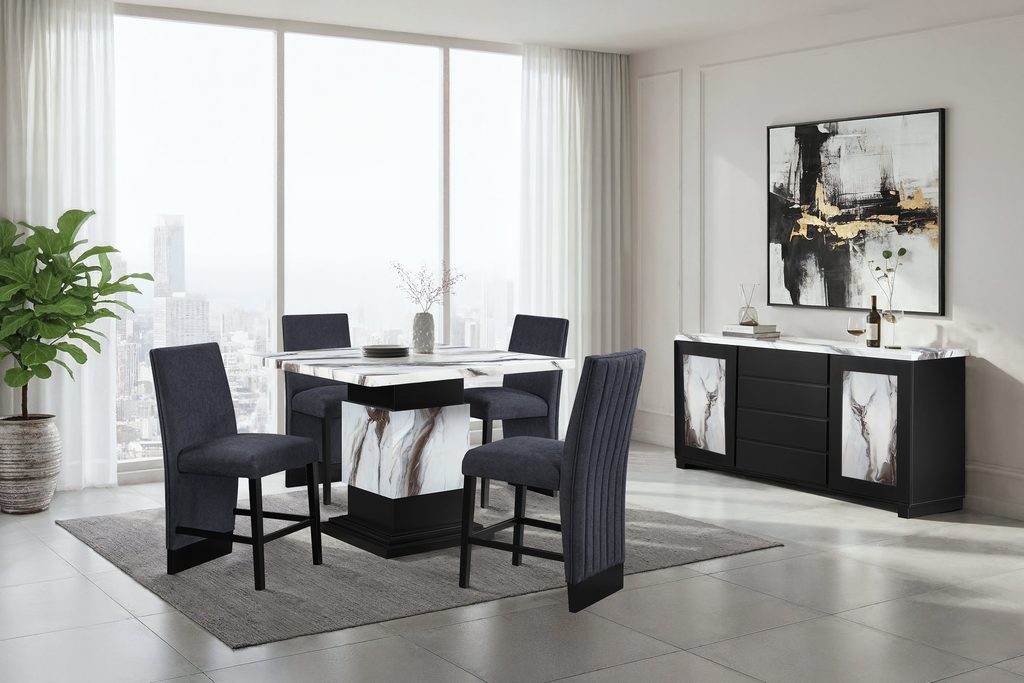
As trust built, the scope expanded well beyond single videos. Over twenty months the work grew to include:
- Upholstery collections: the original loveseat and sofa build plus colour variants, Modular Max, U8879 in two colourways, U5915, U7069, U8880, U8881, U1895, and the MVP recliner line with immersive sound, power recline, coolers and built-in microwave
- Bedroom collections: the Serenity and Elias beds with built-in televisions and LED fireplaces, the Amelia nightstand, and a complete storage bedroom set with three interchangeable footboard configurations
- Assembly and troubleshooting animations, a category the client asked us to open after seeing the product films, including a step-by-step Bluetooth pairing and connection sequence on a clean white set
- Room-scene and e-commerce imagery across bedroom groups, sectionals, dining sets and vanities — AI-generated interiors with the client’s own white-background product photography layered back in and upscaled for catalog print, each with a confirmed room scene plus detail shots in multiple colourways, delivered to a 5000×3000 and 300 DPI standard
- Format and localisation variants, including 4K cuts without text overlays, versions with and without on-screen characters, audio-feature callouts removed for packages that don’t include the speakers, and custom multi-clip audio beds
- A virtual showroom for a retail partner, modelled in 3D from the ground up
- A corporate brand film in two cuts, built to a locked AI voiceover track approved before the edit began
Managing the pipeline mattered as much as making the work. We moved onto the client’s own systems as they scaled, a shared working group, a restructured Dropbox and Drive setup that kept large source files out of both teams’ storage while finished work lived in one shared folder, and their master spreadsheet, where we filled status and cost columns so their leadership had visibility. We pushed back constructively on sequencing, holding detail shots until each room scene was confirmed so hours weren’t spent on rooms that might not be used.
Because room scenes and models could carry across collections, reuse became a deliberate part of pricing. We quoted lower for projects that shared assets, said so explicitly, applied a returning-customer discount, and negotiated openly when the client came back with a target number from their own leadership.
Technical honesty ran throughout. Asked whether AI-assisted imagery could hit 300 DPI for catalog print, we said no immediately, then delivered rendered 300 DPI files by a different route the same day. Handed video footage of a retail partner’s showroom to build a walkthrough from, we reviewed it and reported back the next morning that it couldn’t be camera-tracked and that the brief required removing objects from the floor besides; we had already started modelling the interior in 3D instead, and shared same-day progress. Told the retailer’s budget was fixed and tight, we worked to it.
The relationship wasn’t without friction. The client queried whether a few room scenes had been billed across multiple months. Because we had been sending the underlying revision-count sheet for review before each invoice went out, we could walk the history back item by item, explain what had actually been done each time, and offer to drop anything they considered a minor adjustment rather than a revision. The question was settled and the work continued.
The Result
Over twenty months Global Furniture USA went from one difficult loveseat film to a standing creative department: more than fifteen product films, several hundred room-scene images, a virtual showroom and a brand film, produced inside the client’s own spreadsheets, folder structures and communication channels. By the end, feedback from their national retail partners was routed straight through to us, and product launches were being planned around the pipeline, including one stretch where five to six films were queued at once and the largest 3D build of the relationship, a complete storage bedroom set, was delivered inside a two-week turnaround to a retailer’s required 3200×1334 specification.
The films didn’t stop at delivery. They sit on Global Furniture USA’s own YouTube channel and are embedded directly on the collection pages retailers and shoppers buy from, the Serenity Onyx King Bed and Elias Grey King Bed pages both lead with the animation rather than a photograph, because a bed with a motorised television lift, an LED fireplace, and an immersive sound system is close to impossible to explain in a still image.
What the animations did for the client shows up most clearly in what happened to each one after delivery.
They travelled down the channel. Films built for the client were requested onward by their national retail partners in the retailers’ own specifications: a 4K cut with text overlays and on-screen character stripped out for one retailer’s product page, versions with and without an audio-feature callout for packages that don’t include speakers, and a final master at a retailer-mandated 3200×1334. The client’s customers weren’t just approving the work; they were asking for it in formats they could publish themselves.
They set the template. Once a film landed, the client began pointing to it as the brief for the next one, asking us to follow the story of an earlier collection’s animation for a new range, changing only the set, the palette and the callouts. An animation that becomes the client’s own house format is one they intend to keep using.
They were timed to the selling moments. Work was repeatedly scheduled around the client’s trade show calendar, including a film pulled forward and rendered straight to full quality over a weekend so it could be uploaded before the industry’s largest annual market opened.
They won us more scope, continuously. The first film was barely approved before the client asked for colour variants, then a second model, then whether we could do assembly videos at all, a category that existed because they asked. One brand film became a product pipeline, which absorbed an imagery programme and a virtual showroom. The clearest evidence that the work performed is that a client who reviews every invoice line by line kept buying more of it for twenty months, and moved us onto their main company account to keep doing it.
The client and their retailers said so directly. The first film was described as above and beyond; feedback relayed back from national retailers called one sectional animation genuinely fun to watch and praised the turnaround on the storage bedroom film, before asking for more features to be shown, not fewer.
Why It Worked
- Locking the hardest element first, every time: Narration approved before the edit. Models before the scene, the scene before the animatic, the animatic before the render. On a project where one full-quality pass took days, feedback consistently landed where changes were still cheap.
- Saying no to work we couldn’t do well: We turned down a volume imagery project rather than deliver below our own standard, told the client to find a specialist, and came back two months later only once we had a workflow we could stand behind, and proved it with real output before quoting.
- Keeping the real product in the picture: Generated interiors are fast; generated furniture is wrong. Layering the client’s actual product photography back over the AI scene meant every fabric, finish and handle in a catalog image was the item a retailer would actually receive.
- Bad news early, with options attached: When illness threatened a deadline we said so immediately and offered to hand over the files so the client could go elsewhere. They chose to stay, and that decision defined the next nineteen months.
- Never making the client wait for the finished thing: A rough cut the same evening when a customer meeting needed one, a low-res pass when an animatic read too abstract, a weekend render offered to save a day.
- Running on the client’s systems, not ours: Working inside their master spreadsheet, filling their cost and status columns, restructuring shared folders to solve a storage problem on both sides, and moving to whichever channel they preferred.
- Transparent pricing and invoicing: Asset reuse and returning-customer discounts were quoted lower and said so out loud, revision counts went over for review before each invoice, and a billing question was answered with project history rather than defensiveness.
- Work that went straight into the sales channel: The films aren’t marketing extras, they lead the client’s own product pages, run on their YouTube channel, and were cut to national retailers’ specifications for use on theirs.
 Rachel A