
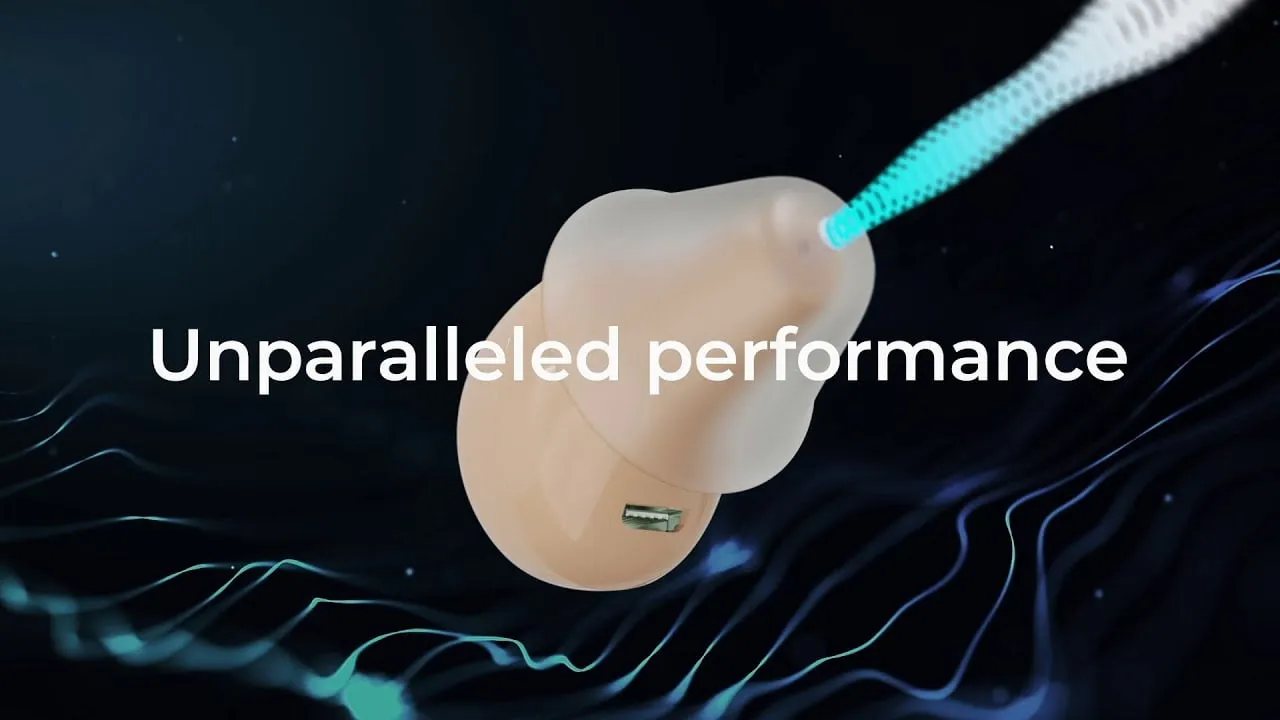
Client: Audien Hearing, a direct-to-consumer hearing aid brand Timeline: Ongoing retainer relationship of more than 5 years Deliverables: Photorealistic CGI product and packaging renders across multiple hearing aid lines (Atom One, Atom 2, Atom Pro 2, and more), lifestyle imagery, and product animations, delivered as a recurring monthly stream of work Services: 3D product rendering, packaging visualization, CGI compositing (shadows, backgrounds, and product layers delivered separately), product animation
The Challenge
Audien Hearing needed a CGI partner who could function less like a project-based vendor and more like an embedded visual production team, turning around a constant stream of product images, packaging renders, and lifestyle shots across an expanding lineup of hearing aid models, each with its own case design, box size, and accessory contents, while matching an exacting, consistent visual standard across every device and every touchpoint (web, marketing, packaging mockups).
Our Process
Work arrived less as single defined projects and more as an ongoing queue of numbered tasks, spanning multiple devices at once (Atom One, Atom 2, Atom 2 Pro, Atom Pro 2) across lifestyle images, box and packaging renders, and full CGI product shots. Each task moved through fast, detail-oriented rounds of feedback directly with the client’s team: confirming exact packaging dimensions against master files rather than outdated mockups, checking resolution consistency across desktop and mobile image sets, and adjusting fine details like clip and hinge colors so they read as subtle and true-to-product rather than flat black.
A recurring theme was flexibility in how final assets were delivered. Rather than handing over single flattened images, we broke renders into separated layers, product, shadow, and background, so the client’s own team could recombine and reuse them across different contexts without commissioning a new render every time a background or platform color changed. When the client shared reference photos showing a desired shadow-casting and gradient style, we replicated that exact look across the full product lineup rather than treating it as a one-off request.
Consistency checks ran both ways: when a product’s packaging changed (for example, Atom Pro 2 moving to a new sliding-sleeve box design), the client’s own team flagged that an existing mockup reference was outdated, and we cross-checked sizing against current master files before continuing, catching a mismatch that could have propagated across dozens of images. Small brand details, like ensuring a logo appeared only when a case was shown closed, not open, were treated with the same care as the core renders themselves, with corrections traced back to the source texture file so the fix carried through consistently.
As full accessory kits needed to be shown (charger, USB cable, ear tips, wind guard, and more), the client provided reference photos of complete product contents so every “what’s in the box” image accurately reflected everything customers would actually receive.
The Result
What began as CGI renders for individual hearing aid models has grown into a standing, multi-year production relationship, still active after more than five years, with Audien Hearing relying on the team as an ongoing extension of their visual production process across an expanding product catalog, coordinated directly through Discord and, more recently, a dedicated Slack channel for day-to-day requests.
Why It Worked
- Layered, reusable deliverables: Separating renders into product, shadow, and background layers let the client repurpose assets across contexts without new render requests for every small variation.
- Precision on the details that matter to a medical-adjacent product: Getting box dimensions, accessory contents, and branding placement exactly right mattered for a product where trust and accuracy count, and treating that precision consistently kept the relationship strong.
- Operating as an embedded team, not a one-off vendor: A steady flow of numbered tasks, fast turnaround, and direct day-to-day coordination let the relationship function like an in-house resource rather than a series of separate engagements.
 Rachel A