
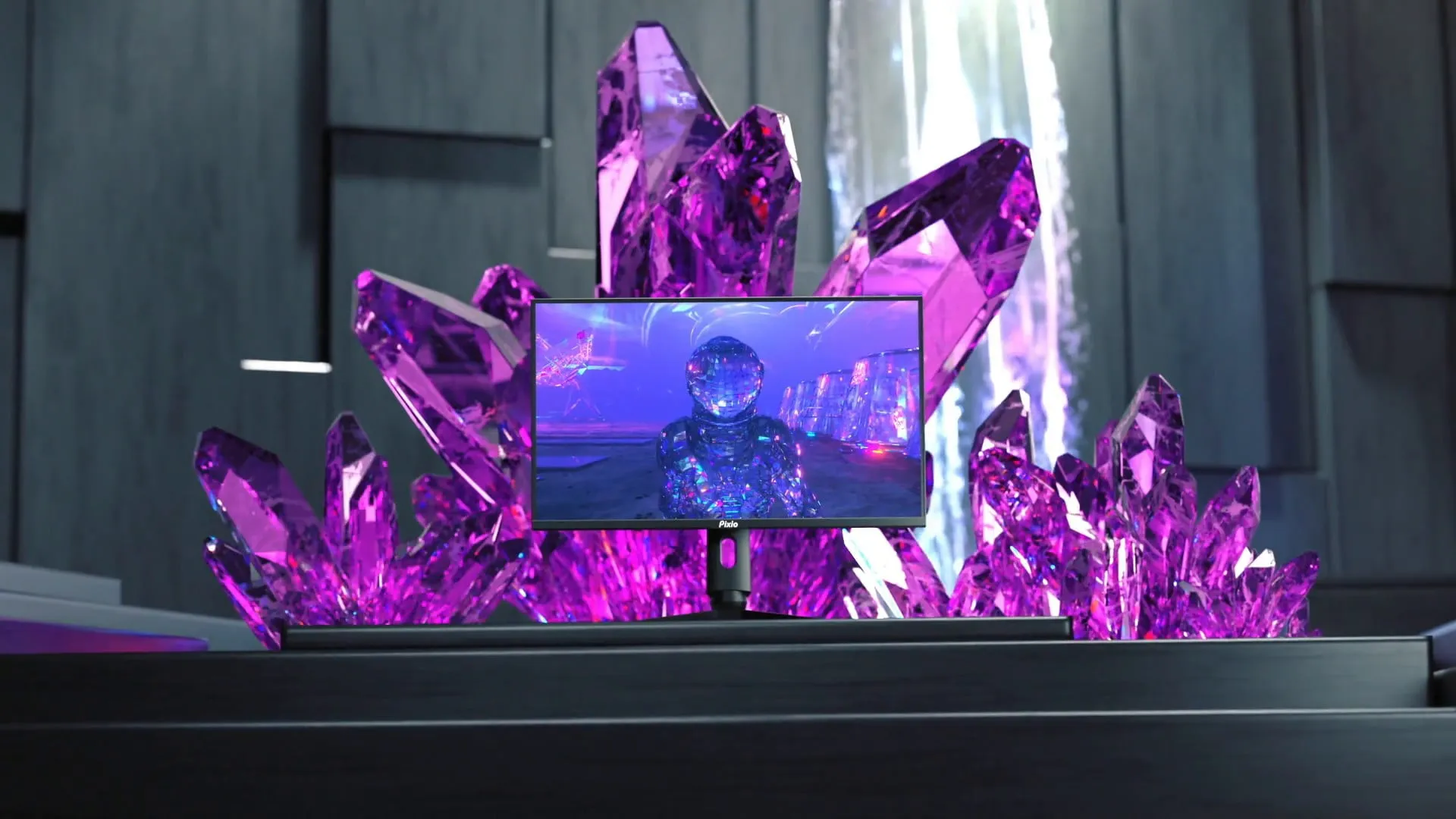
3D Product Animations for Computer Displays and LED TV Screens
In the world of consumer electronics, selling a display screen is one of the toughest challenges a marketer faces. When turned off, a flagship $3,000 OLED TV and a budget monitor look remarkably similar: they are both black rectangles.
So, how do you sell “visual perfection” when you can’t rely on the physical product to speak for itself?
Enter 3D Product Animation. This is the secret weapon behind the stunning, fluid, and hyper-realistic commercials for the world’s leading tech brands such as Philips. Here is why 3D animation has become the industry standard for marketing computer displays and televisions.
1. Escaping the Constraints of Photography
Traditional photography is a nightmare for displays. Screens are highly reflective surfaces; they act like mirrors, catching every studio light and camera crew reflection. Retouching these out is time-consuming and expensive.
3D animation offers total control.
- Perfect Lighting: We can create “impossible” lighting setups that highlight the sleekness of a bezel or the curve of a monitor without unwanted glare.
- Flawless Surfaces: There is no dust, no fingerprints, and no manufacturing defects in a 3D render. It is the product, idealized.
Key Takeaway: 3D allows you to present the “Platonic ideal” of your product-the version of the display that exists in the designer’s mind, unburdened by the laws of physics.
2. Visualizing the Invisible: The “3D Exploded View“
Modern display technology (Mini-LED, OLED, Quantum Dot) happens inside the device. You cannot photograph a processor upscaling an image, and you cannot film the layers of a screen with a camera.
3D animation excels at the exploded view. This technique pulls the product apart in mid-air to reveal:
- The Layer Stack: distinct visual layers showing the backlight, the color filters, and the glass.
- The Chipset: A macro zoom into the motherboard to visualize the processing power.
- Pixel Density: Zooming in to the microscopic level to show individual sub-pixels lighting up.
This turns complex engineering specs into a visual story that the average consumer can instantly understand.
3. Selling the “Screen Experience”
How do you show how bright a screen is, or how deep the blacks are, when the viewer is watching the ad on their own (potentially inferior) phone screen?
3D animators use Simulated Screen Replacement. Instead of filming a real screen (which causes moiré patterns and flickering), the screen content is composited digitally.
- HDR Visualization: We exaggerate contrast and bloom effects in the animation to simulate what HDR looks like.
- Refresh Rate: To sell a 144Hz or 240Hz gaming monitor, we use slow-motion comparisons, showing the competitor “stuttering” while the hero product remains buttery smooth.
4. Total Environmental Flexibility
A lifestyle shoot for a TV requires renting a luxury apartment, hiring actors, and hoping for good weather. If you want to change the setting from a New York loft to a Tokyo minimalist apartment, you have to reshoot.
With 3D, the environment is a digital asset.
- Contextual Relevance: Place a gaming monitor in a neon-lit cyber room, then place the same monitor in a clean office setting for a B2B pitch.
- Scale and sleekness: Dynamic camera angles can swoop around the side of the TV to emphasize its razor-thin profile—movements that massive cinema cameras often cannot achieve physically.
5. Future-Proofing Your Marketing Assets
One of the biggest ROI factors for 3D animation is reusability. Once the 3D model of the TV or monitor is built:
- Still Images: High-resolution renders can be generated for print ads and packaging from the animation project.
- AR/VR: The asset can be optimized for Augmented Reality, allowing customers to “place” the TV in their living room via their phone camera.
- Configurators: Allow users to swap stand styles or colors on your website in real-time.
6. Technical Flexibility: Export Formats
One of the distinct advantages of 3D over traditional video is the ability to render the same scene in vastly different technical formats without losing quality. We don’t just “crop” the video; we can adjust the digital camera to frame the product perfectly for every platform.
Resolution & Aspect Ratios
- 4K & 8K (16:9): Ultra-high definition masters used for YouTube reviews, TV commercials, and trade show booths where every pixel counts.
- Vertical (9:16): Native renders for TikTok, Instagram Reels, and YouTube Shorts. Unlike cropping a standard video, we re-frame the 3D camera to ensure the monitor fits perfectly in a vertical space.
- Square (1:1): Optimized for Instagram and Facebook feed carousels.
Advanced File Types
- ProRes 4444: Lossless files delivered to your video editors, allowing them to color grade the footage to match other campaign assets.
- WebM (with Alpha Channel): This is crucial for modern web design. It allows us to render the TV with a transparent background. This means you can place the moving 3D TV on your website, and it will float seamlessly over any background color or gradient on your page.
- glTF / USDZ: Low-poly 3D exports that allow customers to view the TV in Augmented Reality (AR) directly from their mobile browser.
7. Deployment: How Clients Use These Assets
Once the 3D animation is complete, it becomes the backbone of the entire product launch. Here is how top electronics brands deploy these videos to maximize ROI:
The “Scrollytelling” Web Experience
This is the modern standard for flagship products (think Apple or Samsung product pages). As the user scrolls down the website, the video advances frame-by-frame. The TV might spin, disassemble, and reassemble in sync with the user’s scroll wheel, creating an interactive and immersive learning experience.
Retail Loops (The “Best Buy” Mode)
Walk into any electronics store, and you will see TVs playing a continuous loop of vibrant colors and specs. These are often 3D animated loops designed to be:
- Silent: They must communicate value without audio.
- High Contrast: Designed to cut through the bright lights of a retail store.
- Burn-in Safe: Carefully animated to avoid static elements damaging the floor models.
E-Commerce Galleries
Amazon and generic product pages are static. Adding a 360-degree turntable animation (a simple spin of the product) increases conversion rates by allowing customers to inspect the ports, the back panel design, and the stand depth before buying.
Conclusion: The Art of the Pixel
For computer displays and TVs, the hardware is only half the story. The other half is the promise of immersion. 3D product animation bridges the gap between the plastic chassis and the immersive experience, allowing brands to tell a story of color, speed, and design that traditional video simply cannot match.
Are you ready to showcase your gaming display in a new light? Quince Creative team have a vast experience in designing 3d product animated videos for computer displays and LED TVs!
Related Articles
Elevate Your Digital Showcase: How to Get an Interactive 3D Model on a Website
Latest Trends in Using CGI for Amazon Listings and A+ Content
It Is 2026, Apple Puts AI in Every Device, and It Still Launched Its New Hardware With 3D Animation
Tech Giants Head-to-Head: Laptop 3D Product Animation Showdown
3D Product Animation for Audio Devices
3D Product Animation Trends in 2026: What Brands Are Doing Now

 Rachel A