
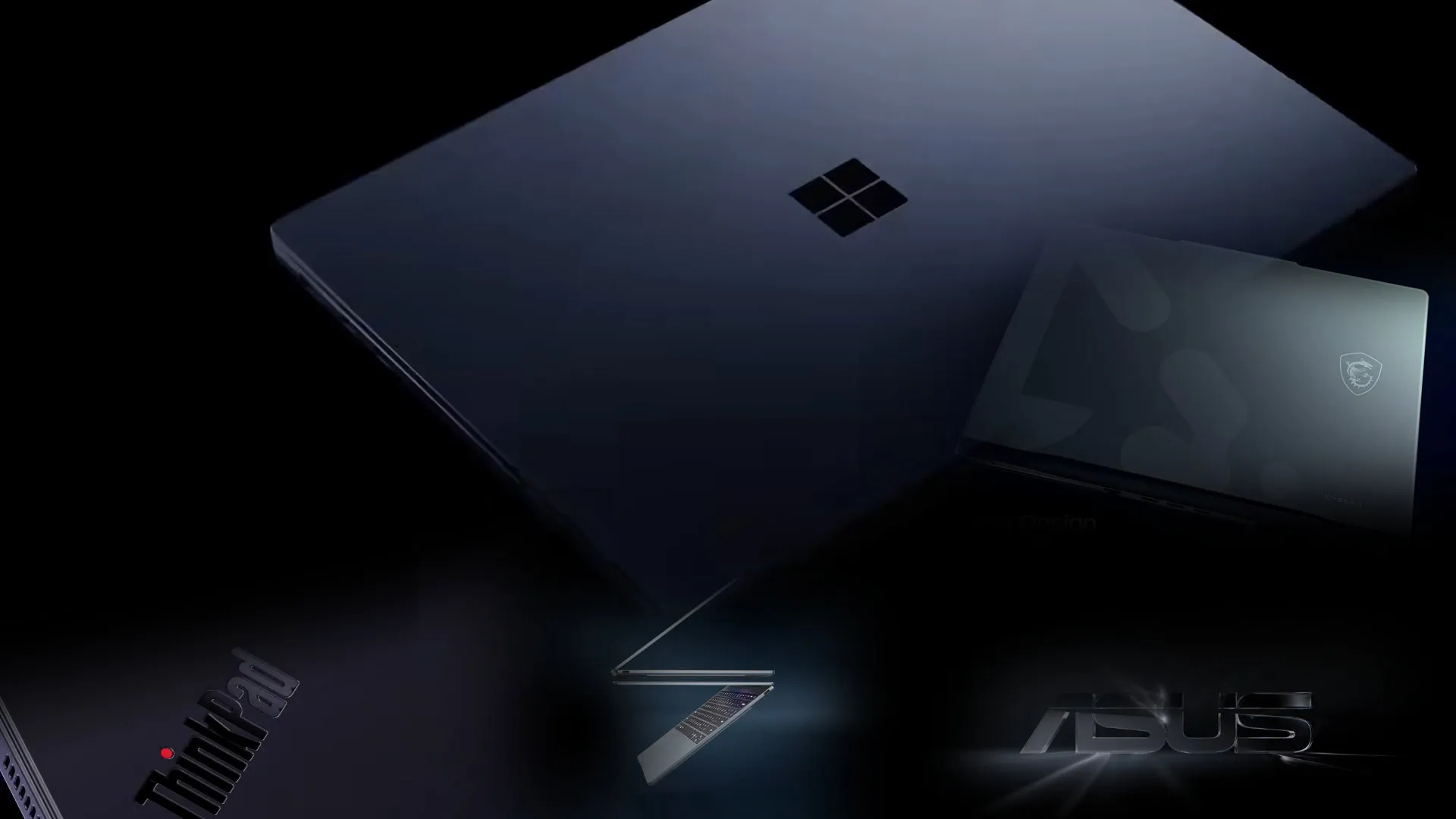
Tech Giants Head-to-Head: Laptop 3D Product Animation Showdown
Analyzing the Latest YouTube Laptop Launches from Microsoft, Asus, MSI, DELL, and Lenovo
In today’s highly competitive tech market, a 3D product video is much more than just a showcase of features-it is a visual manifesto of a brand’s identity. How a company lights, animates, and renders its flagship laptop tells us exactly who they are trying to reach and what values they stand for.
To see how the biggest players in the industry approach this, our team at Quince Creative went straight to the source. We tracked down the absolute latest YouTube video upload for a newly launched laptop from five global tech giants: Microsoft, Asus, MSI, DELL, and Lenovo. We looked past the marketing buzzwords and put these five recent releases under the microscope, focusing on what we do best: topology, lighting, texturing, rigging, and overall artistic direction.
Here is our breakdown of their current approaches, followed by our final studio verdict.
1. Microsoft: Engineering Precision & Hacker Aesthetic
Published: Jun 1, 2026
The Vibe: Dark, moody, and highly technical. Microsoft takes a no-compromise approach with the Surface Laptop Ultra. The animation contrasts the sleek, minimalist exterior with deep, X-ray dives into the complex internal components.
The Execution: Microsoft speaks directly to a tech-savvy audience, utilizing terminal-style typography and glitch effects. The focus is entirely on raw power and thermal management. Technically, the rendering is a masterclass. The lighting control is phenomenal, the PBR materials feel incredibly tactile, and the heavy use of cinematic depth of field makes the micro-components look like modern art.
2. Asus: Corporate Elegance & Lifestyle Integration
Published: Jun 2, 2026
The Vibe: Bright, airy, and practical. Showcasing the ASUS ExpertBook B5 Flip G2, Asus steps away from dark studio environments and places its device in realistic office and lifestyle scenarios.
The Execution: This is a traditional corporate product video aimed squarely at digital nomads and business professionals. It relies heavily on compositing-mixing 3D models with real-world footage. While the initial scenes featuring glass caustics and smooth motion graphics (like the HUD elements highlighting security features) are well-intentioned, the execution struggles to maintain visual consistency.
3. MSI: Raw Power & Character-Driven Action
Published: Jun 16, 2026
The Vibe: Futuristic, aggressive, and highly kinetic. MSI fully embraces its gaming identity by introducing a dynamic 3D female character leaping across the screen and interacting with the environment. Set in an abstract, neon-lit sci-fi setting, the video is a fast-paced adrenaline rush.
The Execution: Unlike the other brands that focus solely on the hardware, MSI incorporates complex character animation. This introduces an entirely new layer of technical difficulty, requiring advanced character rigging, motion capture (or meticulous keyframing), and dynamic simulations. While they still include detailed “exploded views” of the hardware, the narrative revolves heavily around this energetic character. It blends hardware showcase with a gaming-inspired action sequence, giving it a distinct, highly stylized gamer identity.
4. DELL: Cinematic Minimalism
Published: Jun 16, 2026
The Vibe: Calm, sophisticated, and premium. Dell strips away all distractions, placing their laptop in a flawless, ultra-minimalist studio environment. The product is the undisputed hero of every single frame.
The Execution: The focus here is on extreme macro shots and the perfection of the manufacturing process. The 3D production features surgical studio lighting with massive virtual softboxes that create incredibly smooth gradients across the aluminum chassis. The shaders and microscopic surface details are highly optimized, aiming for a pure, clean, and luxurious feel.
5. Lenovo: Laboratory Precision & Analytical Aesthetic
Published: Jun 18, 2026
The Vibe: Clinical, sterile, and scientifically driven. Lenovo targets a very specific niche in this video, placing the device in medical and laboratory environments throughout almost the entire animation. Instead of broad creativity, the focus is squarely on precision and data processing in serious research fields.
The Execution: The visual narrative constantly moves through hybrid lab spaces, while the laptop screen continuously displays complex analytical charts, medical readouts, and diagrams. A pivotal moment in the animation is a detailed macro shot of the internal hardware featuring the processor chip, with the text “Ultra 7 series” clearly displayed underneath-directly communicating the advanced computing power required for such demanding operations. The fluid camera movements and mechanical rigging remain top-notch, but the entire aesthetic is strictly subordinated to this clinical tone. The dynamic, colorful on-screen charts create a striking contrast against the clean, sterile laboratory backgrounds.
The Quince Creative Verdict: Final Rankings
After dissecting every frame, light setup, and render technique from these latest releases, our tight-knit group of 11 experts put it to a vote. Taking into account everything from 3D modeling and lighting to compositing and post-production, here is our definitive ranking (from 1 to 5 points):
1 Point: Asus
The biggest technical disappointment on the list. Asus’s animation simply looks unfinished. In several shots, you can clearly see rendering artifacts-almost as if they accidentally left a draft denoiser turned on. Furthermore, the 3D model is poorly integrated with low-quality stock footage and awkward AI-generated elements. For a premium brand, these shortcuts in their latest release are a major misstep.
2 Points: DELL
Too plain and simple. While the render itself is incredibly clean, it lacks character and dynamic storytelling. Studio minimalism is a valid artistic choice, but this execution ultimately feels flat and uninspired. The creative team could have-and should have-done much more to elevate the visual narrative.
3 Points: MSI
The golden mean. The animation is undoubtedly flashy, chaotic, and a bit childish, but it perfectly understands its target audience. It isn’t aiming for sophisticated corporate design; it’s aiming for gamers. The aggressive, neon-drenched style does exactly what it was built to do, earning solid points for technical complexity.
4 Points: Lenovo
A fantastic effort with high marks for technical execution and mechanics. Setting the story in a medical and laboratory environment is an excellent conceptual move that positions the laptop as a powerful workstation for scientific analysis, further reinforced by the clear emphasis on the Ultra 7 series processor. However, the constant barrage of colorful charts and data on the screen still leaves a slightly “flashy” and scattered impression in its visual identity. Because of this, it lacks that final coat of polish and refinement in compositing to grab the maximum number of points.
5 Points: Microsoft (The Winner) 🏆
Peerless. Absolute perfection in design and the undisputed winner of this breakdown. From the masterful lighting and meticulous texturing to the flawless directing and hacker-chic engineering aesthetic, this is a masterclass in how to produce a 3D product video. It doesn’t just show a laptop; it tells a compelling visual story. Microsoft takes the crown for the best current tech release.
Ready to Elevate Your Hardware Visuals?
In a market where technical perfection defines brand authority, a subpar render is a liability. At Quince Creative, we combine mechanical precision with high-end cinematic storytelling to create 3D product animations for laptops, computers, and complex electronics that captivate your audience. Don’t settle for draft quality-let our team of experts bring your hardware to life.
Related Articles
Smartwatch 3D Product Animation Ranking: Who Told The Best Visual Story?
The Art of 3D Product Animations for Medical and Laboratory Devices
The Art of Technical Animation: How Dyson Uses 3D Product Animation to Explain the Future of Tech
Logitech Rally Bar 3D Video vs. Samsung AI Slop: A Masterclass in 3D Product Animation
Fight of the Titans: KeyShot Studio 2025 vs Blender 5.0
3D Product Animations for Computer Displays and LED TV Screens
 Rachel A