
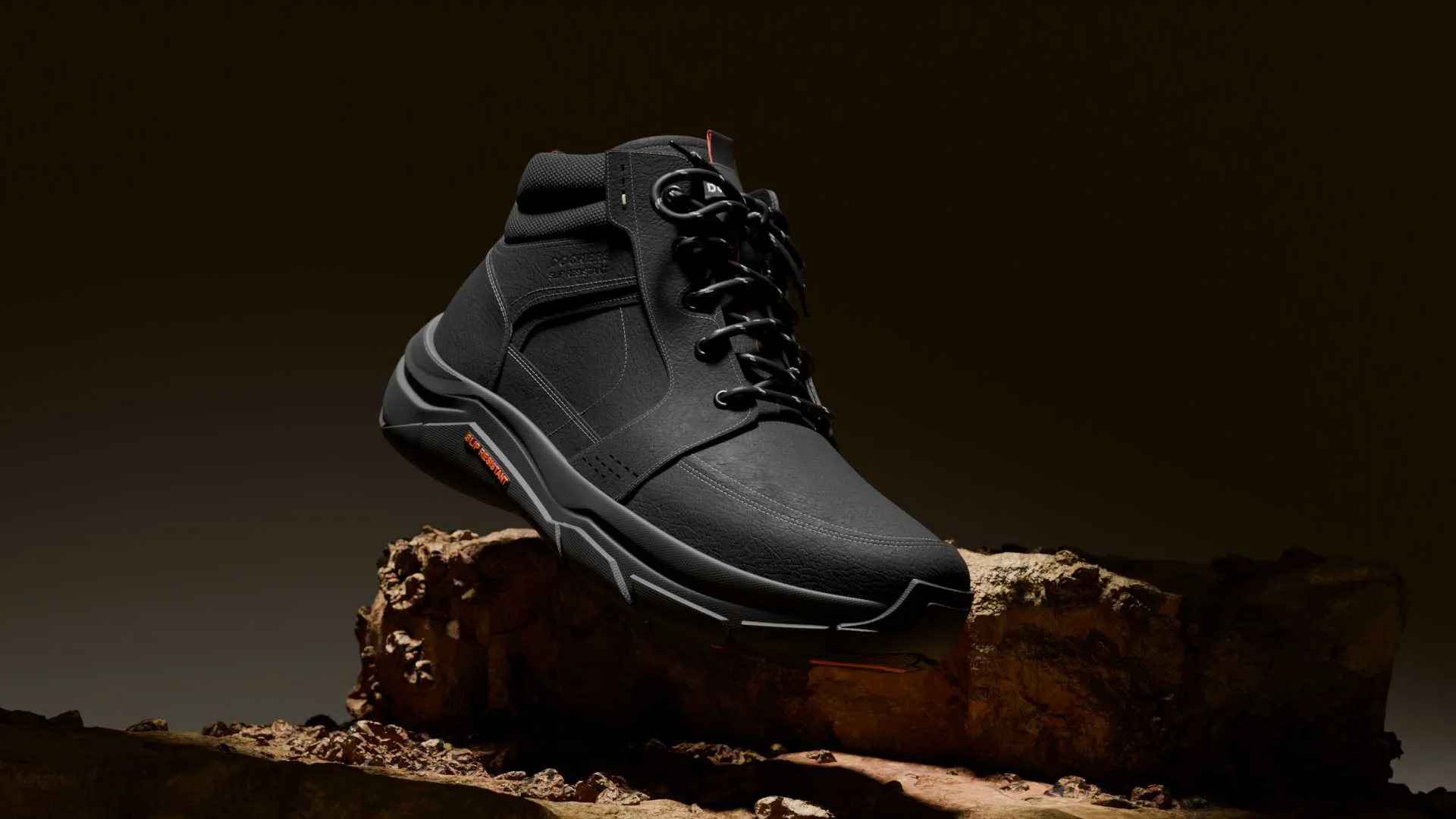
3D Footwear Animation Cost in 2026: Real Prices, Real Timelines, No “Contact Us for a Quote”
Ask most 3D studios what a sneaker animation costs and you get the same answer: “it depends.”
It does depend. But that is not a reason to hide the numbers. We have been modelling and animating footwear since 2012, and after enough projects the variables are predictable enough to publish.
So here is the whole thing: what we charge, what makes the number move, how long each stage takes, and what you need to hand over before we can start.
The short answer
| What you need | Typical cost | Typical timeline |
|---|---|---|
| Single hero video, 10-30s, social formats | $1,900 – $2,300 | 2-3 weeks |
| Full launch video, 31-60s, custom environment | $3,500 – $5,000 | 4-5 weeks |
| E-commerce still set, 21-50 images, one silhouette | $1,200 – $1,600 | 2 weeks |
| Each additional colorway once the model exists | Marginal – the modelling line drops to $0 | 1 day on average |
That last row is the one that matters most, and we will come back to it.
What actually drives the price of a footwear project
Footwear is not a generic “product.” A sneaker is one of the more demanding objects you can put in front of a render engine, and the cost sits almost entirely in two places: how hard the shoe is to build, and how long the finished video runs.
1. The model – $0 to $2,000
This is the single biggest swing in any footwear quote.
- You already have a production-ready 3D model – $0. If your design team works in a 3D pipeline, you may already own the asset. Be aware that a design or grading file is not always animation-ready; we will tell you honestly if it needs rebuilding.
- Simple silhouette – around $400. A clean slip-on, a moulded EVA sandal, a simple leather upper. Few parts, few materials.
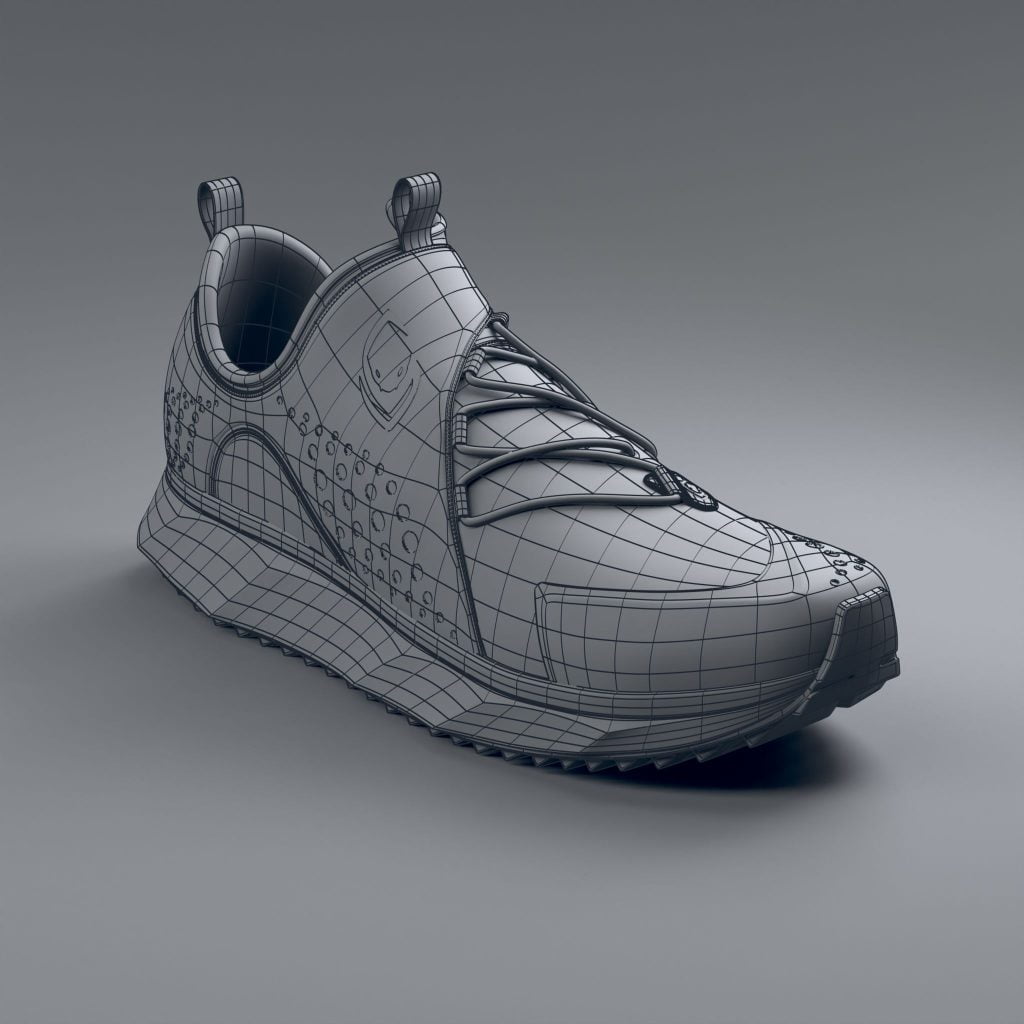
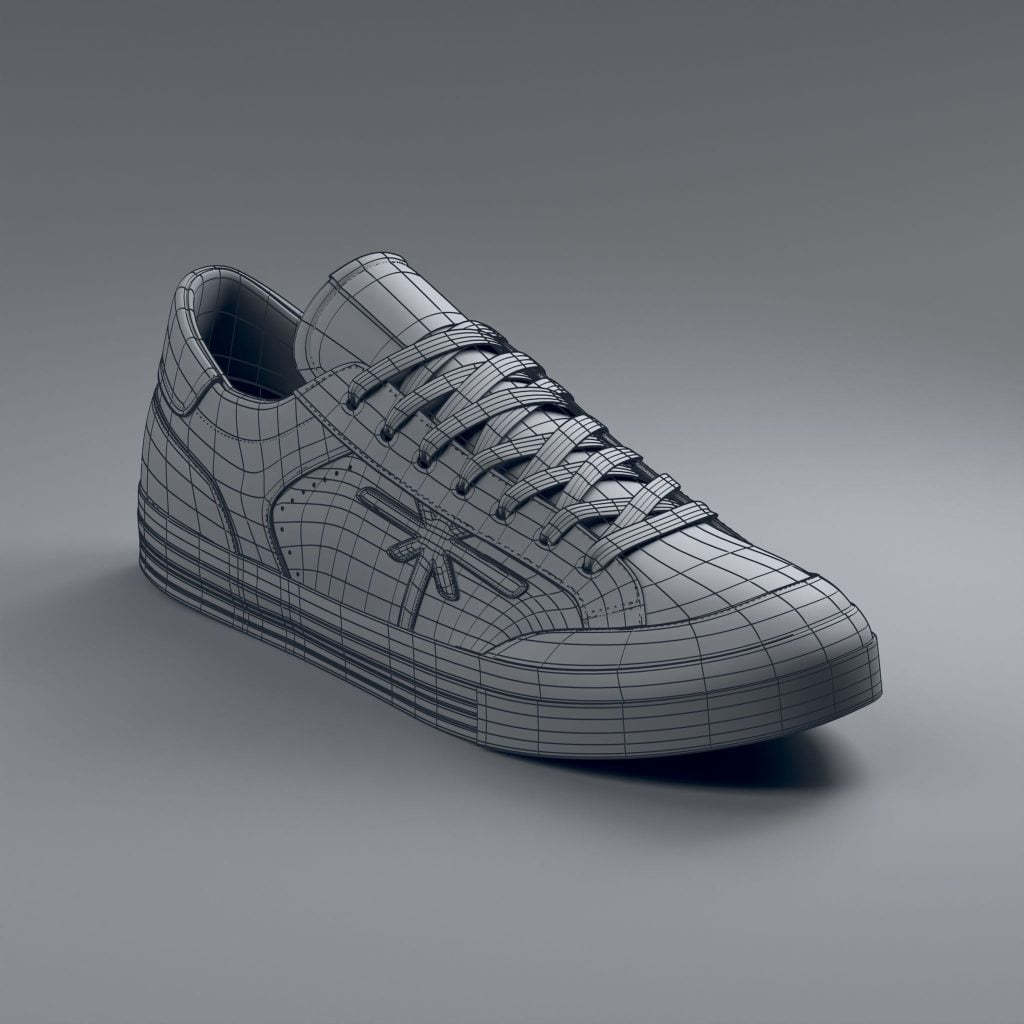
- Medium complexity – around $800. Most sneakers land here. Multi-panel upper, separate midsole and outsole, laces, eyelets, branding.
- Very technical – around $2,000. Engineered knit uppers, translucent or dual-density soles, visible air units, complex lugged outsoles, articulated cleats.
Why footwear sits high on this scale:
Knit and mesh uppers. A knit upper is not a texture, it is structure. Getting it to read correctly under a close camera means either dense real geometry or a carefully authored displacement-and-fuzz setup, and the choice affects render time for the rest of the project. This is the number one thing cheap renders get wrong – knit that looks printed on rather than woven.
Foam midsoles. EVA and supercritical foams scatter light. Skip subsurface scattering and your $180 running shoe looks like injection-moulded plastic. It is a subtle setting that separates a credible render from an obviously fake one.
Suede and nubuck. These have directional sheen – the nap catches light differently depending on which way it is brushed. A flat diffuse material kills the entire premium read of a shoe.
Stitching, laces, and eyelets. Real stitch geometry, not a normal map, once the camera gets close. Laces need simulation if they move at all.
Sole flex. If the shoe bends, compresses, or lands in your animation, the sole has to deform believably. That is rigging work on top of modelling.
2. Video length – $500 to $3,500
Priced in bands, because render time and animation labour scale directly with runtime:
- 10-30 seconds: $500
- 31-60 seconds: $1,000
- 61-120 seconds: $2,000
- 121-240 seconds: $3,500
For footwear specifically, most brands are best served by the shortest band. A sneaker sells on hero moments – the material close-up, the sole reveal, the rotation. Ninety seconds of shoe is ninety seconds nobody watches.
Not sure which of those hero moments your launch needs first? Map out your launch video with the reveal, rotation and feature shots in running order and a budget estimate.
3. Environment – $500 to $1,000
A solid-color studio background is $500. A built 3D environment – a court, a trail, a stylized abstract space, a retail interior – is $1,000. Footwear benefits from environment more than most categories, because context communicates use case instantly. A trail runner on gravel needs no voiceover to explain what it is for.
4. The add-ons
- 1:1 square format: +$250
- 9:16 vertical format: +$250
- 4K resolution: +$250
- Voiceover: +$100
- Whitelabel (we never show the work on our site): +$1,000
Vertical is not optional in footwear anymore. If you are launching to a sneaker audience, 9:16 is the primary format and 16:9 is the afterthought.
Four real scenarios, with the maths shown
Scenario A – DTC brand launching one silhouette on social Medium-complexity model ($800) + 20-second video ($500) + solid background ($500) + 9:16 vertical ($250) + 4K ($250) = $2,300
Scenario B – Performance brand, full launch film Very technical model, engineered knit and translucent sole ($2,000) + 45-second video ($1,000) + built 3D environment ($1,000) + 1:1 and 9:16 ($500) + 4K ($250) + voiceover ($100) = $4,850
Scenario C – E-commerce imagery, one silhouette across a colorway range Medium-complexity model ($800) + 21-50 images ($500) + transparent background ($100) + 1:1 and 9:16 ($200) = $1,600
Scenario D – Second silhouette, same season, model already built Model ($0) + 20-second video ($500) + solid background ($500) + 9:16 ($250) + 4K ($250) = $1,500
Scenario D is the entire argument for 3D in footwear.
The model is the asset. The video is just one thing you do with it.
Photography is a per-shoot cost. You pay for the sample, the studio, the photographer, the retouching – and then you pay again for the next colorway, and again for the next season, and again when marketing needs a different crop.
A 3D model is a one-time build. After that:
- Every colorway is a material swap, not a reshoot
- Every format is a re-render, not a new session
- Every campaign angle is a camera move
- The same asset feeds your e-commerce stills, your paid social, your retail screens, and a web configurator if you want customers to build their own colorway
For a brand running eight to twelve colorways per silhouette, an $800 model works out to well under $100 per variant – and every one of those variants is delivered in every format you need, at no extra shoot cost. That is the real financial case, and it is why footwear brands moved to 3D faster than almost any other category.
How long it takes, and what happens when
We use a four-stage process. You approve at every stage, so nothing expensive gets rendered before the direction is locked.
Stage 1 – 3D Model Creation We build a detailed digital replica of the shoe. If you do not have a model, we work from reference photos: multiple angles, ideally straight-on, plus close-ups of any material we need to match. For footwear we specifically want the outsole from directly below and a clear shot of the upper material texture.
Stage 2 – Concept Renders Lighting, materials, and composition, locked as stills before anything moves. This is where we get the suede sheen and the foam translucency right – and where changes are cheap.
Stage 3 – Animatic A grayscale timed blueprint of the whole video: pacing, camera moves, music sync. Deliberately ugly, deliberately fast to change. Structural feedback belongs here, not after final render.
Stage 4 – Final Render & Review Full quality render, then post: effects, color grade, sound design. Your final approval, and the project ships.
Revisions: We usually include two rounds of revisions into every stage of the process, but we are happy negotiate different terms as per your needs.
What we need from you before we can start
- Reference photos from multiple angles, or your existing 3D file
- A close shot of every distinct material on the shoe
- Brand guidelines, if colours must match exactly
- Pantone or material references for anything colour-critical
- Your target formats and platforms
- Your hard launch date
Projects that arrive with all six start faster and cost less, because we are not reverse-engineering the brief.
What is not included
Being clear about this up front saves everyone a difficult conversation later:
- Licensed music (we can advise on sourcing)
- On-foot human animation – a full character rig is a different project
- Physical sample photography
- Ongoing hosting for interactive assets
FAQ
Is 3D cheaper than photographing sneakers?
For a single shot, often no. Across a colorway range or a season, almost always yes – because the model is reusable and a photo shoot is not. The break-even usually lands around the third or fourth variant.
Can you work from CAD, or do you need physical samples?
Neither is strictly required. We can build from reference photography alone. CAD or an existing 3D file removes the modelling line from your quote entirely, so send it if you have it.
Can you animate the shoe flexing or compressing?
Yes. Sole deformation is rigging work on top of the base model, so it affects the modelling band – flag it in your brief rather than after the model is approved.
Can I get the 3D model itself, not just the video?
Yes, this is possible. We can provide you with original Blender 3D file which you can use further as per need.
Do you work with brands outside the EU?
Yes. We work with clients worldwide and have done since 2012.
How accurate is the pricing calculator?
It is a starting point, not a contract. It gets most footwear projects within a reasonable range. Anything unusual – heavy simulation, character work, a very tight deadline – we quote directly.
Get a number in about thirty seconds
Our pricing calculator gives you a rough figure without talking to anyone. Pick your model complexity, your video length, your formats, and it does the maths.
If your project is more complicated than a form can handle – a full season, a configurator, a multi-silhouette launch – tell us what you are working on and we will quote it properly.
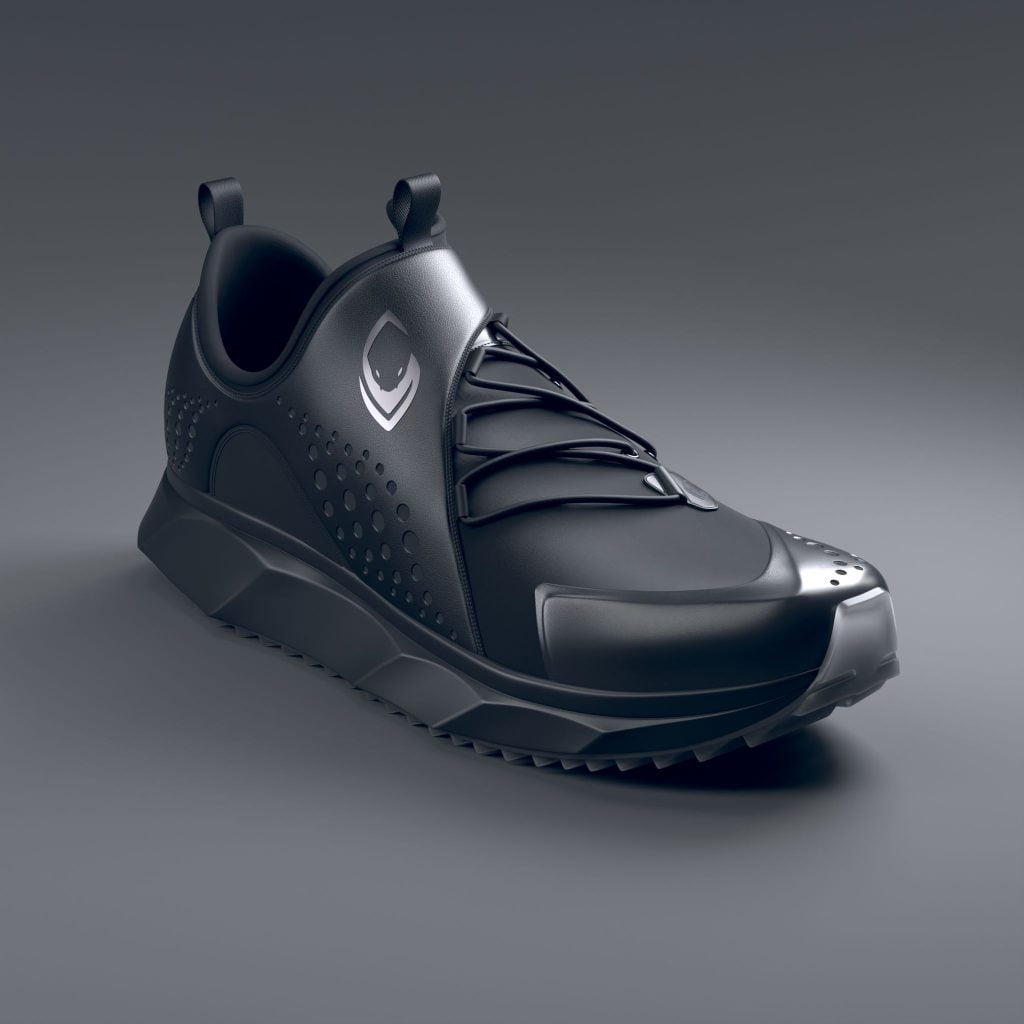
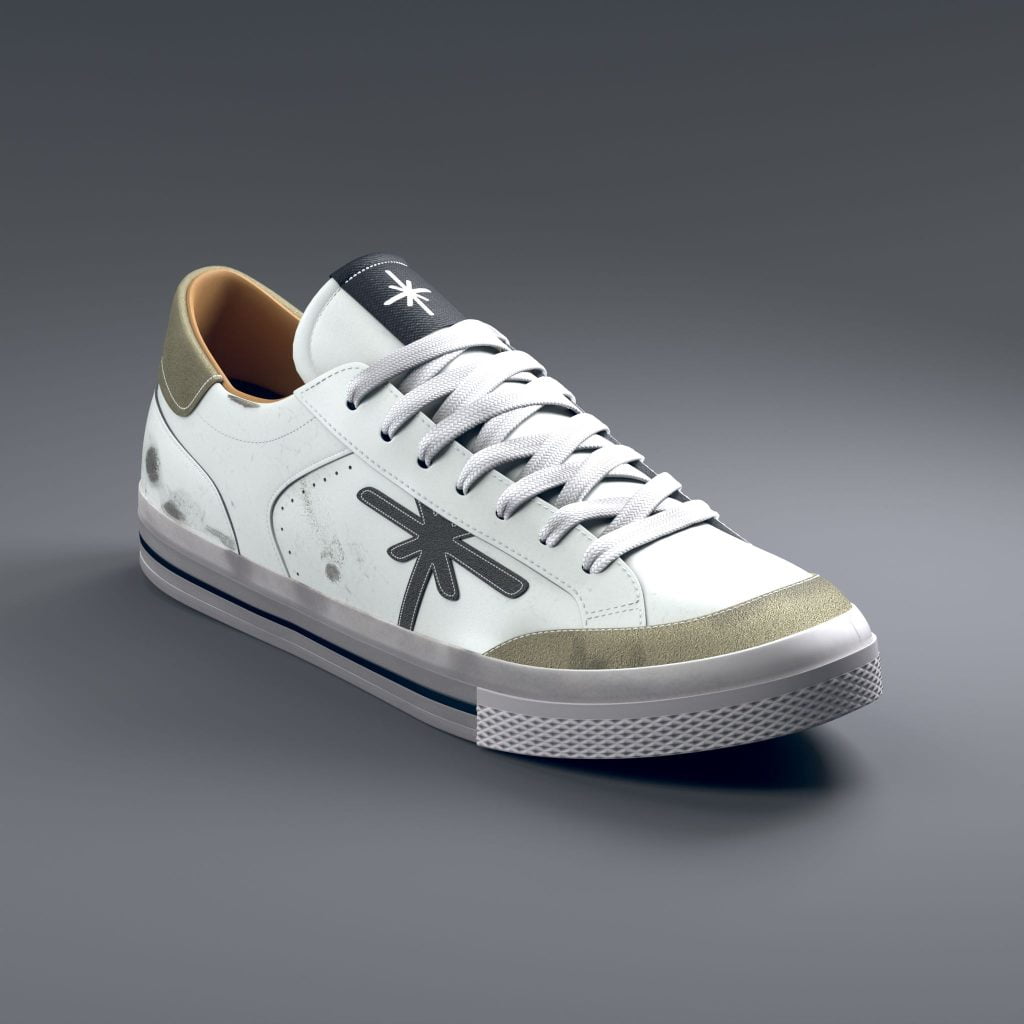
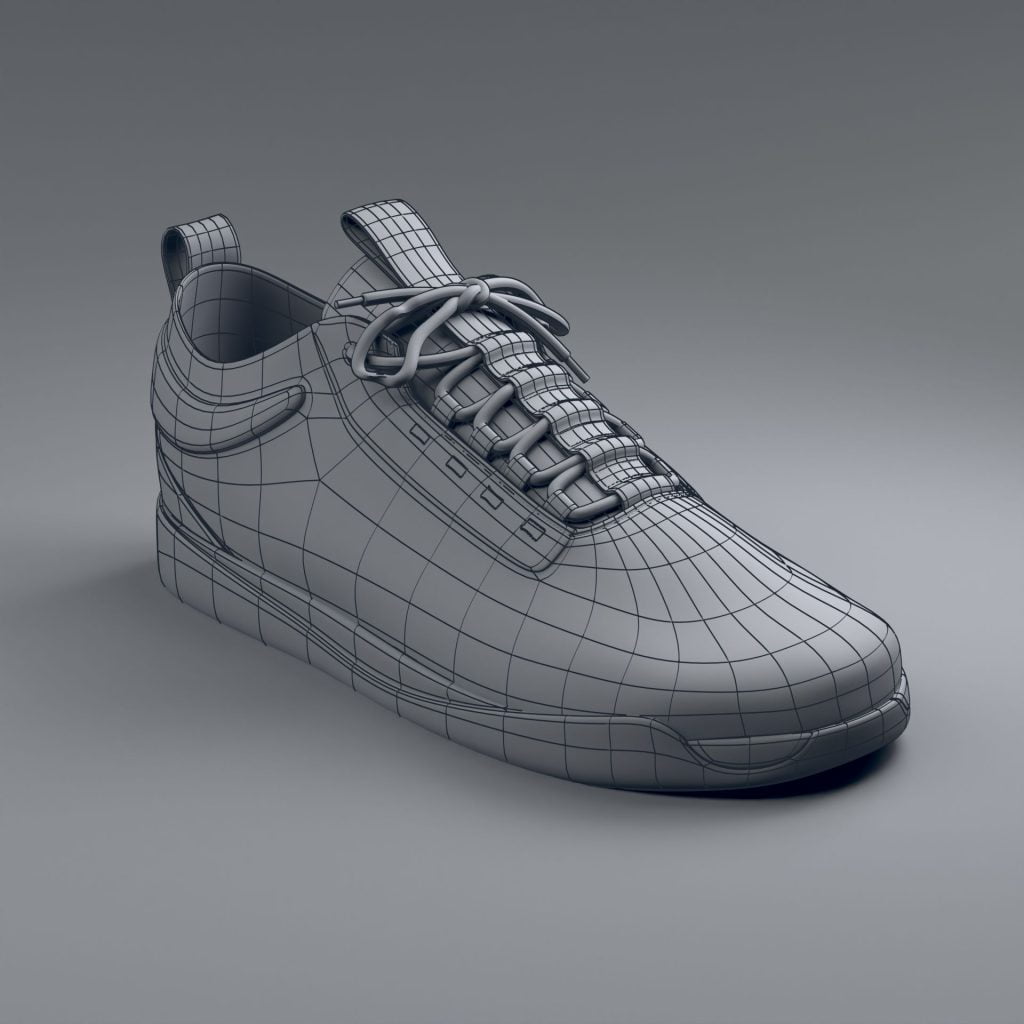
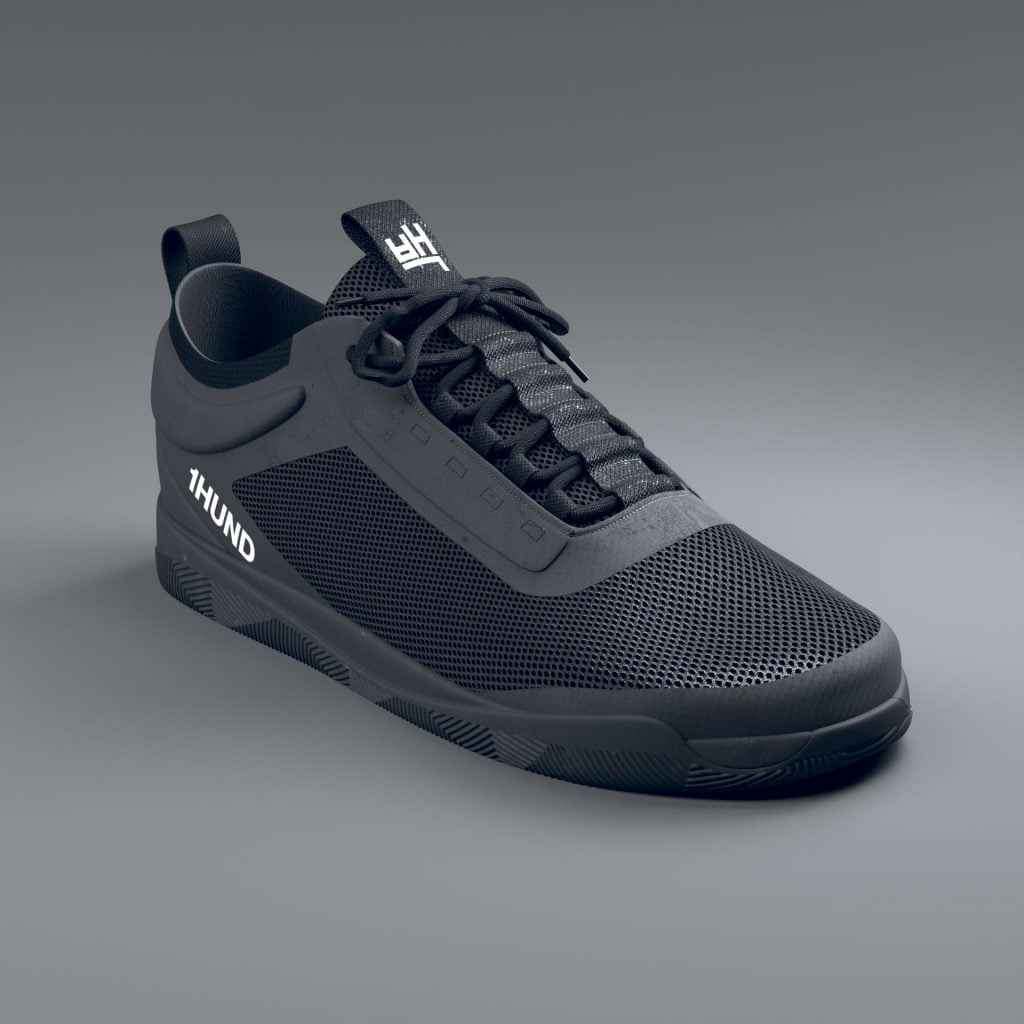
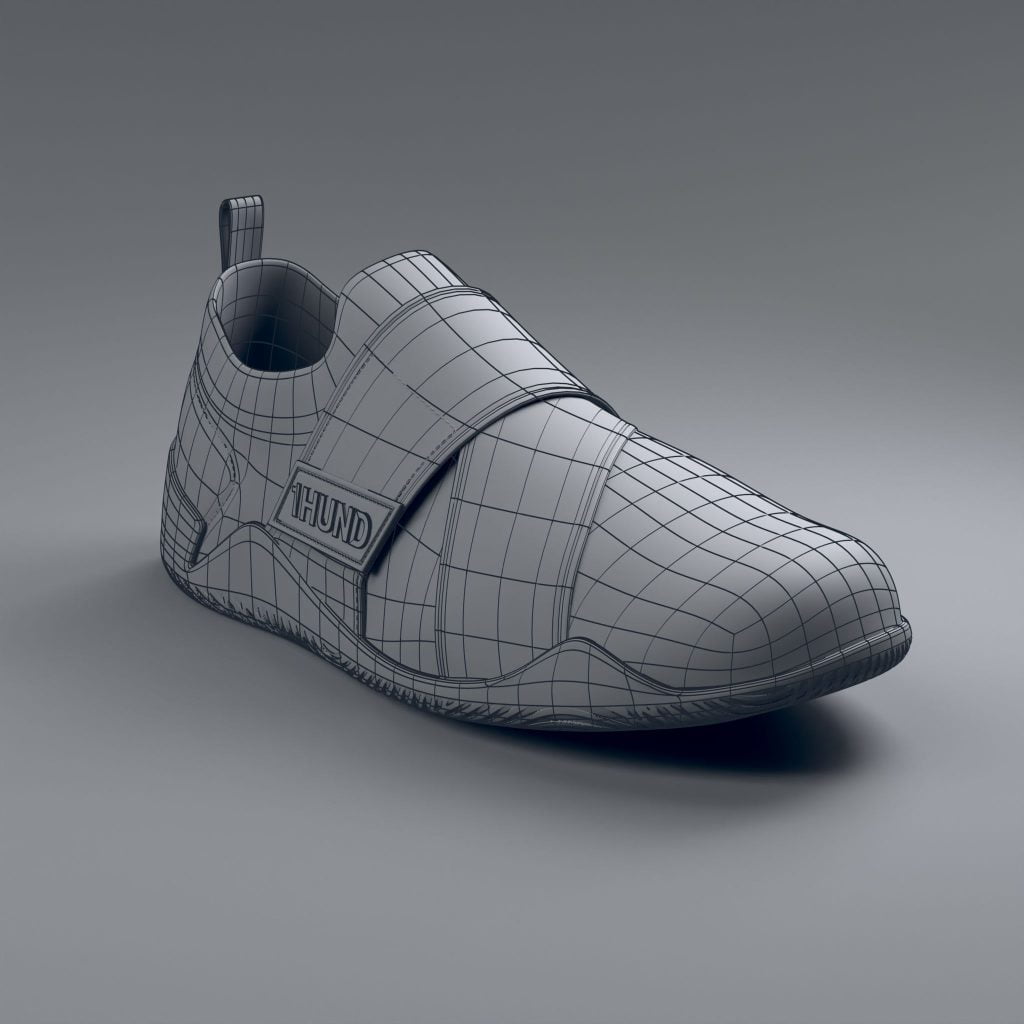
See our footwear 3D modelling and animation work, including our SANDVIPER project.
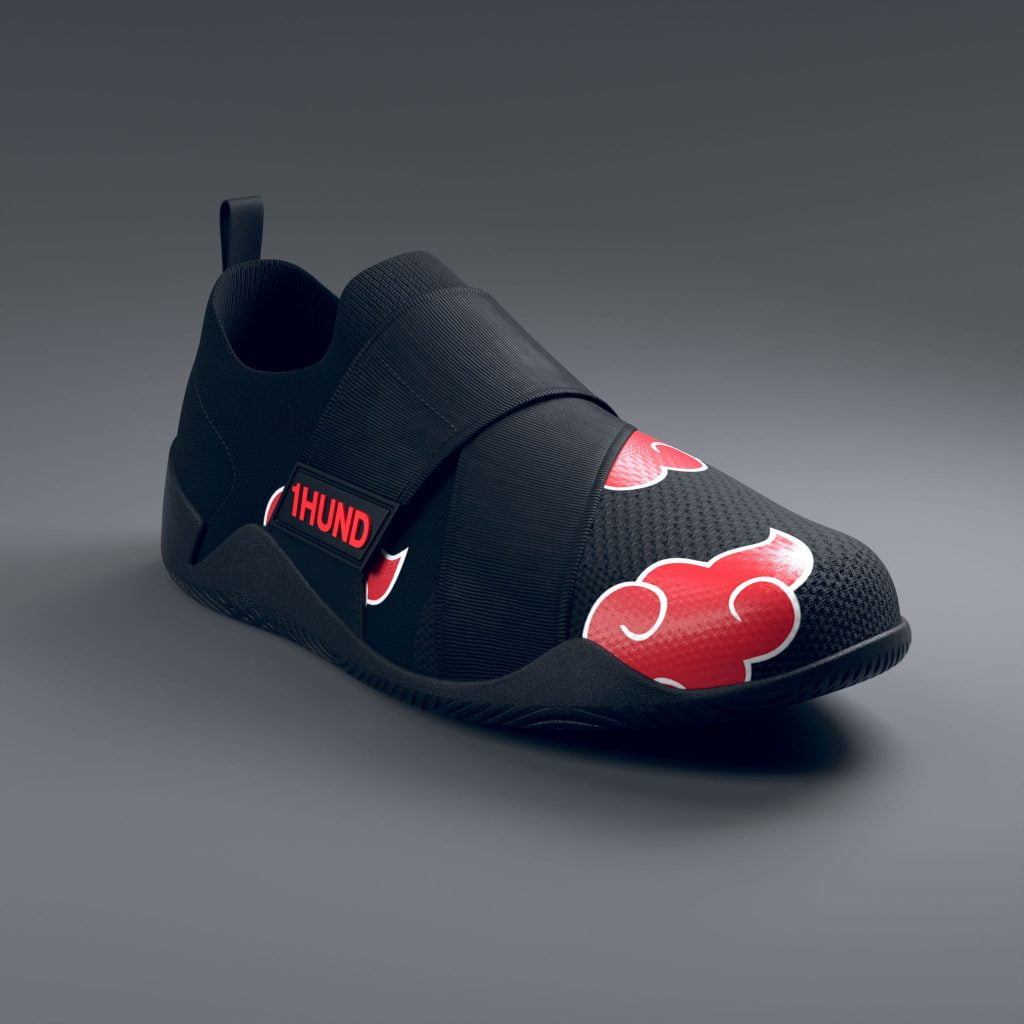
Related Articles
How to Choose a 3D Product Animation Studio: A Buyer’s Checklist
How Much Does 3D Product Rendering Cost in 2026? Per-Image Prices, What Drives Them and How to Pay Less
Product Hero Shots: What They Are, Why Brands Now Render Them in CGI, and What They Cost
Your Catalog Keeps Growing and Every New Product Means Another Photoshoot. Build the Asset Library Instead
How to Use 3D Animation on Kickstarter Without Getting Your Campaign Cancelled
3D Product Explainer Videos: Examples, Cost and How They Are Made (2026)

 Rachel A