
How to Choose a 3D Product Animation Studio: A Buyer’s Checklist
You have eight tabs open. Every one of them is a 3D animation studio, and every one of them opens the same way: a dark set, a slow orbit, a product turning under a rim light, a logo. Watch them with the sound off and you cannot tell them apart. Watch them with the sound on and you still cannot, because they all licensed the same kind of track.
Meanwhile your actual situation is probably this. You have a product launching in ten weeks. You have CAD, because engineering has CAD. You may even have a designer in-house who makes very good stills in KeyShot, which is why nobody has needed an animator until now. What you do not have is any reliable way to tell which of those eight studios will still be answering email in week six.
This is a checklist for that. Not what to look for in a portfolio. What to ask, and what the answers tell you. Every question here is something you can put in an email before you have paid anybody anything. If you want to see how ten studios differ first, our comparison of the best 3D product animation companies lists where each is based, what it specializes in and whether it publishes prices.
Why does every studio’s portfolio look the same?
Because a showreel is the best thirty seconds of several years of work, assembled from the projects that went well for clients who had budget and cooperative products.
That is not dishonest. It is what a reel is for. But it means a reel tells you what a studio can do on a good day with a good product, and almost nothing about what happens on day nine of your project, when your CAD turns out to be a surfacing mess exported from a version nobody has a license for anymore, or when engineering changes the bezel, or when your first round of notes arrives and the answer is “that’s a change order.”
Testimonials have the same problem, and there is a regulator’s view on it worth knowing. The FTC’s endorsement guides exist partly because testimonials showing exceptional results are not evidence of typical results. A wall of five-star reviews tells you that some projects went well. It does not tell you the rate.
What should you evaluate instead?
Evaluate how a studio responds to your files and your brief, before money changes hands.
Search this question and you get the same seven points on twenty different sites, including one we published in 2024. Check the portfolio. Read the testimonials. Confirm they use industry-standard software. Make sure communication is clear. None of it is wrong. All of it is unfalsifiable. No studio is going to tell you their communication is poor. Asking a vendor whether they are good is not research.
The software question in particular has stopped meaning much. Blender, Maya, Cinema 4D, 3ds Max, KeyShot. The renderer is not what goes wrong on product animation projects. Geometry, scope, approval sequencing and ownership are what go wrong, and none of those are on the standard list.
The ten questions below are chosen because a studio cannot answer them well without actually knowing how this work gets made. You do not need to be able to judge the technical content of the answer. You need to notice whether a specific answer exists at all.
Do you even need a studio?
Sometimes no, and it is worth settling this before you send eight inquiry emails.
If what you need is a clean turntable of a finished product on a plain background for a product page, and you already have someone in-house working in KeyShot, you can probably do it yourself. KeyShot’s own animation tools handle camera moves, part translations, material animation and motion blur, and a competent stills person can produce a usable 15-second rotation in a day or two. Paying a studio $2,000 for that is paying for coordination you do not need.
Before you contact studios, sketch the video’s structure and length so every quote is priced on the same brief.
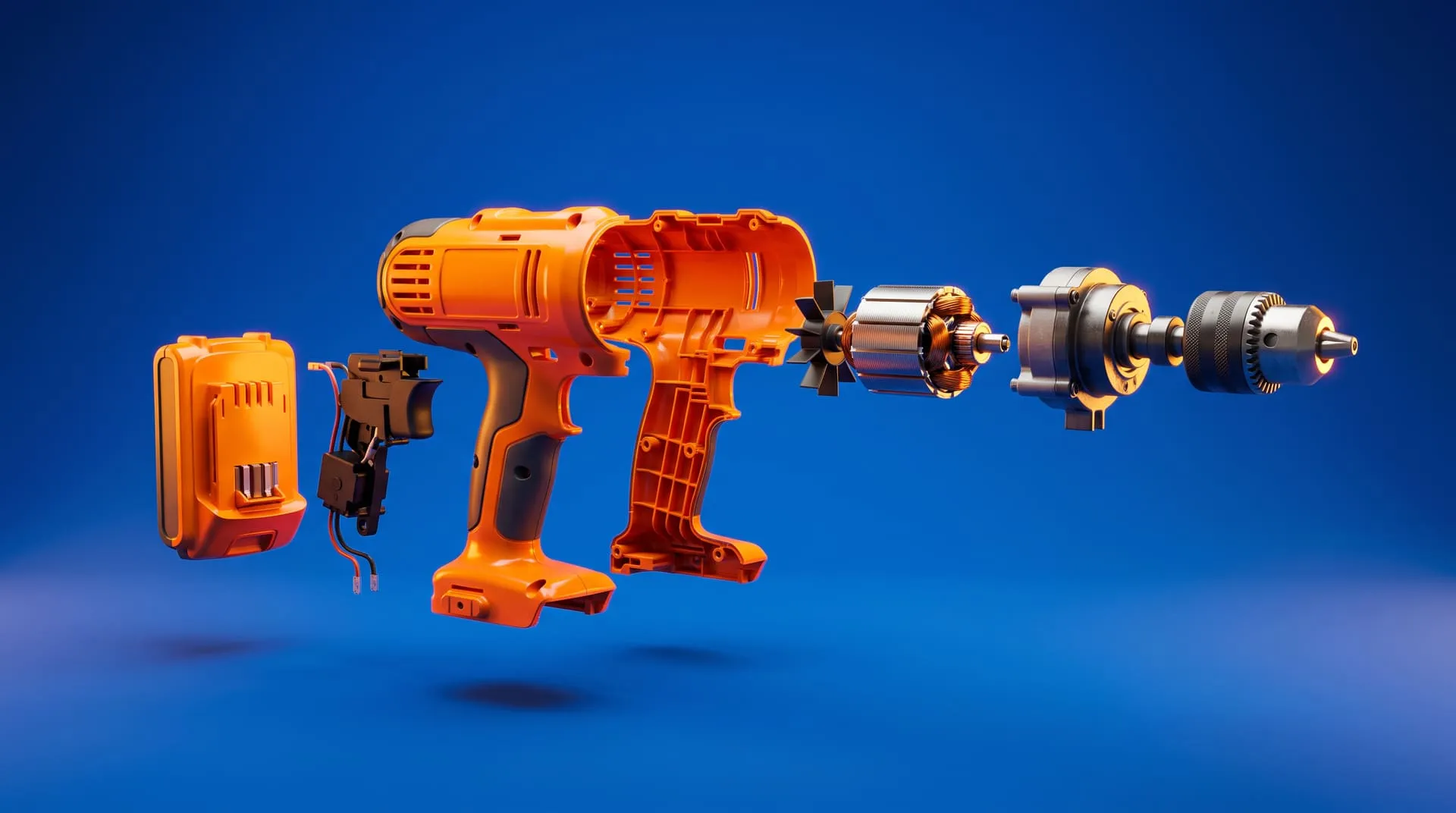
You need a studio when the video has to do something a turntable cannot: reveal an internal mechanism, explain a feature that is invisible from the outside, carry a story across a 40-second edit with sound design, or ship in six formats for six channels on a fixed launch date. That is a different job, and it is the one that breaks in-house.
Here are the realistic routes, side by side.
| Route | Typical cost | Timeline | Best for | Where it breaks |
|---|---|---|---|---|
| Your in-house KeyShot designer | Already on payroll | 1 to 5 days | Turntables, stills, simple loops, plain sets | Edits, sound, cutaways, multiple deliverable formats |
| Freelance 3D artist | $800 to $3,000 | 2 to 4 weeks | One asset, one video, a clear and stable brief | Multi-stage projects, fixed launch dates, revisions at scale |
| Production studio | $1,200 to $15,000 | 4 to 8 weeks | Launch films, product page video, ongoing catalog work | Brand strategy, scripted campaign concepting |
| Creative agency | $15,000 and up | 8 to 16 weeks | Campaign concept, script, direction, original music | Budget, speed, a single product video |
Cost ranges reflect what we quote and what we see quoted. Our own published numbers sit in the studio row and are broken down by complexity, length and background on our pricing page.
What are the ten questions to ask a 3D product animation studio?
Ask these in an email before you book a call. The answers sort the field faster than any portfolio review.
1. Here is my CAD. What do you need from it, and what will you have to rebuild?
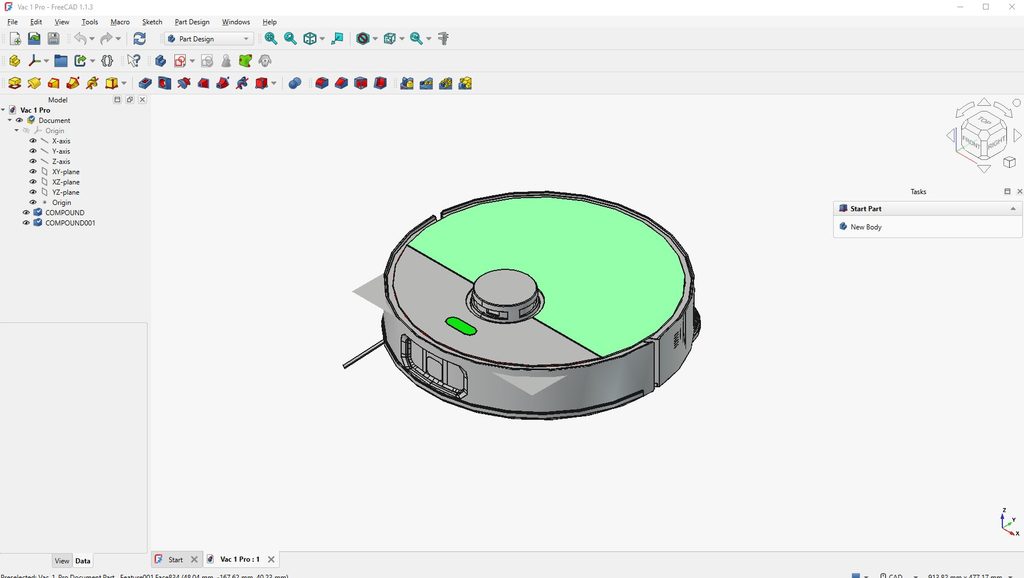
A good answer names formats and asks about structure. STEP or IGES if you have no native file, SolidWorks, Creo, NX, Rhino or Alias if you do. STEP is the one most studios will ask for first, because it is a published interchange standard (ISO 10303-21) and it survives the trip between packages. A studio that knows this will also ask whether your file is a single body or an assembly, whether the assembly tree is intact, and whether the internal components you want revealed are actually modeled or blanked out.
They should also tell you, unprompted, that CAD geometry is not render geometry. It gets retopologized. Fillets and draft angles need checking. Manufacturing detail like fasteners and parting lines sometimes has to be rebuilt so it reads on camera.
A bad answer is “sure, send whatever you have.” That is not flexibility. That is a studio that has not handled enough CAD to know what goes wrong, and you will find out in week two when the number changes.
2. Can you show me a project where the product was boring?
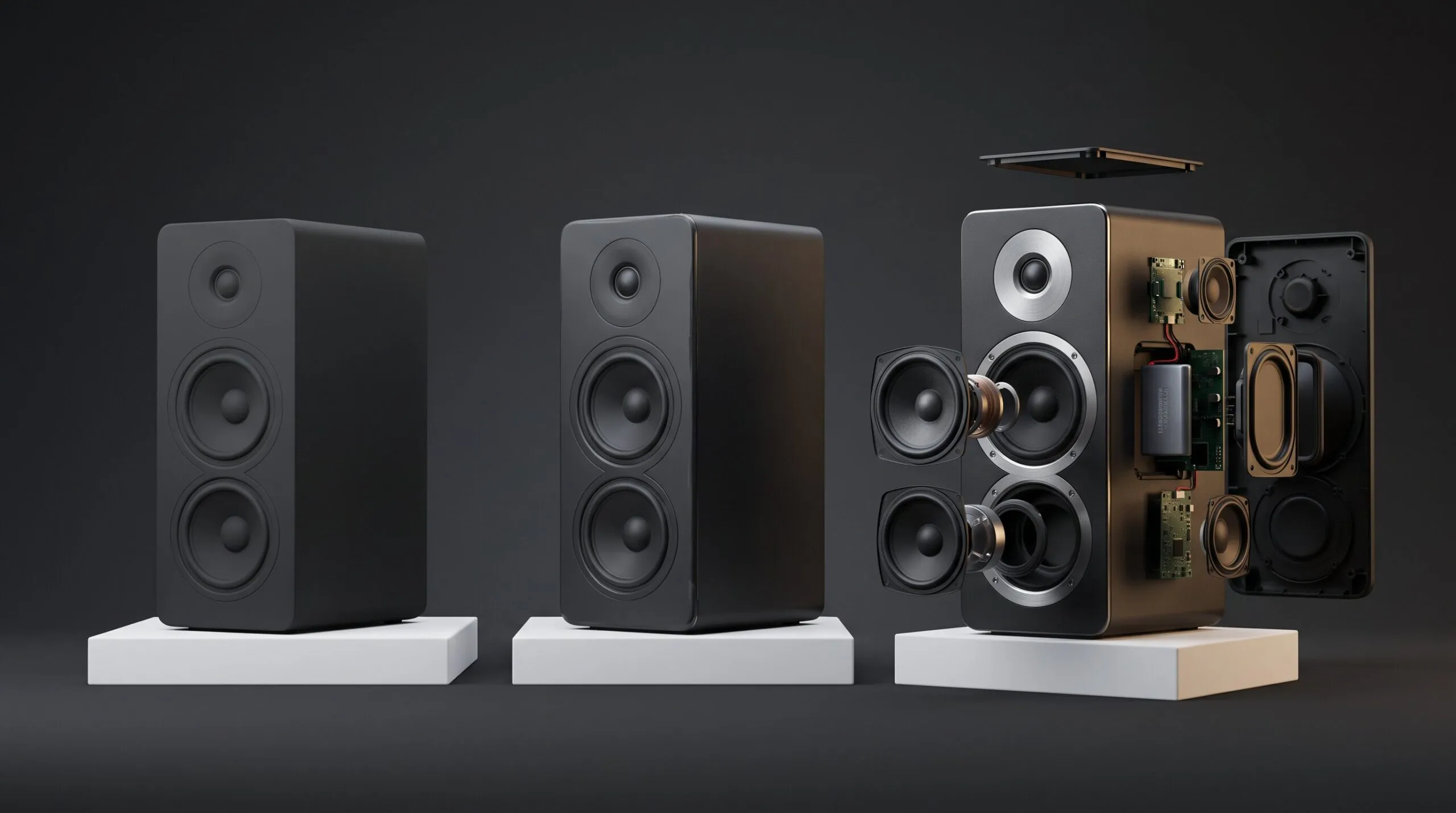
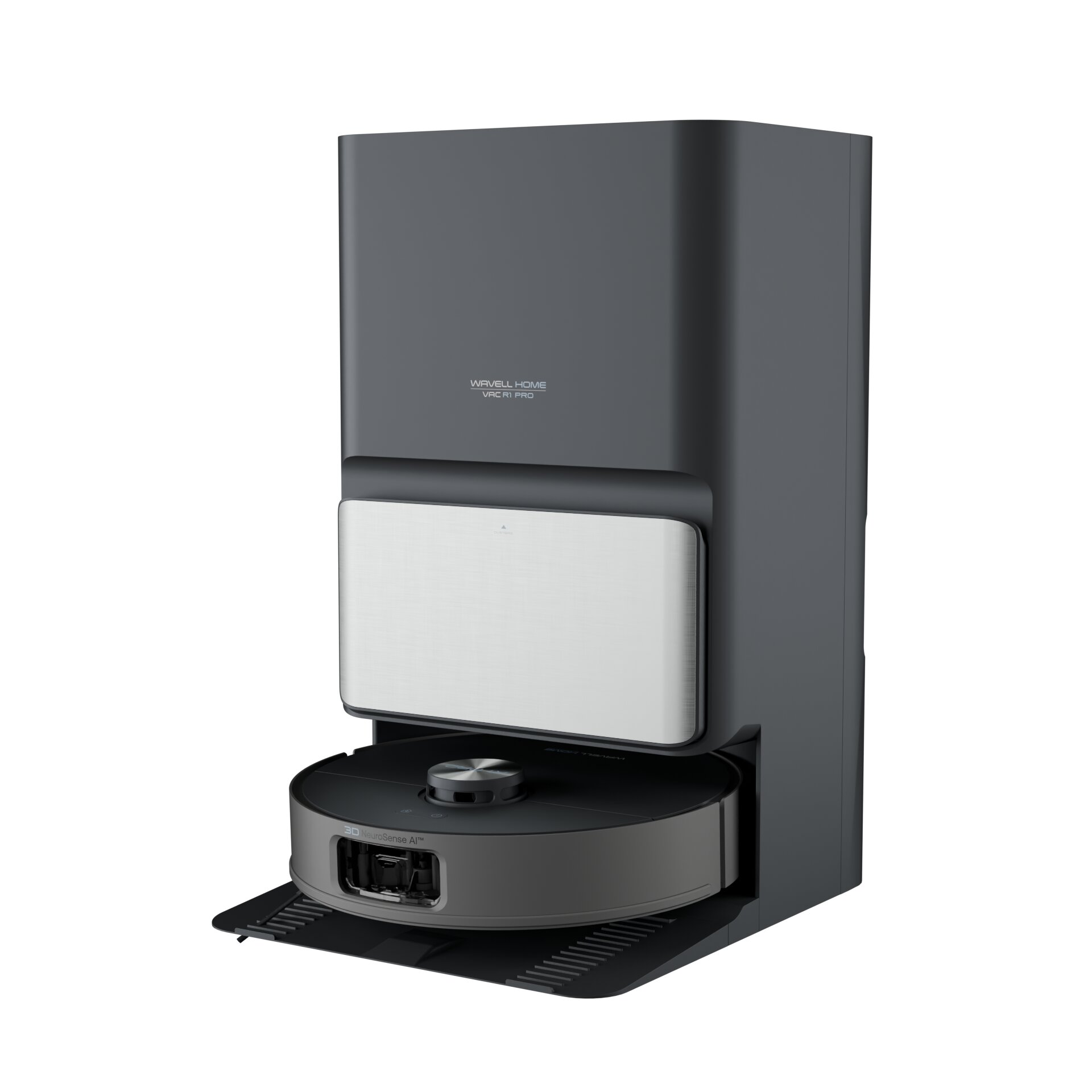
This is the portfolio filter that works. Anyone can make a sneaker, a watch or a pair of headphones look good, because the industrial design is doing most of the work. Ask instead for the ventilation unit, the network switch, the lab instrument, the beige enclosure that does something important and looks like nothing.
If the reel is all consumer hero products and your product is a manifold, you are looking at a studio that may be excellent at glamour and untested at explanation. Those are different jobs, and the second one is harder.
3. What happens when the product changes mid-project?
Hardware timelines being what they are, this will happen. Engineering revises the housing. The anodizing comes back a shade off the color target. Marketing adds a second colorway.
A studio with a real answer talks about which stages are cheap to redo and which are not, and about sequencing so geometry changes land before lighting and animation are committed. A studio without one quotes you a straight line and then treats every change as new work.
4. What will I see before anything is rendered at full quality, and when?
This is the most diagnostic question on the list. The right answer includes at least two checkpoints before final render.
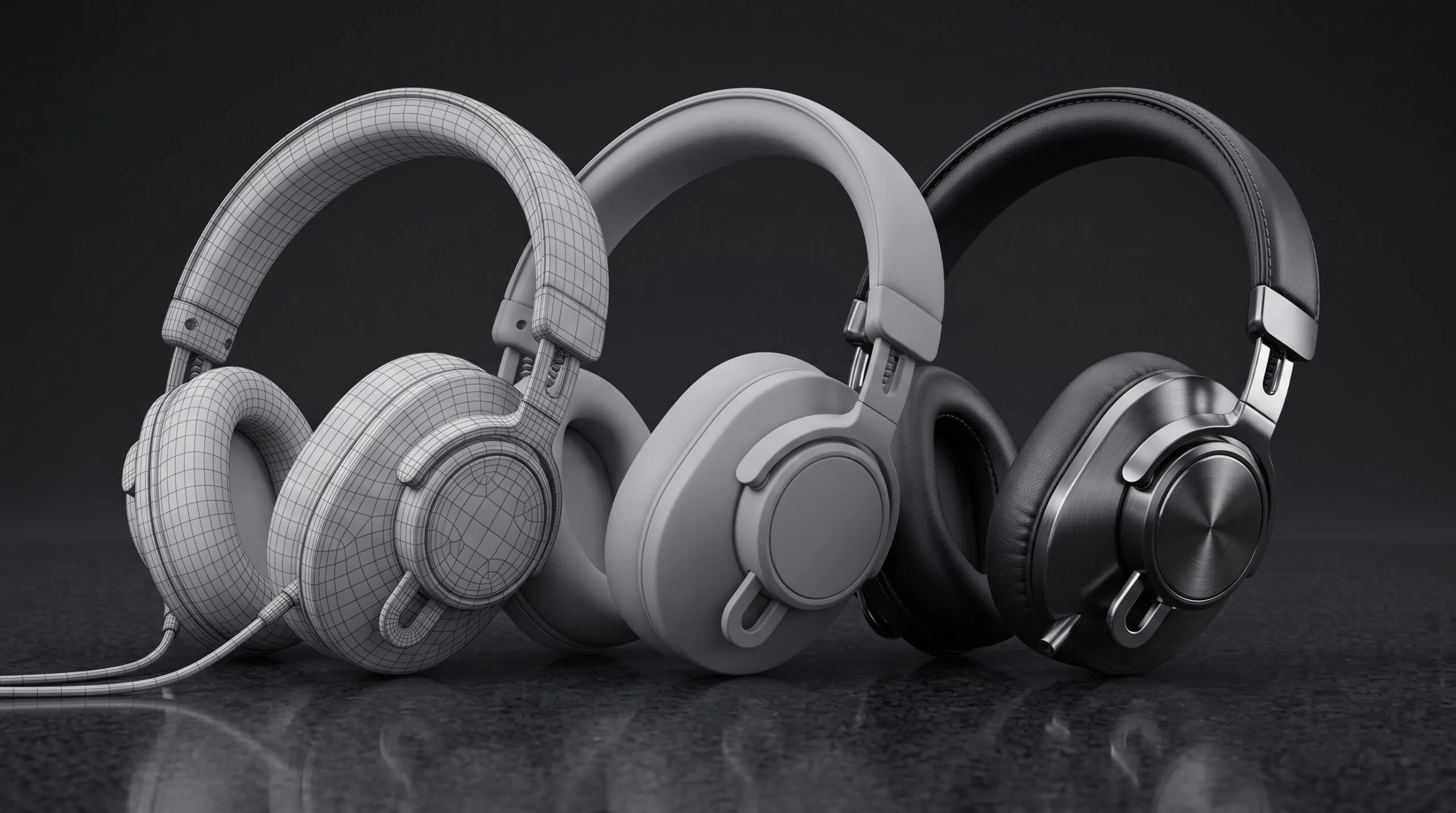
A model approval, where you look at gray unlit geometry or a first lit concept render and confirm the product is correct. And an animatic: a rough, low quality, often grayscale pass of the whole video with real timing, real camera moves and real cut points. It is supposed to look bad. Its entire job is to let you say “the reveal is too slow” and “we never see the back” while those notes still cost an afternoon instead of a week.
If the first thing you are shown is a finished video, you had no steering. You have a take-it-or-leave-it deliverable and a revision process that just got expensive for everybody. Our workflow puts three approvals in front of the full quality render for this reason, and it is the part of the process we would defend hardest.
Ask for stage lengths too. “Twenty to thirty days for the model, twenty to thirty for the animation” tells you more than “about two months,” because it tells you somebody has measured it.
5. How many revision rounds are included, and what counts as a revision?
The definition matters more than the number. Two rounds with a clear line beats five rounds with a vague one.
Ask what separates a revision from a change order. Adjusting a fabric tone against the factory reference is a revision. Adding a second product to the film is a change order. Restructuring the edit after the animatic was signed off sits in between, and you want to know which side of the line the studio puts it on before you are standing on it.
Then ask the uncomfortable follow-up: what is the hourly rate beyond the included rounds? A studio that answers immediately has thought about it. A studio that says “we’re flexible, we don’t really count” is either going to absorb the cost and resent it, or count it quietly and put it on an invoice you did not expect.
Be skeptical of “unlimited revisions.” Either it is not true, or it is priced in, or the process is loose enough that they expect to get it wrong repeatedly.
6. Who is actually doing the work?
Some of the best output in this field comes from small teams that subcontract specialist passes, and some of the worst comes from agencies that white-label the whole thing at a third of your budget. Neither model disqualifies anyone. Not knowing which one you are buying does.
Ask how many people will touch the project, whether any of it goes outside the core team, who your contact is, and whether that person is doing the work or relaying it. Time zone matters more than country. A studio six hours ahead that answers inside your working day is easier to run a project with than one in your own city that batches replies weekly.
7. What happens when something goes wrong on your side?
The answer you want is not “it won’t.” It is a description of how they tell you. Illness, a failed render node, an underestimated build. It happens on every long project.
The studios worth hiring deliver bad news early and attach options to it: a revised date, an offer to hand over the working files, a partial delivery so you are not empty-handed in a meeting. The painful ones go quiet for a week and then deliver late with an explanation.
You cannot verify this in advance, which is why it is worth asking for a reference from a client relationship that ran longer than one project. A single testimonial tells you a project finished. A twelve-month relationship tells you the friction was survivable.
8. Is this a fixed price, and what is explicitly not in it?
Get the exclusions in writing. The usual ones: sound design and music licensing, voiceover, extra aspect ratios for social, 4K delivery, additional colorways, source file handover, rush fees.
Every one of those is a legitimate line item. Every one of them is also how a $4,000 project becomes a $6,500 project without anybody behaving badly. Studios that publish ranges before you contact them are trading negotiating position for filtering out mismatches early, which is a reasonable signal.
9. When this is over, what do I own?
Almost nobody asks this, and it has the longest financial tail on the list.
There is a large difference between owning the finished video and owning the 3D assets that produced it. In many contracts you get the MP4 and the studio keeps the scene file, the model, the shaders and the lighting setup. That is the common default and it is usually reflected in the price. But it means that next year, when you need the same product in a new colorway, on white, vertical for TikTok, and as a still for packaging, you are back at the start with whoever holds the file.
It is also worth knowing that commissioning work does not automatically transfer copyright. Under U.S. law, a commissioned piece is only a work made for hire if it falls in one of nine categories and there is a signed written agreement expressly saying so, as the Copyright Office lays out in its Works Made for Hire circular. Without that language, or a separate assignment, the contractor keeps the copyright. Paying an invoice is not the same as owning an asset.
The alternative is to treat the build as an asset rather than a one-off output and price it that way. You pay more once. Decide which one you are buying, and put it in the contract instead of discovering the default eighteen months later.
Ask the reverse question too: can they show your work? If you are launching unreleased hardware you want an NDA and a stated embargo date. If you would like the studio to publicize it, say so, because it is often worth something on the quote.
10. Can we start with something small and paid?
Not a free test. A free test gets you a studio’s B team and no accountability.
A paid pilot costs a fraction of the full project and tells you what the previous nine questions could not. One hero still, a ten-second loop, a single model build. How they handle your files. Whether their notes process is sane. Whether the thing that arrives resembles the thing you discussed. Whether they hit the date.
A studio that refuses a small paid engagement on a project they want is telling you their process does not scale down, which usually means it does not flex much at all.
What is the one thing the checklist cannot ask?
Whether they ask you anything back.
Run all ten questions and you will notice the pattern that actually sorts the field. A studio that returns a quote within the hour with no questions has quoted a video. A studio that asks what the video is for, where it will run, whether it is a launch film or a product page loop or a trade show wall, who the audience is, which single feature everything hinges on, and what happens to the file afterward, is quoting your problem.
Those two quotes can be identical in price and will not produce the same result. The best single predictor of a project going well is that somebody on the other side asked a question you had not thought of yet.
Does it matter where the studio is located?
Mostly no, and the search volume on “3D product animation studio London” suggests plenty of buyers assume otherwise.
This is file-based work. CAD goes in, video comes out, and the review cycle runs on shared links and written notes. What actually affects your project is working-hours overlap, response time, and whether the written English on both sides is precise enough for feedback to survive the trip.
Location matters in four specific cases:
- Physical samples. If material accuracy depends on somebody holding the product, a specific fabric weave, an unusual anodizing, a paint flake, then proximity or a real courier budget becomes relevant.
- Procurement rules. Some public sector and enterprise contracts require in-jurisdiction suppliers. That is a legal constraint, not a quality one.
- NDA enforceability and data residency. For defense, medical or pre-release hardware, where your legal team needs a contract enforceable somewhere specific.
- In-person presence. If you want somebody in the room at a trade show or a shoot.
If none of those four apply, filtering by city removes most of the good options for no benefit. Filter by time zone instead.
What should you send when you hand the project off?
Send this and any competent studio can give you a real number instead of a padded guess.
- CAD in any format you have. Native is best. STEP or IGES is fine. Say which package and version it came from.
- A note on the assembly. Single body or assembly, whether internals are modeled, and which parts need to move or come apart on screen.
- Color and material spec. Pantone or RAL references, finish names, sample photos of the real thing under normal light if it exists.
- Reference video. Two or three links to videos you like, with one line each on what you like about them. This saves more time than any other item on the list.
- Where it will run. Product page, paid social, trade show loop, retailer portal. This changes length, aspect ratio and whether it needs to work with the sound off.
- The one feature that matters most. If the video can only land one thing, name it.
- Length and deadline. Target duration and the date it has to be live, not the date you would like it.
- Deliverables list. Formats, resolutions, aspect ratios, and whether you need a version without text.
- Brand assets. Logo files, fonts, brand guidelines if you have them.
- Who approves. One named person, ideally. Two is workable. Five is how projects slip.
If you are starting from a KeyShot scene rather than raw CAD, that is a common and workable starting point, and we covered it separately in You have a KeyShot file but no animator.
Common mistakes
- Choosing on reel quality alone. Every reel is the top 2% of the work. Judge the quoting conversation instead.
- Accepting the fastest quote. A quote back in an hour with no questions is a price for a generic video, not for yours.
- Not asking what a revision is. The number of rounds is meaningless without the definition.
- Skipping the animatic. If nobody shows you rough timing, your notes arrive when changes are most expensive.
- Assuming you own the 3D files. You usually do not, unless the contract says so.
- Comparing quotes with different exclusions. Most big price gaps between serious studios close once you list what is actually included in each number.
- Treating a low bid as a bargain. Same stated scope at half the price means something got left out. Find out what before you sign.
- Animating features that do not exist yet. If the video is for crowdfunding this is also a rules problem. Kickstarter’s rules for design and technology projects state that prototype demonstration “should not include any CGI or special effects to demonstrate functionality that does not yet exist.”
- Running approvals by committee. Five stakeholders with equal veto power will cost you more in revision rounds than any pricing decision you make.
FAQ
How long does a 3D product animation take?
Four to eight weeks end to end for a typical 20 to 40 second product film from supplied CAD. Roughly 20 to 30 days for the 3D model and 20 to 30 for the animation, with some overlap, plus your own approval time. Rush is possible and usually costs more than the saved days are worth.
What do I need to send to get an accurate quote?
CAD, a color and material spec, a target length, where the video will run, and your deadline. Without the CAD, any number you get is a guess with a safety margin built into it.
Should I hire a freelancer or a studio?
Freelancer for a single asset or a short, stable scope, especially if you have an internal art director who can run the process. Studio when there are multiple stages, multiple deliverables, or a launch date that cannot move.
How do I compare quotes that are wildly different?
Normalize them first. Put the exclusions side by side, count the included revision rounds, and check whether asset ownership differs. Most of the gap is usually scope, not rate.
Do I need a studio if I already have a KeyShot designer?
Not for turntables, stills and simple loops. Yes for anything with an edit, sound design, internal cutaways or a set of channel-specific deliverables on a deadline.
Is AI going to make this cheaper?
For some steps, already yes, mainly environment generation and parts of post. For the product itself, no, because generative tools invent geometry, and an image that invents your product becomes a problem the moment a customer receives the real one.
How we answer our own checklist
It would be dishonest to publish ten questions and skip them ourselves, so here is Quince Creative against its own list, including where we are not the right call.
Files. CAD is the normal starting point for us, and we say at quoting stage what will need rebuilding. On one furniture project the hardest element was a fur-like upholstery we had never built at that quality. We flagged it as the difficult part before quoting, not after. We can also do the 3D modeling from scratch, from just high quality images.
Boring products. Ventilation systems, water dispensers, network hardware, gaming monitors, electric grills, pickleball paddles, hearing devices. Our case study index is deliberately not all glamour products.
Process. Three approvals before anything is rendered at full quality: the 3D model, the concept render, the animatic. On our largest engagement nothing expensive was committed to until the cheap version was approved, which mattered on a project where one full quality pass ran into days.
Revisions. Two rounds per milestone included, with an hourly rate stated upfront for anything beyond. On long-running accounts we send the revision count sheet for review before the invoice goes out. When a client once asked whether some room scenes had been billed twice, we could walk the history back item by item and offer to drop anything they considered a minor adjustment. That is the whole argument for counting in the open.
Timelines. 7 to 10 days per stage, stated per stage instead of as one vague total.
Ownership. Ask us. It varies by project and it is priced differently depending on the answer, and we would rather have that conversation at quote stage than have you find the default a year later.
Pricing. Published in ranges before you contact us, broken down by complexity, length and background.
Where we are not the right fit. We are a production studio, not a creative agency. If you need a brand campaign concepted from zero with strategy, scripting and a directorial layer, there are agencies built for that and their rate card says so. We have also turned down work we did not think we could do to our own standard: a volume image program we said no to, told the client to find a specialist for, and only came back to two months later once we had tested a workflow we could stand behind. If your project is that project, we would rather say so on the call.
And there is a test that costs you nothing. Send the CAD for your hero product and a line on what you want the video to do. You get a staged quote, a stated timeline per stage, and an honest note on which part of your product will be the difficult one, inside 12 hours, before you commit to anything.
Related Articles
You Have a KeyShot File but No Animator. Here Is How to Get a Product Video Made
How Much Does 3D Product Rendering Cost in 2026? Per-Image Prices, What Drives Them and How to Pay Less
Best 3D Product Animation Companies in 2026: 10 Studios Compared (Prices, Specialties, How to Choose)
3D Product Explainer Videos: Examples, Cost and How They Are Made (2026)
What Is 3D Product Animation, and How Does It Get Made From CAD?
Exploded View Animation From CAD: What It Takes, What It Costs, and When You Do Not Need a Studio
 Rachel A