
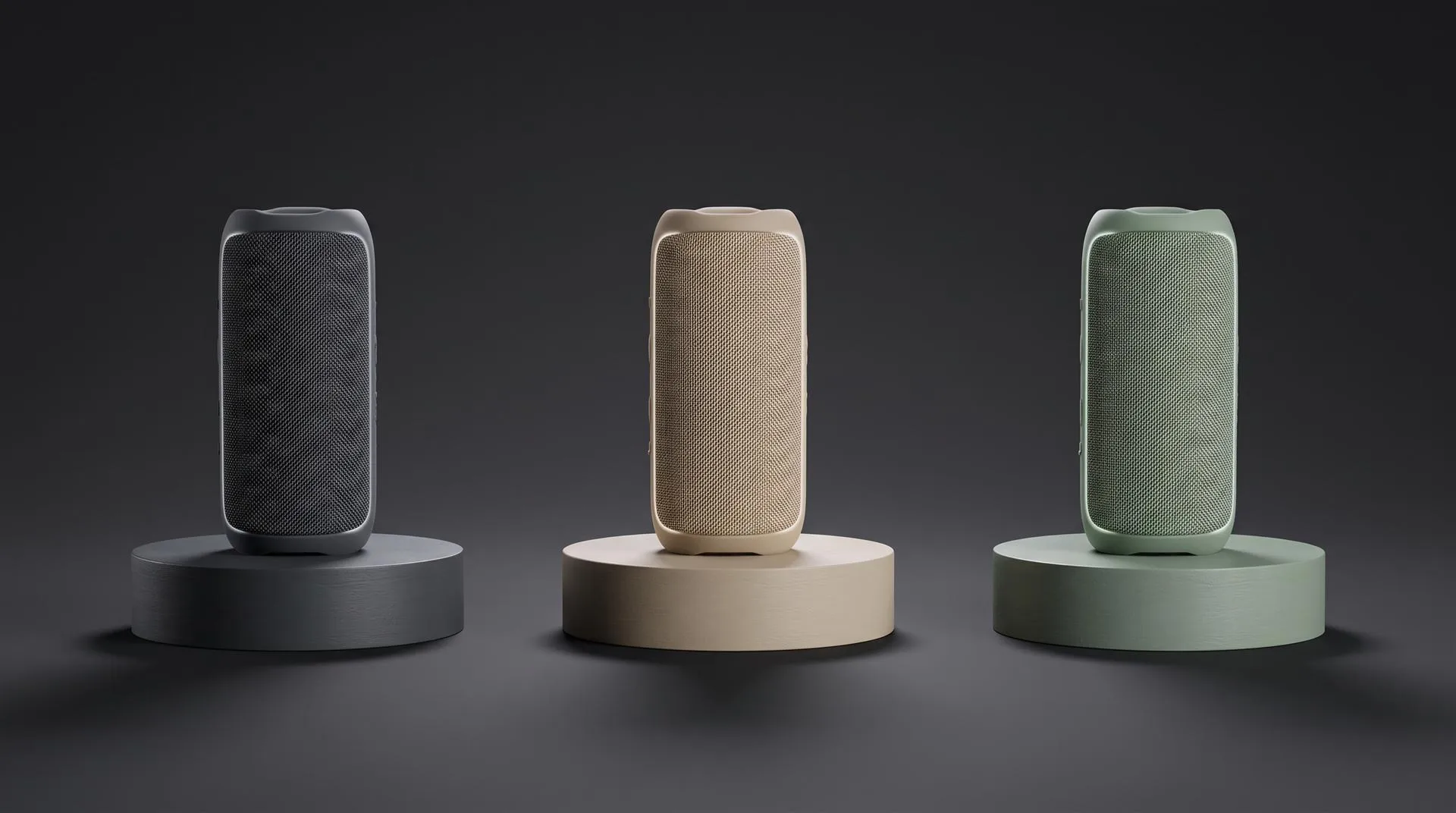
How to Hire a 3D Product Rendering Agency: What to Ask, What It Costs and the Red Flags
To hire a good 3D rendering agency for products, pick one that works from CAD, shows physical products like yours in its portfolio, and puts revisions, file formats and model ownership in writing. Expect roughly $50 to $700 per clean studio image on the open market, with the 3D model as the biggest single cost. Most of the bad hires come from skipping the questions, not from picking the wrong price.
Here is the situation we see most often. You search “3d rendering agency” and the first page is full of architecture firms. Glass towers, empty lofts at sunset, kitchen remodels. A few of them say they also do products. You have a speaker, a kettle or a monitor launching in eight weeks, a CAD file from engineering, and maybe an in-house designer who makes decent stills in KeyShot but does not have time for 40 images and four colorways.
This guide is for that buyer. It covers how product rendering differs from architectural work, what a product agency should deliver, the questions to ask before you sign, what it costs and the warning signs.
Product rendering agency vs architectural studio vs freelancer: which one do you need?
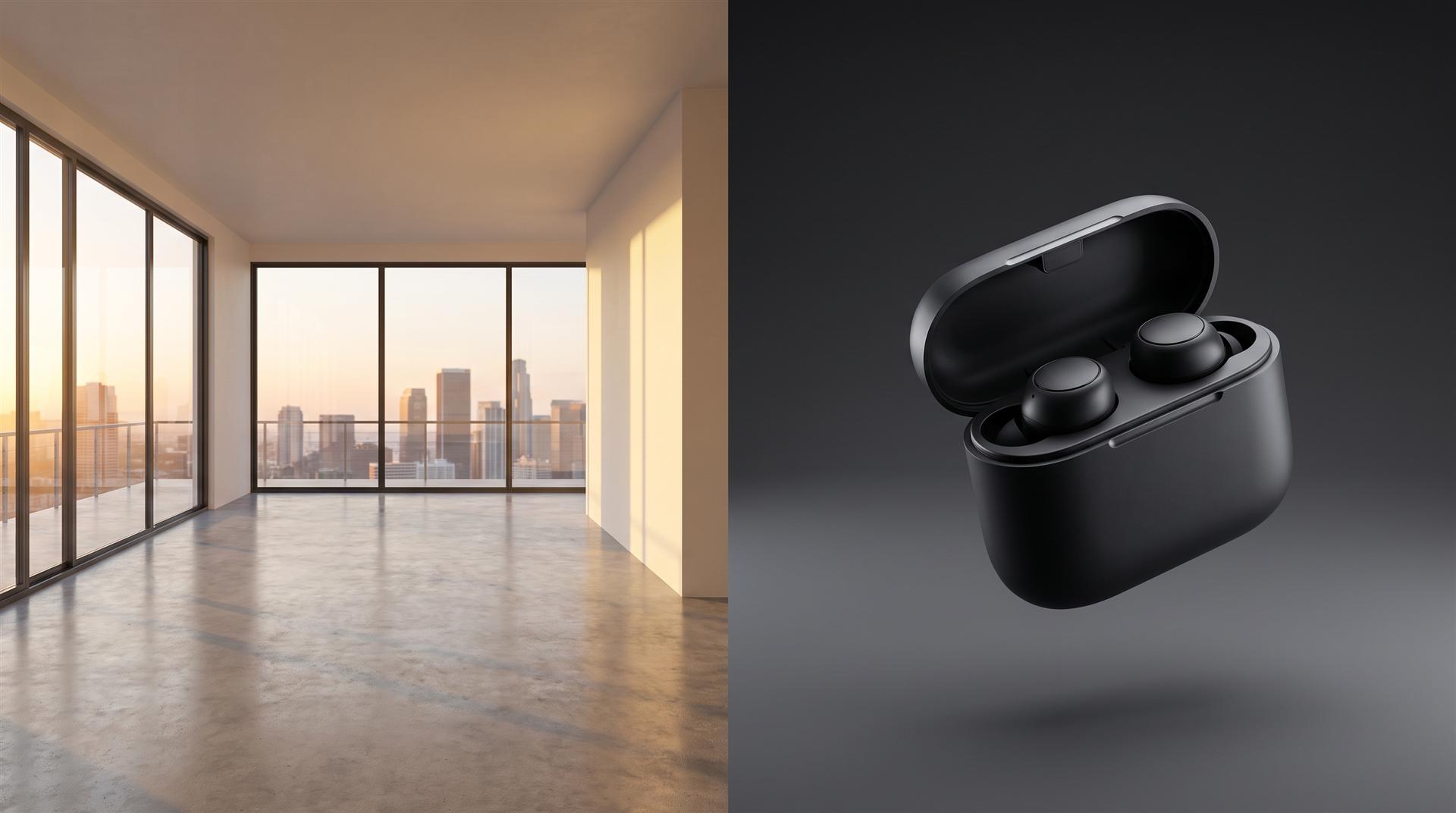
For a physical product, you need a team that renders products every week, whether that is an agency or a freelancer. An architectural visualization studio is a different trade, even though both use the word “rendering.”
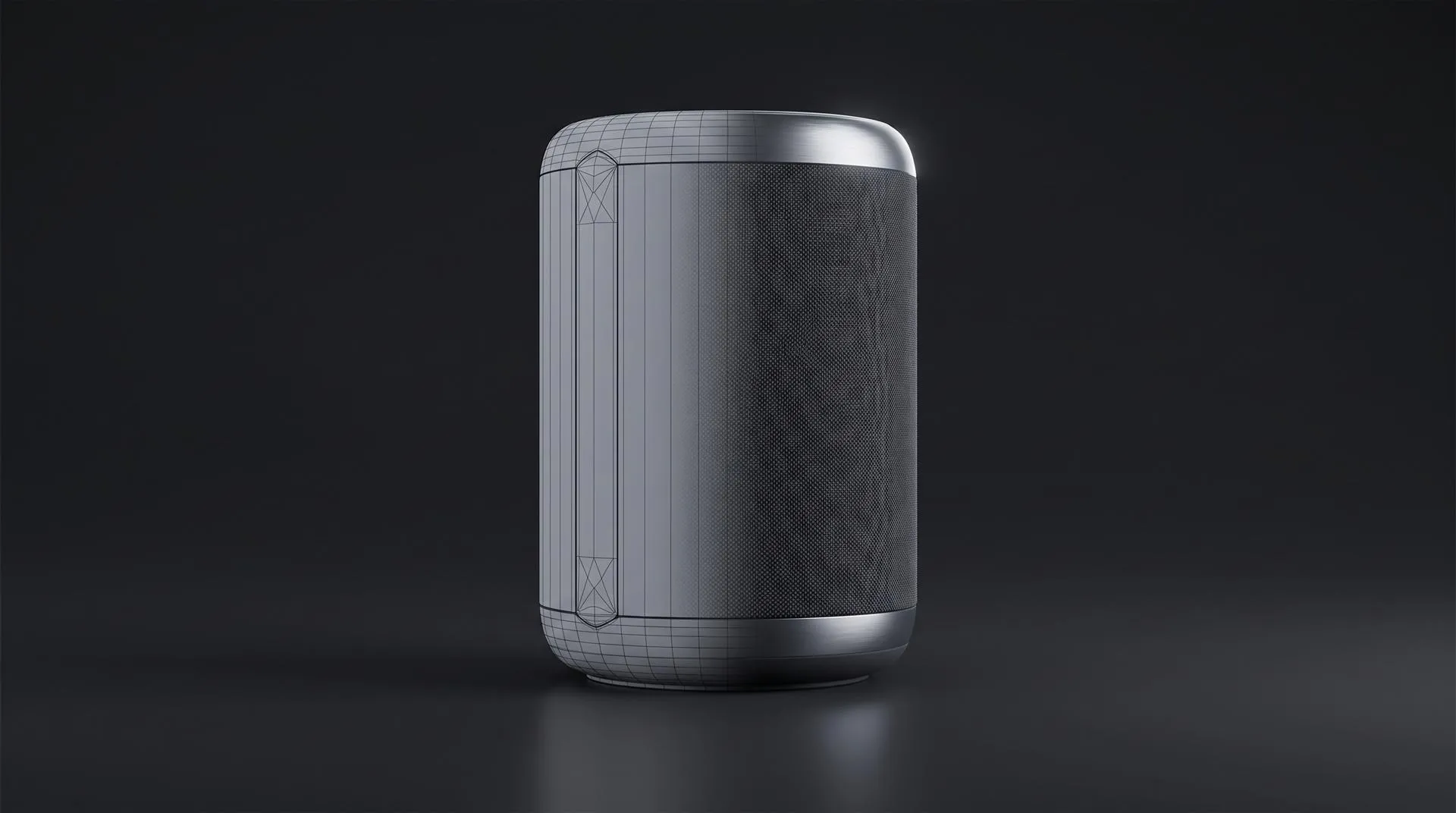
Architectural work is about space, daylight and scale. Product work is about small surfaces seen up close: a 2 mm chamfer catching a highlight, the weave on a speaker grille, the difference between anodized and painted aluminum. A studio that lights living rooms all day often makes products look like furniture props, a little soft and a little generic.
| Option | Typical work | Product cost | Good for | Watch out for |
|---|---|---|---|---|
| Architectural visualization studio | Buildings, interiors, real estate | Varies, products are a side service | Furniture in a room, a product inside an interior scene | Weak on materials up close, no CAD cleanup habits |
| Product rendering agency | Electronics, appliances, consumer goods | Mid to high, usually fixed price per set | Full catalogs, colorways, launch sets, video later | Minimum project size |
| Freelancer | Mixed, depends on the person | Lowest per image | One or two images, simple products | Availability, one person is a single point of failure |
| Your in-house KeyShot designer | Whatever they already do | Salary plus license | Ongoing stills when the designer has time | Lifestyle scenes and animation are a different skill |
Be honest about the last row. If your designer already makes good stills and you need ten more angles of the same product on white, you probably do not need an agency at all. Agencies earn their fee on volume, lifestyle scenes, a tight deadline or when the same 3D model will also be used for a launch video.
What should a product rendering agency actually deliver?
A product rendering agency should deliver finished images in the formats your channels need, plus a reusable 3D model of the product. The model is the expensive part, and it is what makes every later image cheaper.
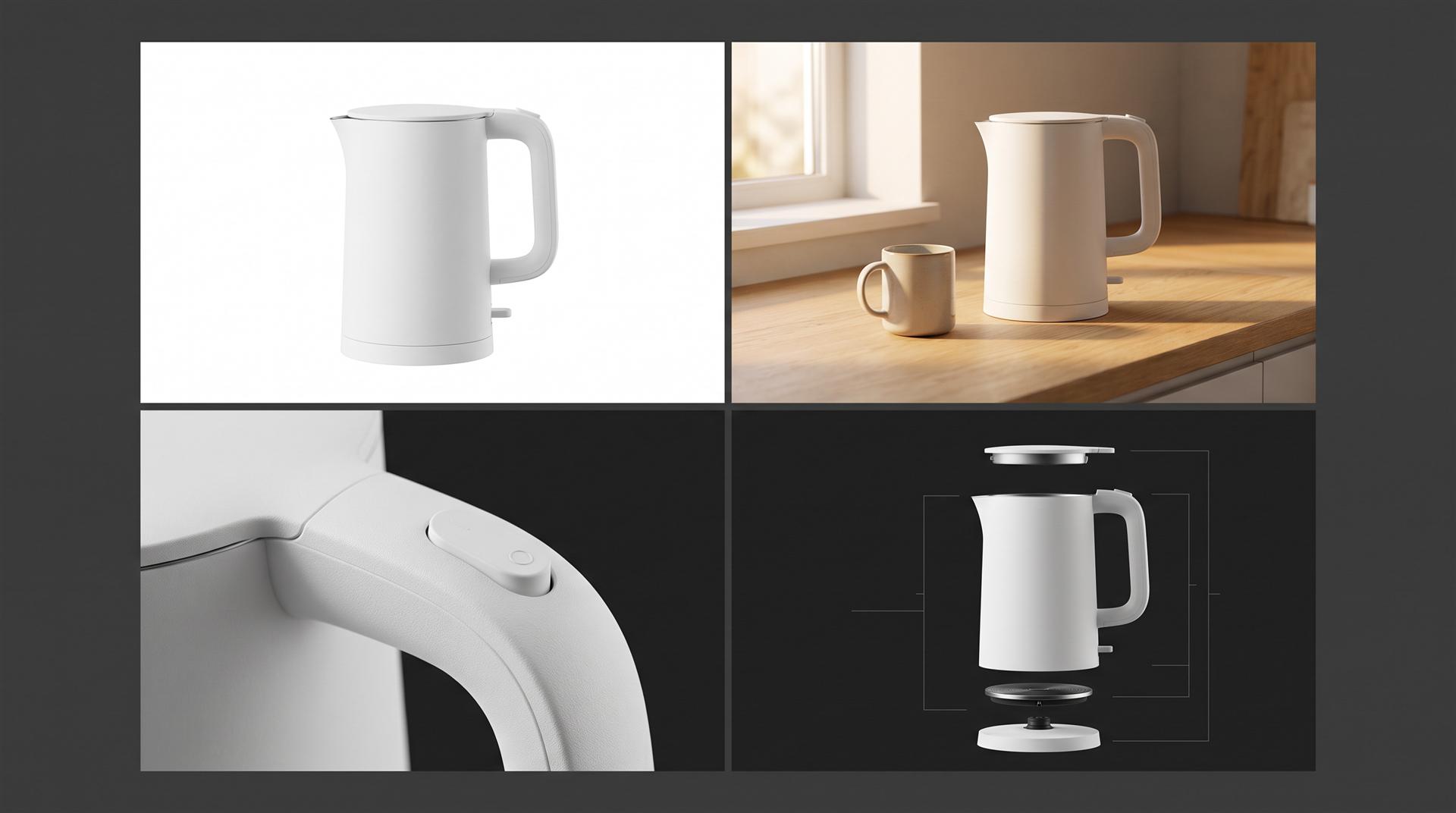
The usual set looks like this:
- Silo shots on white or transparent. Main marketplace images, catalog and spec sheets.
- Lifestyle scenes. The product in a kitchen, on a desk or in a living room, built in 3D instead of shot on location.
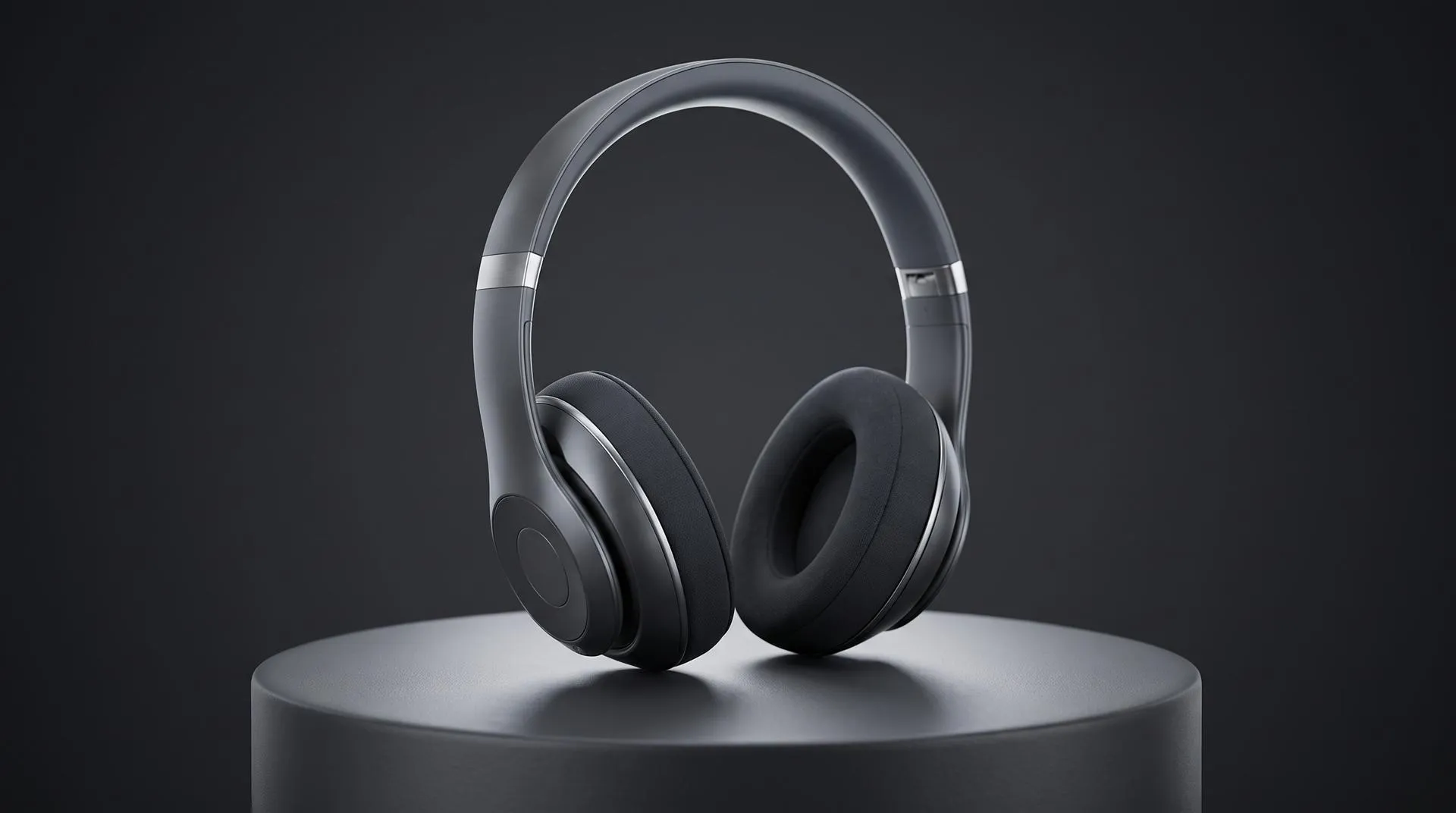
- Hero shots. One image with custom lighting for the homepage and ads.
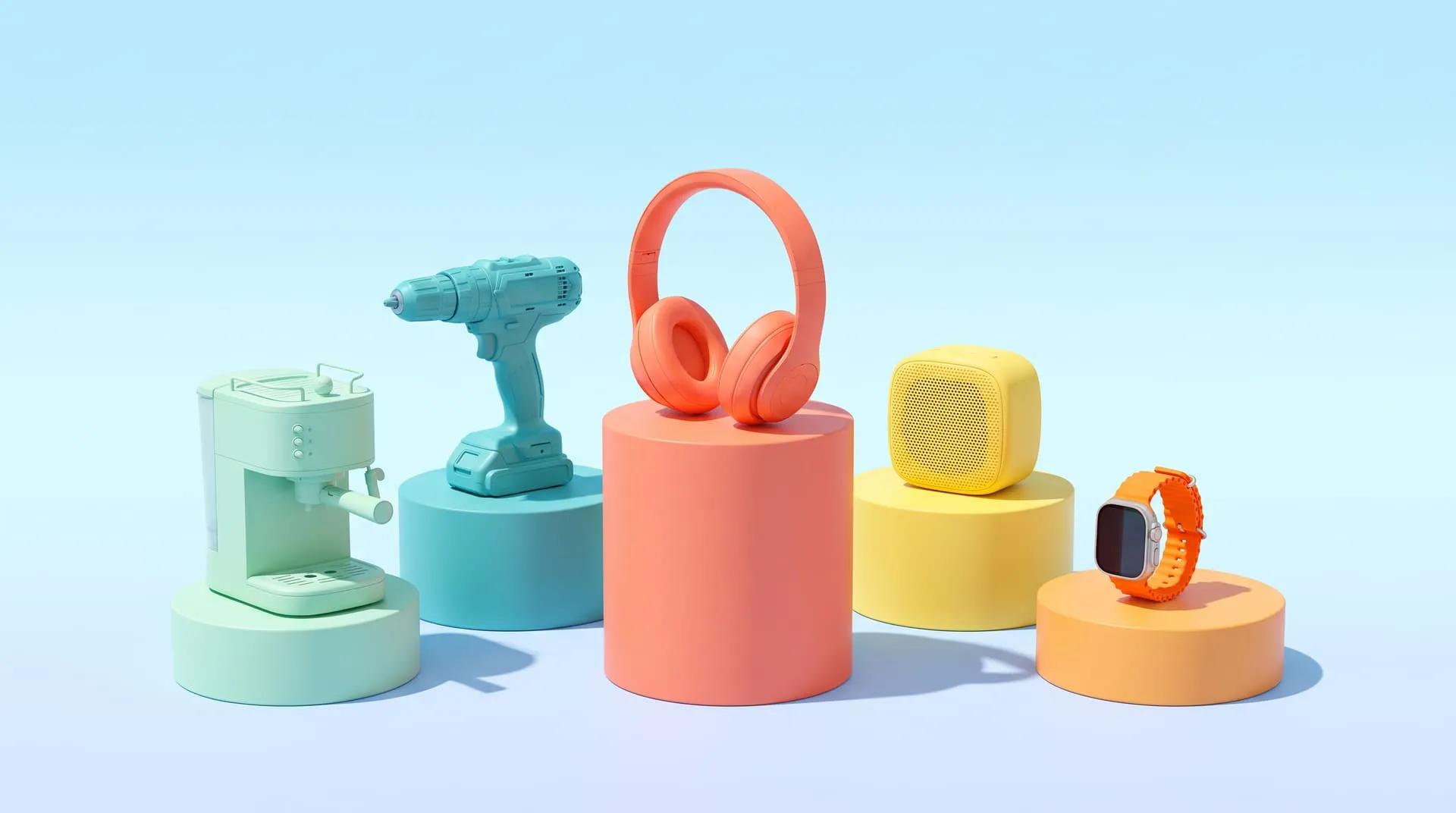
- Colorways. Every finish from the same angles, usually priced per extra finish.
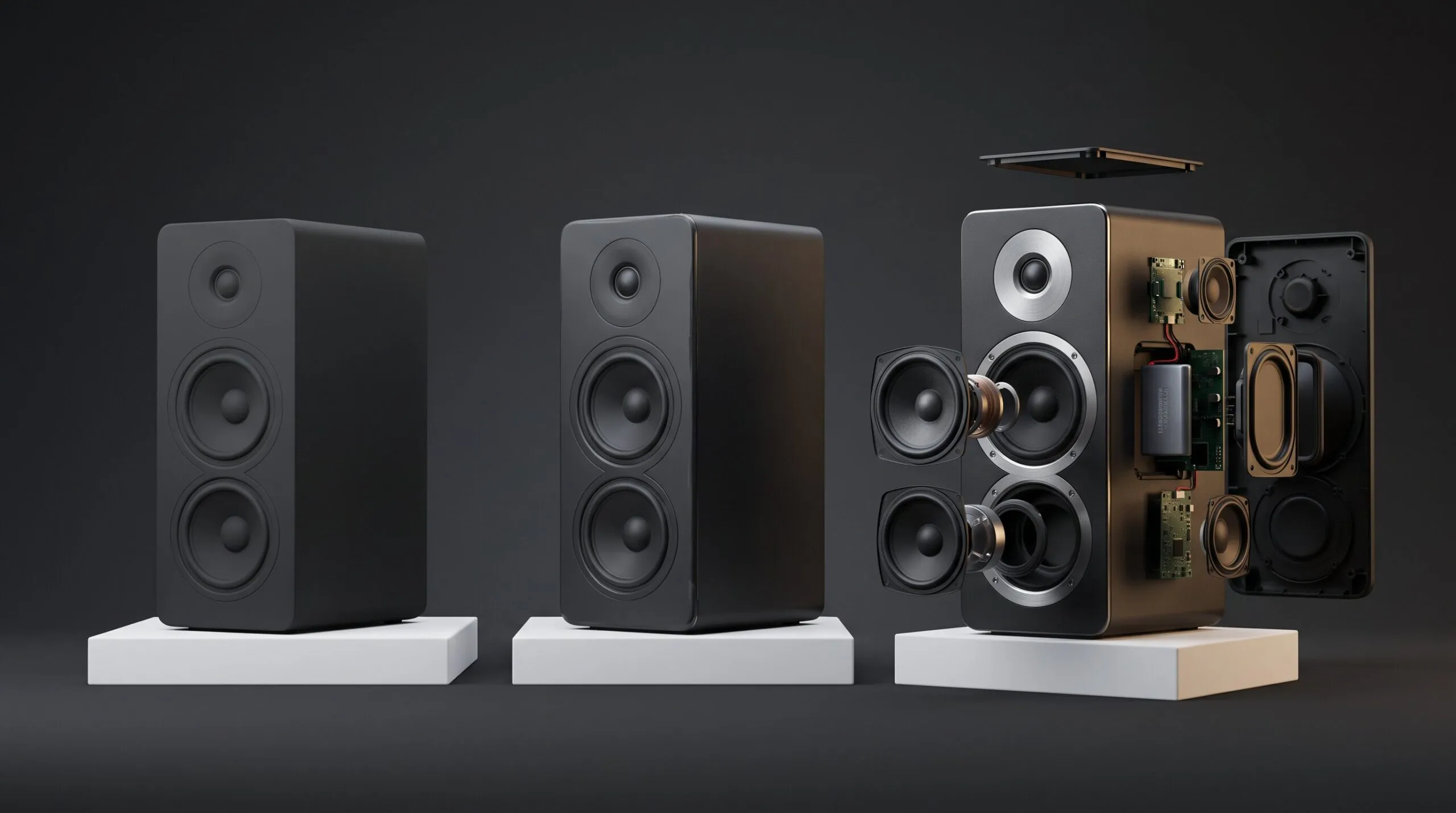
- Detail and exploded views. Close-ups of materials, and the parts pulled apart to explain what is inside.
- 360 spins and short animations. Optional, but much cheaper when the model already exists.
Our 3D product images page shows what each of these looks like in practice.
What are the 8 questions to ask before you hire a 3D rendering agency?
Ask these eight before you sign anything, and get the answers in the quote, not only on a call. A good agency answers all of them in a few lines. If the answers are vague, the project will be too.
- Can you work from our CAD, and what will you rebuild? Most product agencies take STEP files. A STEP file is the neutral exchange format almost every CAD tool can export. CAD is built for manufacturing, so the agency usually has to clean it up, round sharp edges and add materials. Ask them to look at the file and tell you what needs work before they quote.
- Show me two projects in my product category. Not the reel. Two real projects with products like yours: reflective plastics, fabric, glass, whatever your product is made of.
- How many revision rounds are included, and what counts as one? Two or three rounds is common. Get it in writing that a revision means changes to the same shots, and that a new angle or a design change is a new item.
- Who owns the 3D model and scene files when we are done? Paying for images does not mean you own the 3D model or the scene. Many agencies keep the source files unless the contract says otherwise. The US Copyright Office explains in its circular on works made for hire that commissioned work only counts as “made for hire” in specific cases. A written transfer is the simple way to remove the doubt. Talk to your lawyer about the wording.
- Which file formats and sizes will we get? Ask for layered or high resolution masters, web sizes, and a version with a transparent background. If you want the model for a website viewer later, ask about glTF, the standard format for 3D on the web.
- Is each aspect ratio a separate item? A 1:1 or 9:16 version is not an automatic export of a 16:9 image. Someone has to reframe the camera. It should be on the quote.
- What is the timeline, and what happens if you miss it? Ask when you see the first draft, not only the final date. A first look at lighting and angles within the first few days is a good sign.
- Do you sign an NDA before we send CAD? For an unreleased product this should be routine, and a good agency will offer it first.
If you are also hiring for animation, our checklist for choosing a 3D product animation studio adds the questions that matter for video.
How much does a 3D rendering agency cost?
On the open market, a product render runs about $50 to $700 per image on white and $500 to $3,000 for a lifestyle scene, with the 3D model usually the largest line. Those ranges come from 2026 price guides we collected in our article on 3D product rendering cost, where you can see the full breakdown by shot type.
Per-image prices mislead, though. Agencies charge once for the model, then much less for each image taken of it. Here is how our own still image pricing adds up:
| Item | Quince price |
|---|---|
| 3D model from your usable CAD or KeyShot scene | $200 |
| 3D model built from scratch | $400 to $2,000, depending on complexity |
| 1 to 10 images | $250 |
| 11 to 20 images | $400 |
| 21 to 50 images | $500 |
| Plain or transparent background | $100 |
| Complex 3D background (interiors, abstract sets) | $500 |
| Extra 1:1 or 9:16 version | $100 each |
So ten images from your CAD on a white background come to $550, about $55 per image. With CAD from your team, a set of around ten stills usually takes up to a week, depending on whether the background is plain or a full 3D scene. Our pricing page has the calculator if you want to build your own quote.
Two things push agency prices up more than anything else: building the model without CAD, and lifestyle scenes, where the room or setting has to be built too.
What are the red flags when hiring a rendering agency?
The biggest red flag is a portfolio you cannot connect to real products. Most of the rest are about what the agency will not put in writing.
- Portfolio with no named products. Pretty images of generic perfume bottles and sneakers that do not exist could be stock, student work or someone else’s.
- Only architecture in the portfolio. If every project is a building, the “we also do products” line is a guess.
- No revisions in the price, or “unlimited revisions.” The first means every comment costs extra. The second usually means the scope was never defined.
- AI images sold as renders. AI generators guess at logos, labels and button shapes. A real 3D model uses your actual artwork and geometry. Ask how a sample image was made. Some shopping platforms also have rules here: Google Merchant Center requires AI-generated product images to carry metadata saying so, and the C2PA standard is how that kind of origin data is attached.
- No questions about your CAD. An agency that quotes before seeing the file is guessing at the biggest cost.
- Model ownership left out of the contract. You will find out when you want a launch video next year and the files are not yours.
- A price far below the market with no explanation. Cheap is fine. Cheap without saying what is excluded is not.
How do you brief a 3D rendering agency?
Send the CAD, the list of shots, and where each image will be used. That is enough for an accurate quote in most cases.
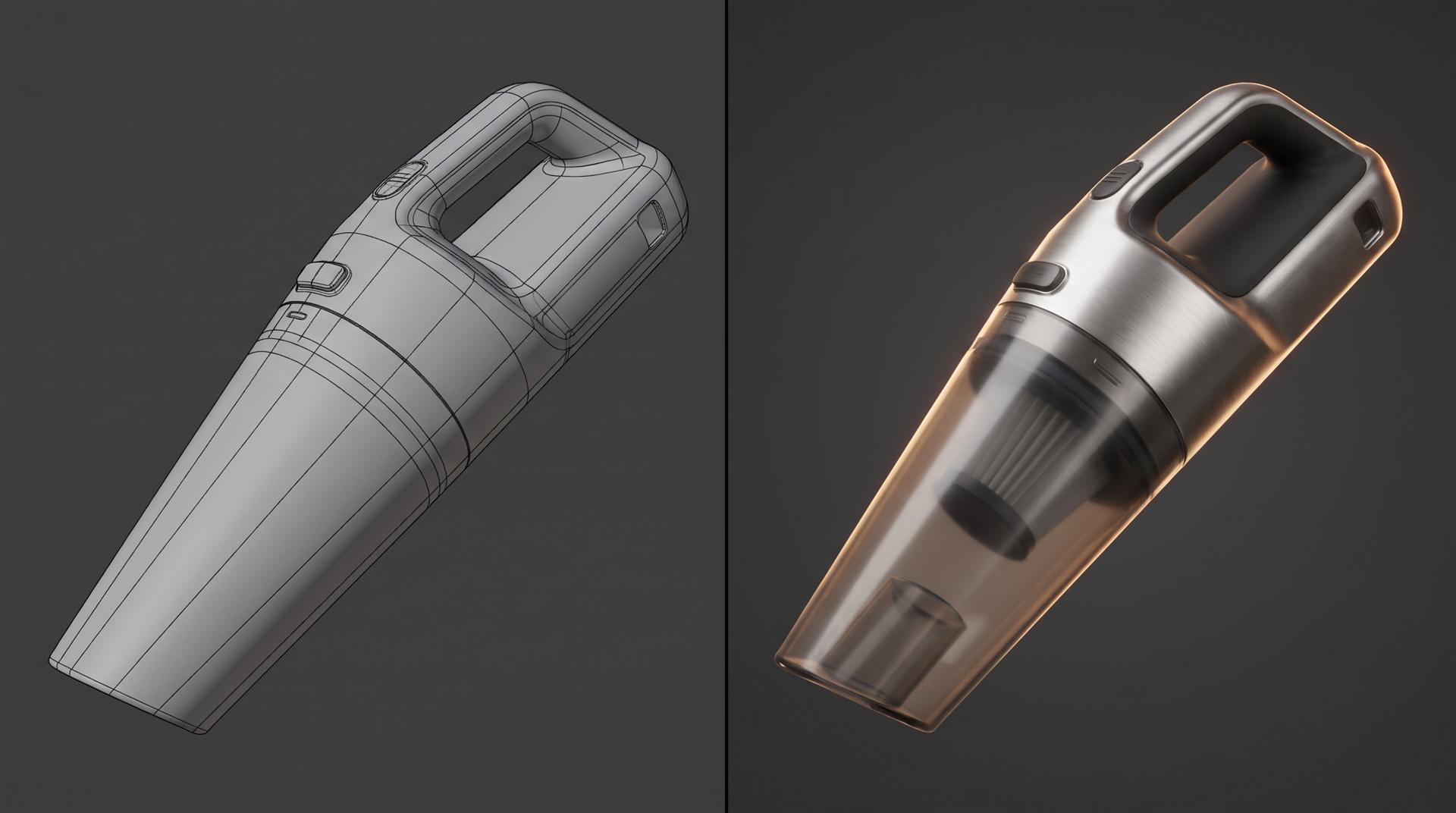
What to send when you hand it off:
- STEP or native CAD file, plus a note on which parts are internal and can be removed
- Material and color references: CMF sheet, Pantone or RAL codes, physical samples if you have them
- Logo and label artwork as vector files
- Shot list: angles, colorways, lifestyle settings
- Where each image goes (Amazon, Shopify, ads, print) and the sizes and ratios for each
- Two or three reference images you like, from any brand
- Deadline, and the date the product design is frozen
- Who on your side approves the images
If you only have photos and dimensions, say so up front. The agency will build the model by hand, which changes both price and time. A physical sample or exact measurements of every visible part make that step faster.
Common mistakes
- Hiring off the reel. Every reel looks good. Ask for projects in your category.
- Sending CAD before the design is final. Every change after the model is built costs time and money.
- Ordering one aspect ratio and asking for the others later. Reframing each shot is extra work. Plan formats on day one.
- Forgetting the model contract. The model is the asset that pays off later, in colorways, a website viewer or a launch video.
- Comparing quotes per image. Compare the full set: model, images, backgrounds, formats and revisions.
- Hiring an architectural studio for small electronics because they ranked first on Google.
If you want to see how product studios compare, we listed ten of them, including us, in our roundup of 3D product animation companies. Most of them also do stills.
FAQ
How much does a 3D rendering agency charge?
For products, roughly $50 to $700 per image on white and $500 to $3,000 per lifestyle scene on the open market. The 3D model is usually the biggest cost. At Quince, ten images from your CAD on white come to $550.
What is the difference between a 3D rendering agency and a freelancer?
An agency has several people, so it can handle larger sets, tighter deadlines and absences. A freelancer is often cheaper per image and fine for one or two simple shots. Check product experience in both cases.
How long does product rendering take?
With a usable CAD file, a set of about ten stills typically takes up to a week at our studio. Building the model from scratch, or a full 3D lifestyle scene, adds time.
Do I need a CAD file to hire a rendering agency?
No, but it helps a lot. Without CAD, the agency builds the model from photos, dimensions or a physical sample, and that is usually the largest part of the bill.
Can an agency make renders for Amazon?
Yes. Silo renders on pure white are a common use. Tell the agency it is for Amazon so they follow the current main image rules on background, framing and extra graphics.
Send us the file
If you are comparing agencies, send us your CAD and your shot list. We will tell you what it costs, how long it takes and whether your in-house designer could do it instead. Get a quote for your product renders.
Related Articles
How Much Does 3D Product Rendering Cost in 2026? Per-Image Prices, What Drives Them and How to Pay Less
How to Choose a 3D Product Animation Studio: A Buyer’s Checklist
Best 3D Product Animation Companies in 2026: 10 Studios Compared (Prices, Specialties, How to Choose)
Product Hero Shots: What They Are, Why Brands Now Render Them in CGI, and What They Cost
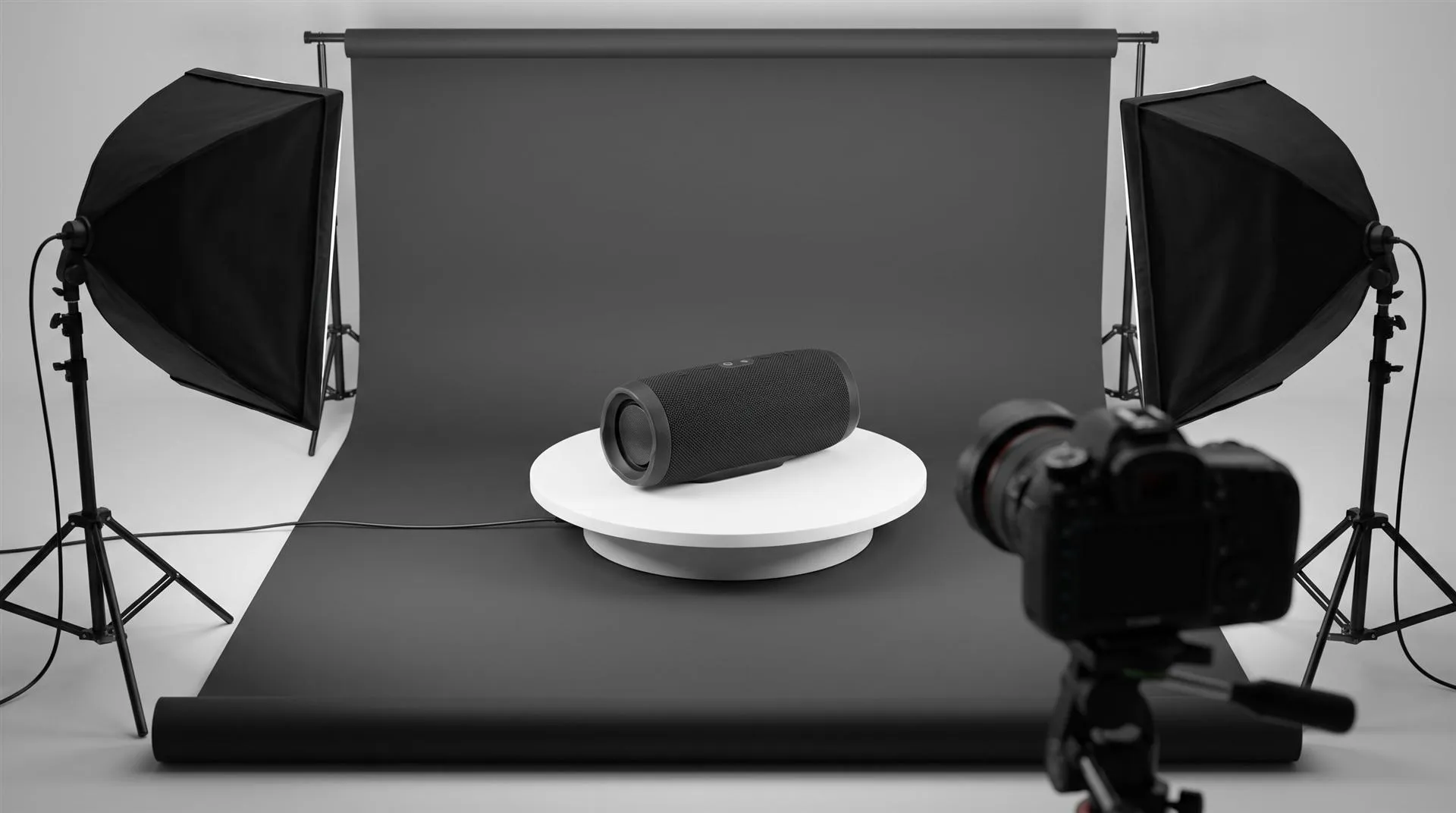
360 Product Spins: Photographed on a Turntable vs Rendered From CAD (Cost, Frames, Where to Use Them)
CAD Rendering for Products: How to Turn a CAD Model Into Photorealistic Images (Software vs Studio)

 Rachel A