Published 2026 price guides put 3D animation at roughly $2,000 to $15,000 per minute for most commercial work, which is about $35 to $250 per second, and well above that for cinematic films. For a product video built from your CAD file, length matters less than you think. The 3D model, the background and the extra formats move the price more.
That is the short answer. Here is the situation behind most of these searches: you have a product, maybe a CAD file, maybe an in-house KeyShot designer who makes good stills, and a launch date. Someone asked for “a budget for the video” and every studio site says “it depends.”
It does depend, but on a short list of things you can see in advance. This guide walks through them, with our own prices as a worked example.
What does 3D animation cost per minute and per second?
Most product and commercial 3D animation lands between $2,000 and $15,000 per finished minute. The ranges below come from 2026 pricing guides published by animation studios in the US and Europe. They are market ranges, not our prices.
| Tier | Typical price per minute | Roughly per second | Who it usually is |
|---|---|---|---|
| Freelancer, simple work | $500 to $3,000 | $8 to $50 | One person, simple turntables, limited revisions |
| Entry studio | $2,000 to $5,000 | $35 to $85 | Clean product animation on simple backgrounds |
| Mid-tier studio | $5,000 to $15,000 | $85 to $250 | Custom environments, art direction, sound |
| High-end, cinematic | $15,000 to $50,000+ | $250 to $800+ | Heavy simulation, large teams, agency layers |
Treat these as a sanity check, not a quote. The guides measure different things. Some include scriptwriting and voiceover, some do not. Some assume a character animation, which costs far more than a product turning on a pedestal.
Why is per-minute pricing misleading for product videos?
Because most of the cost of a product video is paid before the first second is animated. The model has to be built or cleaned up from CAD, materials have to match the real product, and lights and cameras have to be set. A 15 second hero spot needs all of that. A 90 second explainer needs the same setup, plus more animation time.
So short videos look expensive per second and long videos look cheap. Here is what that looks like with our own pricing calculator, for a video built from your CAD on a plain background:
| Video length | Our price (your CAD, plain background) | Per second | Per minute equivalent |
|---|---|---|---|
| 15 seconds | $1,200 | $80 | $4,800 |
| 30 seconds | $1,200 | $40 | $2,400 |
| 60 seconds | $1,700 | $28 | $1,700 |
| 90 seconds | $2,700 | $30 | $1,800 |
| 120 seconds | $2,700 | $23 | $1,350 |
| 240 seconds | $4,200 | $18 | $1,050 |
The 15 second spot and the 30 second spot cost the same. Length is priced in bands (10 to 30 seconds, 31 to 60, 61 to 120, 121 to 240), because the setup work does not shrink with runtime. If someone quotes you “per second,” ask what happens to the price if you cut the video in half. Often the answer is “not much.”
What drives the cost of a 3D product animation?
Five things decide almost every quote: the model, the background, the motion, the formats and the revisions. Length is real, but it usually comes sixth.
The 3D model. If your engineers have a STEP or SolidWorks file, the studio cleans it up and adds materials. With us that line is $200. Without CAD, the product has to be modeled from photos and drawings: $400 for a simple object, $800 for medium complexity and $2,000 for a very technical one. That single line can be bigger than the animation itself.
Materials. Matte plastic is quick. Brushed aluminum, glass, clear acrylic, chrome, fabric grilles and translucent rubber take longer, because every mistake shows when the camera moves around them.
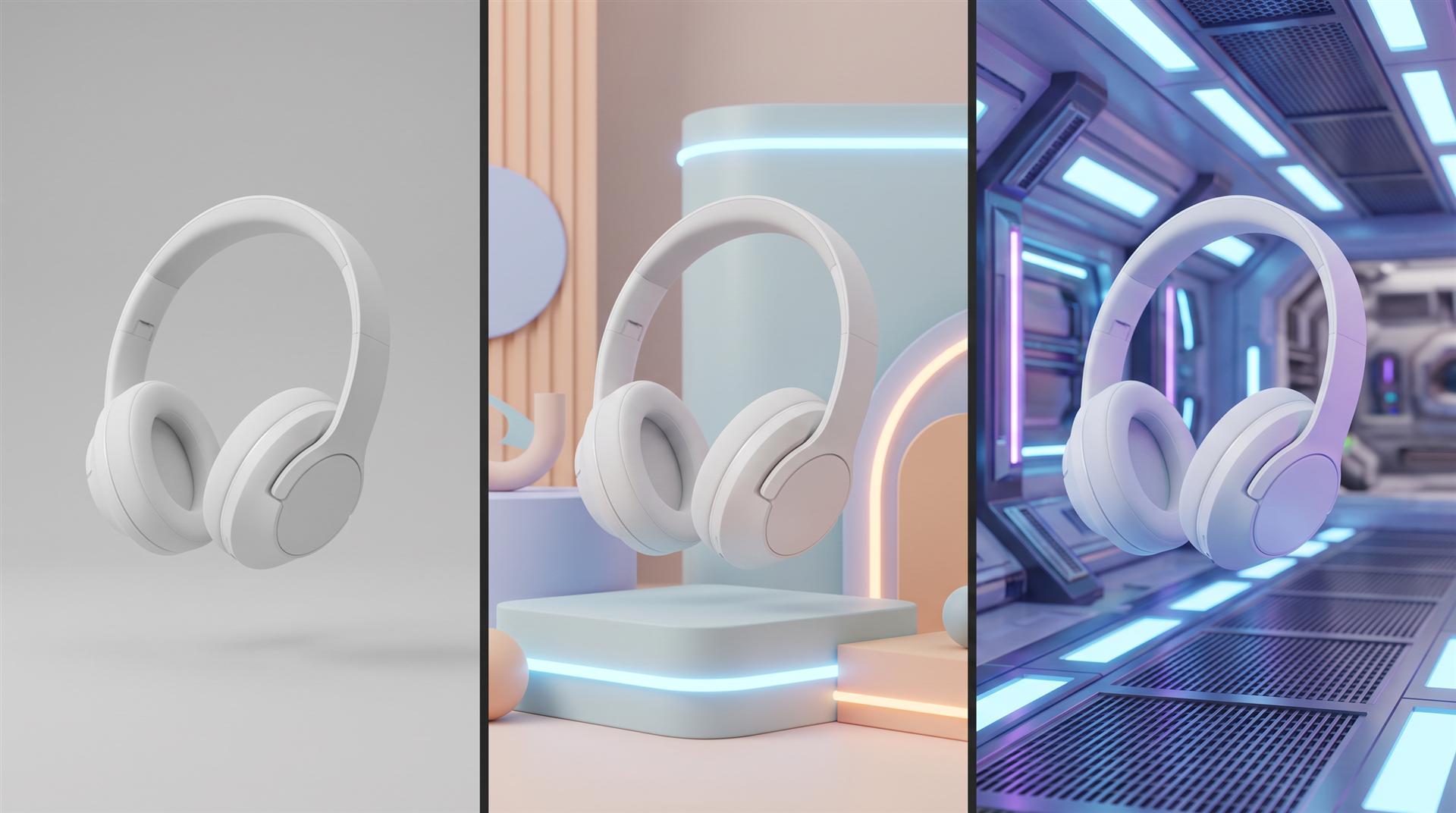
The background. This is the line most buyers underestimate. With us, a plain single-color background is $500, a simple 3D set (stylized studio, pedestals, abstract shapes) is $2,000, and a detailed VFX environment (3D interiors, futuristic scenes, simulations) is $5,000.
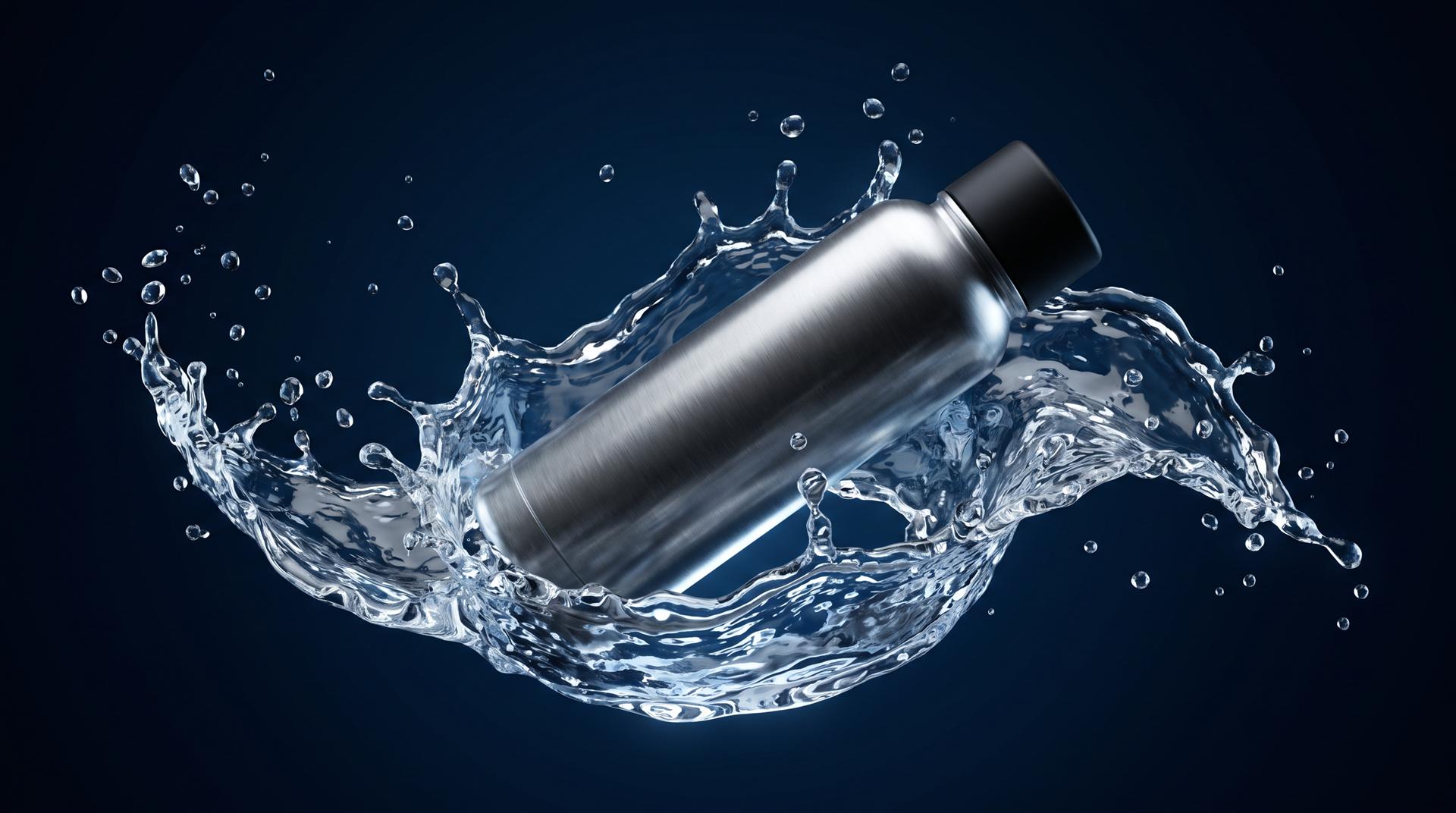
Liquids, particles and simulation. Water splashes, powder bursts, airflow and cloth are simulated, not keyframed by hand. They take longer to set up and much longer to render. If your concept has a splash in it, expect the background line to sit at the top tier.
Extra formats. A 9:16 version for Reels or YouTube Shorts is not a crop of the 16:9 file. The camera has to be reframed in the scene, shot by shot, and the video rendered again. With us each extra format (square or vertical) is $250, and 4K is another $250.
Voiceover, music and white label. A voiceover is $100 with us. Licensed music is usually separate. White label, meaning we never show the work in our portfolio, is $1,000.
Revisions. Changes are cheap while the video is a gray draft and expensive after final render. Most of the “surprise” cost in animation projects comes from design changes after the cameras are locked.
How much does a product video cost by type?
The type of video mostly decides the length band and the background tier, and those two decide the budget. Here are three common product videos priced line by line with our calculator.
| Video type | Typical setup | Line items (our pricing) | Total |
|---|---|---|---|
| Launch or teaser hero spot, 20 seconds | Your CAD, simple 3D set, plus 9:16 and 1:1 versions | $200 + $500 + $2,000 + $250 + $250 | $3,200 |
| Explainer, 90 seconds | Your CAD, plain background, voiceover, 4K | $200 + $2,000 + $500 + $100 + $250 | $3,050 |
| Social ad with a splash, 30 seconds | No CAD, medium model, VFX background, 9:16 | $800 + $500 + $5,000 + $250 | $6,550 |
Notice that the 20 second launch spot costs more than the 90 second explainer. The set and the extra formats outweigh the extra minute. Our guides to the product launch video and the 3D product explainer video go deeper into what each one should contain.
The lowest number we quote for a video is $1,200: 10 to 30 seconds, your CAD, plain background. The calculator tops out a little above $12,000 for a very technical model, a four-minute film, a VFX environment and every add-on. With a usable CAD file, a roughly 30 second animation typically takes about 10 to 15 days.
If you are planning a crowdfunding launch, budget for where the video will run. Kickstarter’s rules for hardware and product design projects do not allow photorealistic renderings on the campaign page. A photoreal 3D video can still work in pre-launch ads and after funding, but the campaign page needs footage that meets those rules.
Does 2D or 3D animation cost more?
For a simple explainer, 2D is usually cheaper to start. For a physical product, 3D often costs less over a year. A 2D video is drawn for that one video. A 3D model, once built, keeps producing new shots, stills, formats and colorways at a fraction of the first cost.
The real question is whether the viewer needs to see the actual product. If they do, a 2D drawing of it rarely does the job. Our 2D vs 3D animation guide covers when each one makes sense.
Studio, freelancer, in-house or AI tool: which is cheapest?
The cheapest route depends on what you already have and how close the video must be to the real product.
| Route | Typical cost | Good for | Watch out for |
|---|---|---|---|
| In-house KeyShot designer | License plus their time | Turntables and simple reveals | Camera work and pacing are a different skill from stills |
| Blender, learning yourself | Free software, a lot of time | Teams with time and a technical person | Months of learning before the result looks professional |
| Freelancer | $500 to $3,000 per minute | Short, simple animations | Availability, revision speed, one point of failure |
| Studio | $2,000 to $15,000+ per minute | Launch films, multi-format campaigns | Minimum project size |
| AI video tool | A monthly subscription | Mood clips, ideas, internal pitches | Shape, logos and details change from shot to shot |
Be honest about the in-house option first. Every KeyShot Studio plan includes camera, model and path animation. At the time of writing, the Professional plan is $1,299 per year. If your designer already makes good stills, a simple turntable or reveal may not need a studio at all. Note that KeyShot animation stays inside KeyShot, so it does not transfer to other software later. Blender is free and fully capable, but it takes time to learn.
AI tools are cheapest per clip, and least accurate. They guess at the product from images, so buttons, seams and logos drift between shots. That is fine for a mood board. It is a problem for a launch video that has to match what customers will receive.
How do you budget a 3D product video? A five-step framework
- Decide where the video will run. Website hero, Amazon listing, paid social, trade show screen. This sets the length and the formats.
- Pick the shortest length that tells the story. For ads and hero spots, 10 to 30 seconds is usually enough. Save longer runtimes for explainers.
- Choose the background tier on purpose. Plain for clarity, a 3D set for mood, VFX only when the effect is the message.
- List every format up front. 16:9, 1:1 and 9:16 each need their own camera framing, so they belong in the first quote.
- Find your CAD file. It is the cheapest saving available. With us it turns a $400 to $2,000 modeling line into $200.
For a deeper example of line-by-line budgeting, our 3D footwear animation cost guide walks through four full scenarios. If you also need stills, the 3D product rendering cost guide covers per-image prices from the same model.
What to send when you ask for a quote
A studio can only price what it can see. Send these and you get one real number instead of a range:
- CAD file (STEP, IGES, SolidWorks or similar), or photos and dimensions if there is no CAD
- Target length, or the job the video has to do
- Where it will run, and every format you need (16:9, 1:1, 9:16, 4K)
- Background idea: plain, 3D set or a specific effect
- Material and color references, especially metal, glass and fabric
- Voiceover script or music, if you have them
- Hard deadline, such as a launch date or trade show
- Two or three videos you like, and one you do not
Common mistakes
- Budgeting by the minute. A 15 second spot can cost as much as a 60 second one. Budget by line items.
- Adding vertical versions after the cameras are locked. Reframing late costs more than planning it.
- Changing the product design after the draft is approved. That is a new model, not a revision.
- Asking for a splash or particle effect “if it is easy.” It is the most expensive line on the quote. Decide early whether it is worth it.
- Comparing quotes that include different things. Check the model, formats, revision rounds and music in each one.
- Assuming you own the 3D scene. Owning the finished video does not mean you own the model and scene files. If you want to reuse them for stills or another studio, put it in the contract before the project starts.
FAQ
How much does 3D animation cost per minute?
Published 2026 guides put most commercial 3D animation at $2,000 to $15,000 per minute, with cinematic work far above that. For product videos, per-minute numbers are less useful, because setup costs the same whether the video runs 15 seconds or 60.
How much does a 30-second 3D product video cost?
With us, $1,200 if you send a usable CAD file and choose a plain background. Without CAD it is $1,400 to $3,000, depending on how complex the product is. A 3D set or extra formats add to that.
Does 2D or 3D animation cost more?
2D is usually cheaper for a single simple explainer. 3D costs more to start, but the same model keeps producing new videos and stills, so it often costs less across a product’s life.
Why is 3D animation so expensive?
Because a product has to be built, textured, lit and rendered frame by frame before it looks real. Shiny materials, simulations and extra formats each add hours of setup and render time.
Is AI cheaper than 3D animation for a product video?
Per clip, yes. But AI tools guess at the product, so details change between shots. For a video that must match the real product, 3D from CAD is more reliable.
Get a real number for your product
Our pricing calculator gives you a figure in under a minute. If your project does not fit a form, send us the CAD file and a few lines about where the video will run. We will tell you which route fits, including the ones that do not involve hiring us. Contact us here.