
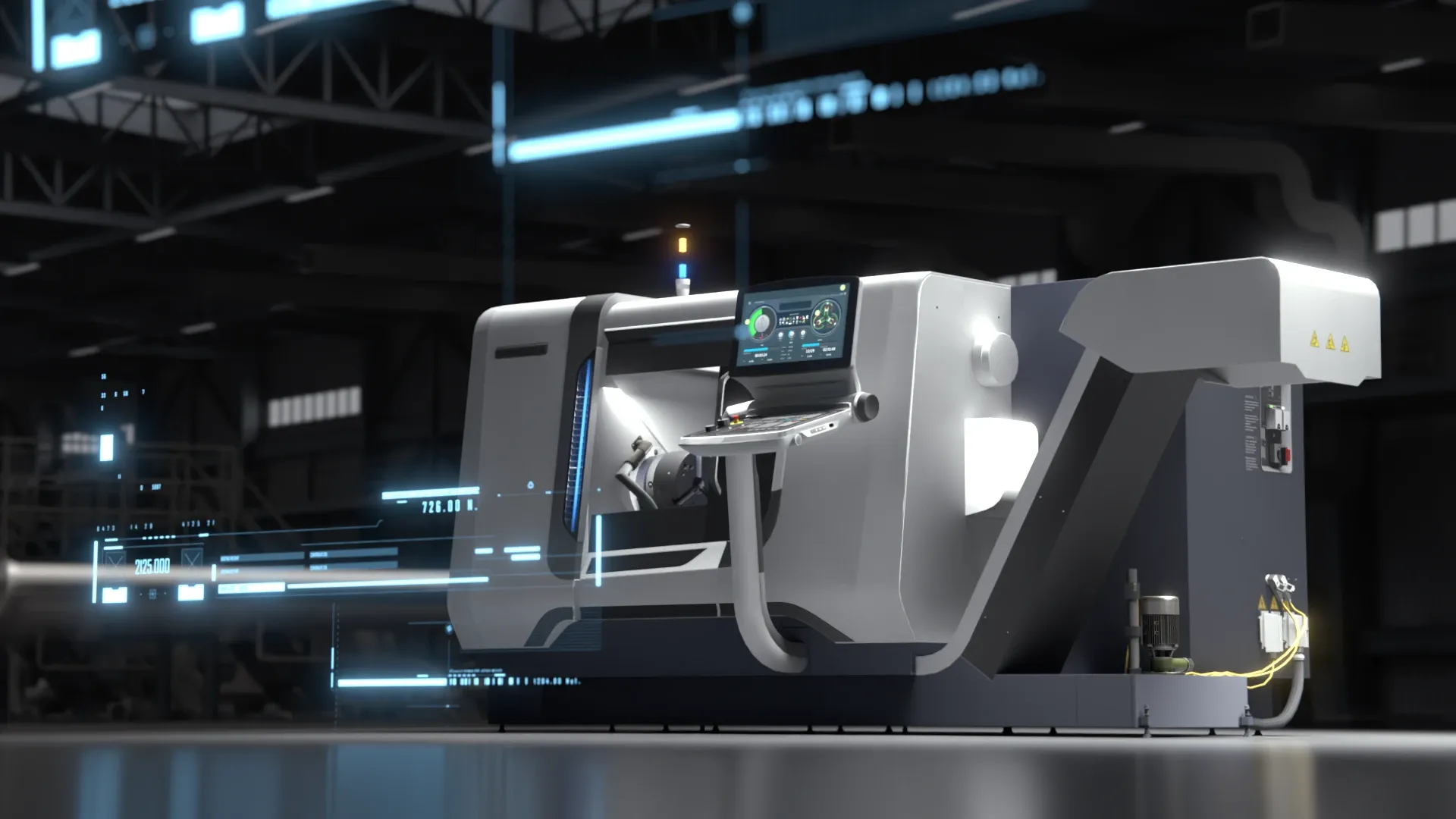
The Two Digital Twins: Why the 3D Master Model is the One That Sells
Ask five people in an industrial company what a digital twin is and you will get five answers. The plant manager describes a live model of the production line fed by sensor data. The design engineer describes a validated CAD assembly. The head of marketing describes the photoreal 3D model used in the launch video. The CTO describes a platform investment. The CFO describes a line item that has not yet produced a number.
They are all correct, and that is what creates a problem.
Somewhere between 2020 and now, “digital twin” stopped being one technology and became two. They share a name, a vendor ecosystem, and a set of conference keynotes. They do not share a buyer, a budget, a timeline, or a purpose. Companies that fail to separate them tend to spend heavily on one and assume they have bought the other. This article separates them, and then makes an argument: most industrial companies have solved the engineering half of the digital twin and quietly neglected the half that actually talks to customers.
That confusion is expensive and companies are pouring seven-figure budgets into digital twins their engineers can read beautifully, and still have nothing to show a customer, a trade show crowd, or a board. They have the raw data, but they are completely missing the photorealistic 3D modeling required to bring that product to life.
Twin One: The Operational Twin
This is the digital twin analysts usually mean, a virtual replica of a physical asset, process, or facility, connected to live data, and used exclusively to simulate and predict behavior.
While the technology is undeniably impressive (such as Siemens Digital Twin Composer mapping entire facilities for clients like PepsiCo to identify up to 90% of potential issues before physical build), it is exceptionally difficult to land in practice. According to Gartner’s 2024 IoT survey, only about one in three companies that began digital twin initiatives in 2022 succeeded in deploying them beyond the pilot stage. The rest are stuck in proofs of concept due to legacy system integration, data quality issues, and delayed ROI.
Still, this is where tens of billions of dollars are being spent, primarily on predictive maintenance and platform investments.
- Who owns it: Operations, engineering, IT.
- What it optimizes: Uptime, yield, throughput, risk.
- What it costs: A platform investment, measured in quarters and years.
Twin Two: The Product Twin
The second twin gets far less coverage, yet it is far closer to most companies’ revenue.
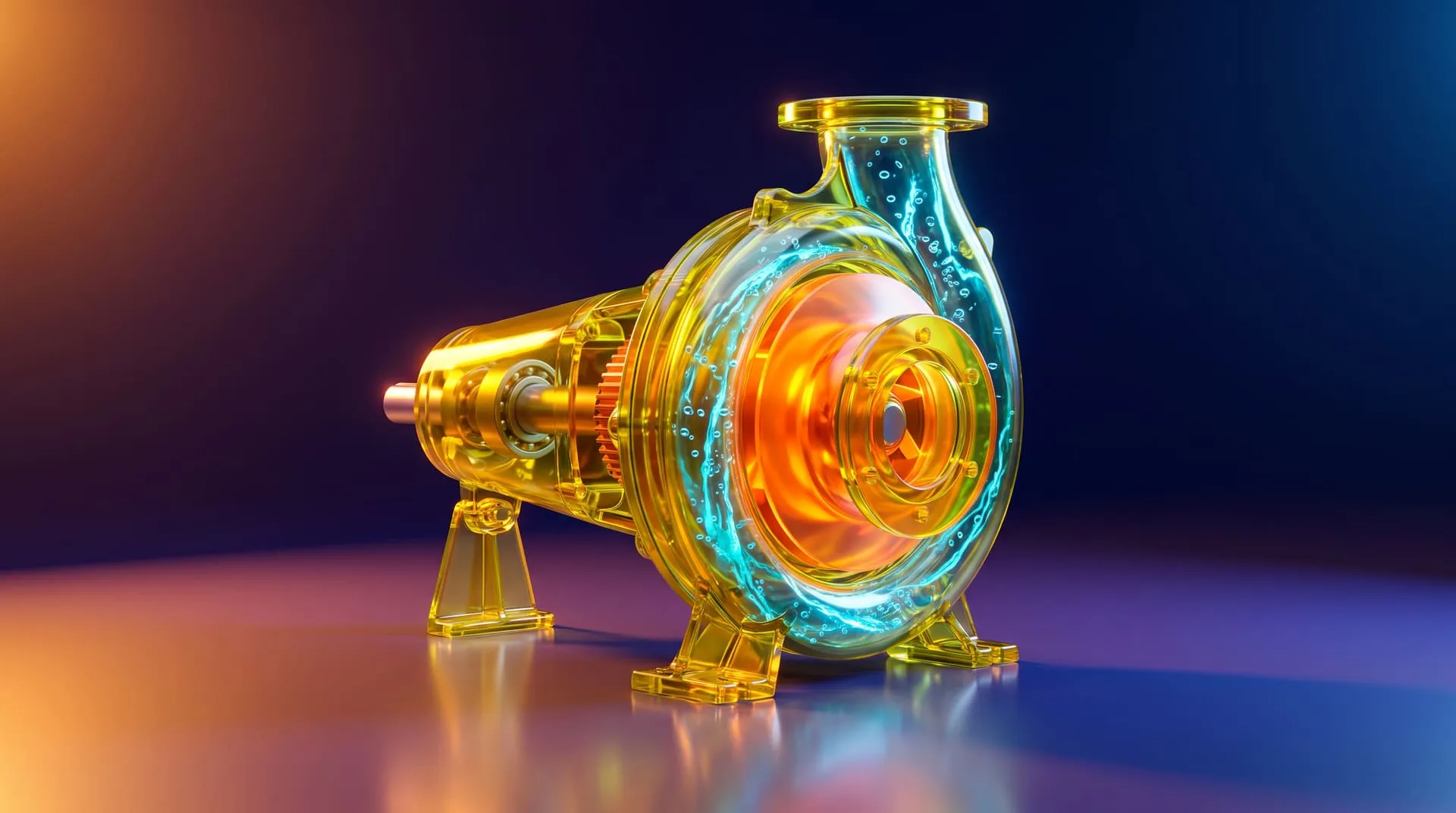
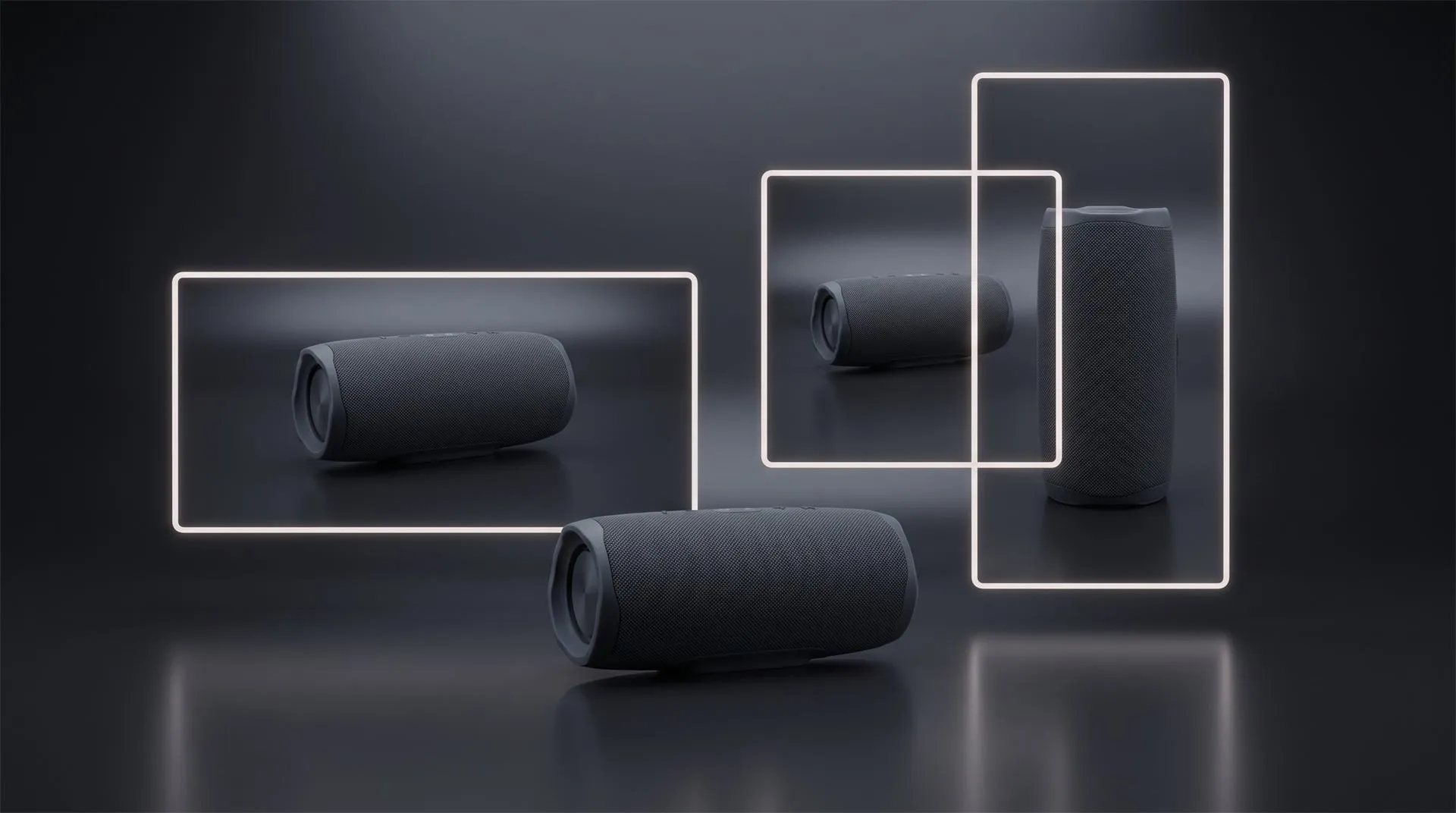
A product twin is a technically accurate, photorealistic 3D master asset built from your engineering data. It is not connected to sensors. It does not predict bearing failure. What it does is act as a single source of truth for every visual representation of the product that exists outside the factory: the launch film, the exploded assembly animation, the configurator on the website, the AR view on a phone, the trade show loop, the e-commerce stills, the training module, the investor deck.
The major platform vendors have formalized it as a category in the last twelve months. Adobe and NVIDIA now explicitly describe a “3D digital twin” workflow built on OpenUSD and RTX rendering, allowing marketing teams to generate on-brand content at scale from one authoritative asset. Maxon previewed its own Digital Twin application at CES 2026, transforming cleared CAD models into digital prototypes with controlled materials, lighting, and environments.
However, this is not just a software category; it is a production process. The tools have been named, but the work itself is still a craft: interpreting engineering geometry, deciding how brushed aluminum reacts under studio light, and making a virtual object read as real.
- Who owns it: Product marketing, brand, sales enablement.
- What it optimizes: Comprehension, launch speed, sales cycle, content cost per asset.
- What it costs: A project, measured in weeks.
Side by Side
| Feature | Operational Twin | Product Twin |
|---|---|---|
| Core question | How will this behave? | How do we show what this is? |
| Input | Sensors, PLC data, process models, CAD | CAD and design files |
| Live data | Required | Not required |
| Primary output | Simulation, prediction, alerts | Video, renders, configurators, AR |
| Buyer | Operations, engineering, IT | Marketing, product, sales |
| Typical horizon | Quarters to years | Weeks |
| Fails when | Integration and data quality break down | Nobody owns it, so every launch starts from zero |
Where the Confusion Costs Real Money
Three failure patterns show up repeatedly.
1. Assuming the operational twin will produce marketing assets.
It will not, or at least not usable ones. A simulation environment is optimized for physical accuracy and data throughput, not for storytelling, lighting, or brand. Screen captures from a simulation tool look like screen captures from a simulation tool. Companies that budget for the operational twin and expect the launch video to fall out of it are consistently surprised.
2. Starting with sensors instead of geometry.
This is the quieter and more expensive mistake. A recurring observation in the field is that many digital twin initiatives stall not because the IoT layer fails, but because there is no clean, accurate, structured 3D foundation underneath it. Sensor data without a reliable spatial model has very little contextual meaning. The 3D asset is not decoration on top of the twin—it is often the foundation that should have been built first.
3. Treating the product twin as disposable.
This is the most common pattern of all, and the most avoidable. A company commissions a render for a trade show. Six months later it commissions an animation for the launch, from scratch. The following year the e-commerce team commissions stills, from scratch again. Three separate suppliers, three interpretations of the same product, three invoices, and no accumulating asset. The whole point of a twin is that it is built once and drawn from repeatedl.y.
The Argument: Your Digital Twin Cannot Sell Anything
Here is the uncomfortable part.
An industrial company can spend two years and a serious budget building an operational twin, get it working, and still have nothing it can put in front of a customer. The model is accurate. It is also unwatchable. It exists inside a specialist tool, requires a specialist to drive it, and speaks in a visual language that means something to an engineer and nothing to a procurement director, a distributor, a trade show visitor, or a board.
Engineering has been digitized. Communication mostly has not.
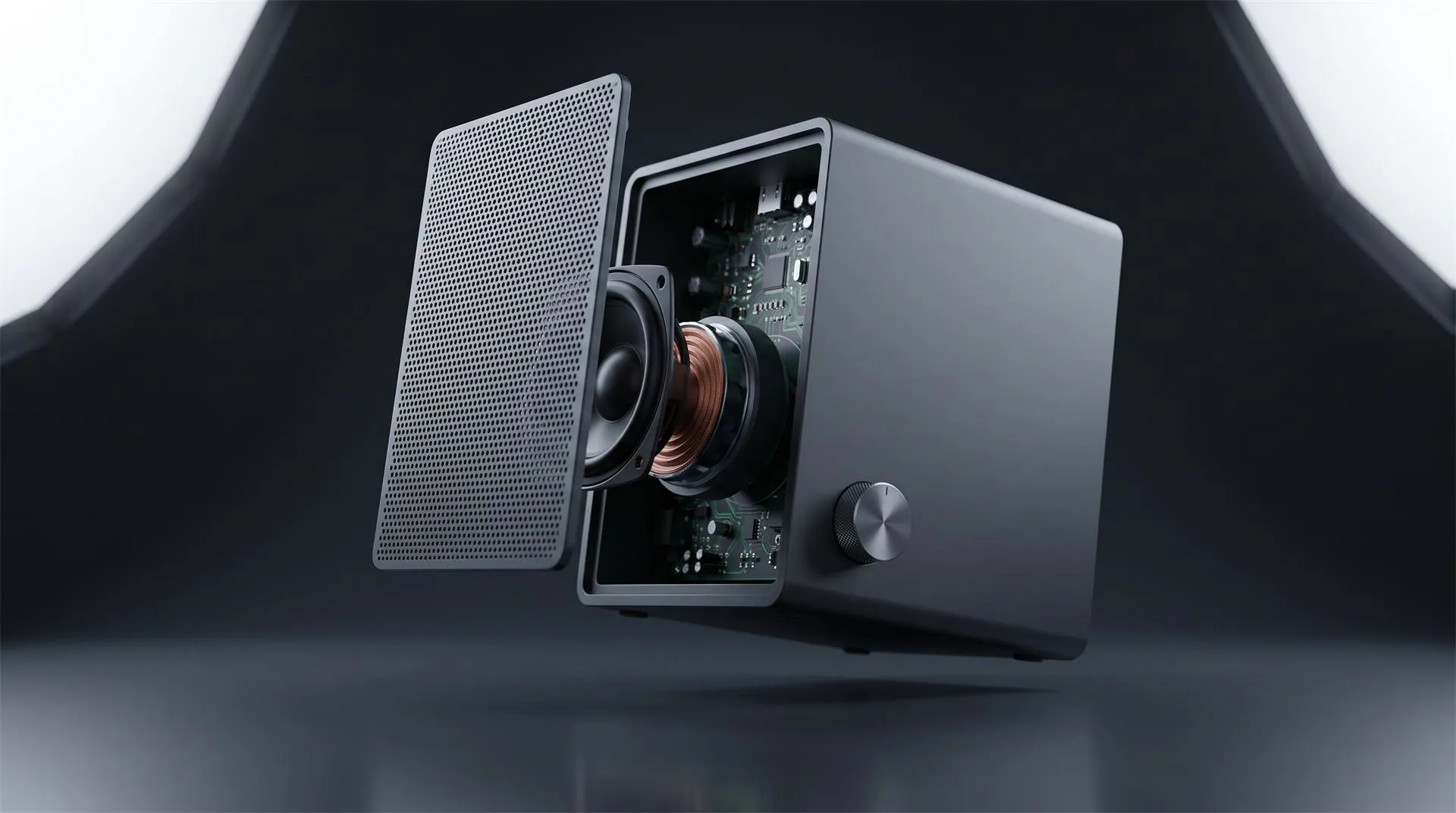
That gap is where the deals sit. Complex hardware is difficult to sell precisely because the thing that makes it good is usually invisible: the internal architecture, the tolerance, the assembly sequence, the way a component behaves under load. A specification sheet asserts these things. A cutaway animation demonstrates them in nine seconds. Buyers do not reject industrial products because they are bad. They reject them because they did not understand them, or because a competitor explained an equivalent product better.
The good news is that the raw material already exists. If a company has invested in digital engineering at all, it is already sitting on the hardest and most expensive input to a product twin: accurate geometry. What is usually missing is the layer that turns that geometry into something a non-engineer can understand and a marketing team can reuse.
That layer is not a platform purchase. It is production work.
How This Works in Practice at Quince Creative
We have built this pipeline for fourteen years, mostly for hardware brands, and until recently we described it as 3D product animation. The vocabulary has caught up with the work.
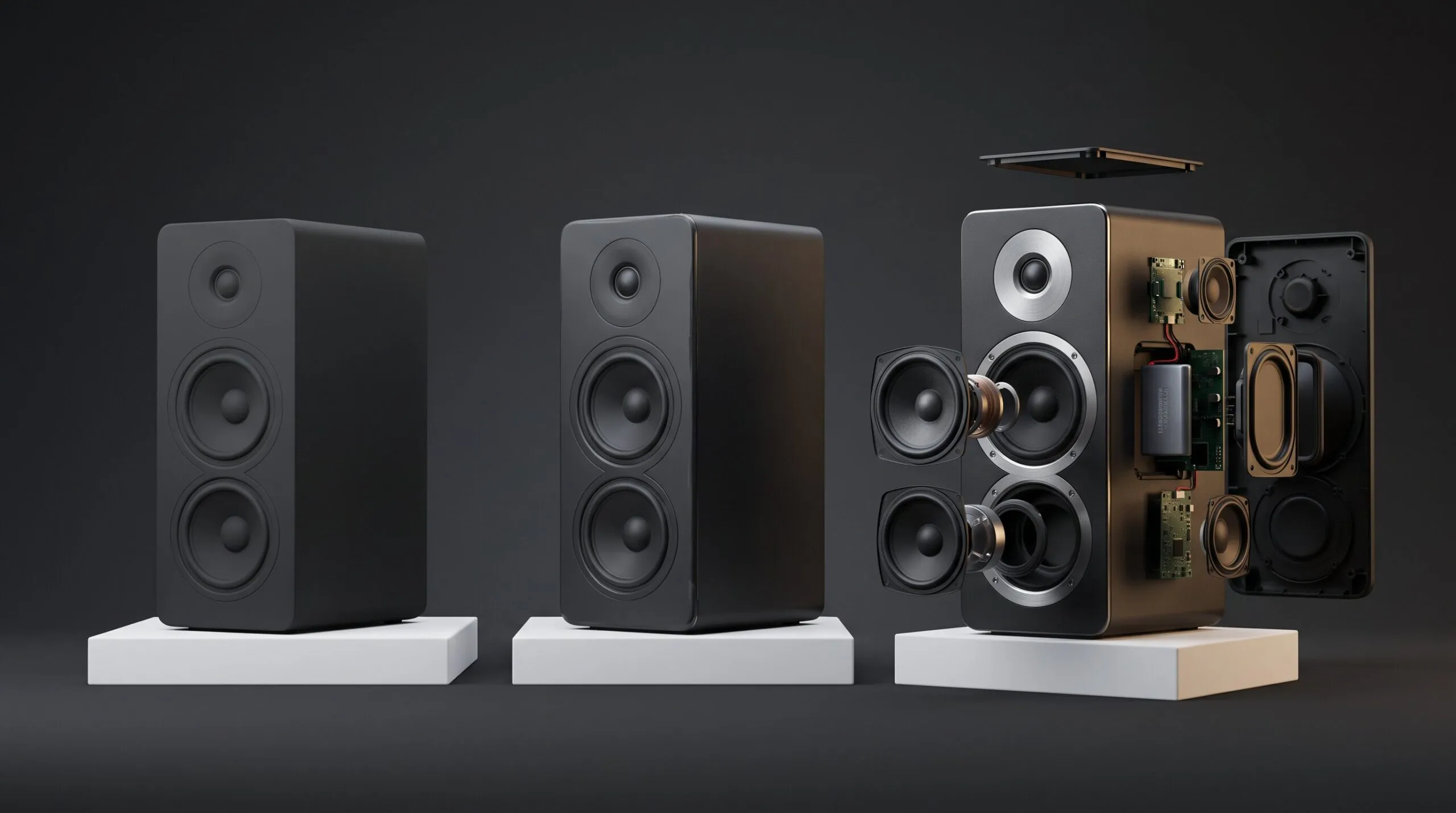
What we do is take engineering data and turn it into the visual layer of a product twin. CAD files come in. What comes out is a master asset with optimized geometry, materials that behave perfectly under realistic lighting, and a set of deliverables generated from it: cinematic launch films, exploded assembly animations, cutaways showing internal mechanisms, product stills for e-commerce, and variant renders for configurations and finishes.
Three things tend to matter to industrial clients specifically:
- Engineering data in, without a rebuild. We work from native CAD rather than asking for a re-modeled asset. This keeps the visual output completely faithful to the manufactured product. We accept all major formats, including STEP, IGES, SolidWorks, Creo, Catia, and Alias.
- Confidentiality as standard. Most of this work happens on unreleased hardware. Strict NDAs are signed and secure data-handling protocols are established before a single file is transferred.
- Assets that compound. Because the work is built as a master asset rather than a one-off render, subsequent deliverables cost significantly less. A launch film and a set of e-commerce stills drawn from the same twin are far more cost-effective than managing two isolated projects.
Where to Start
If you are early in a digital twin conversation internally, the useful first question is not “which platform” but “which twin, and for whom.”
If the goal is uptime, yield, and predictive maintenance, you want the operational twin, and you should expect a multi-year program with real integration work. Start narrow, on one asset class, with a measurable number attached.
If the goal is to launch faster, shorten sales cycles, explain a complex product, or stop paying three suppliers to model the same object, you want the product twin. That is a matter of weeks, not years, and the input is engineering data you already own.
Most companies eventually need both. Very few need them in the same budget cycle, and almost nobody needs them from the same supplier.
If you have CAD files and a product that is hard to explain, that is the conversation we are useful in. Send us the files and a rough scope, and we will come back with a quote within 12 hours.
Related Articles
Industrial 3D Animation: How Equipment Makers Explain Machines You Cannot Film (Examples, Cost, Process)
How to Choose a 3D Product Animation Studio: A Buyer’s Checklist
CGI vs AI for Product Visuals: Key Differences, Cost and When to Use Each (2026)
3D Product Explainer Videos: Examples, Cost and How They Are Made (2026)
How to Use 3D Animation on Kickstarter Without Getting Your Campaign Cancelled
3D Product Animation Trends in 2026: What Brands Are Doing Now


 Rachel A