

FOOH Ads Explained: How Product Brands Make Fake Out-of-Home CGI Videos (Examples, Cost, Process)
FOOH (fake out-of-home) is a CGI video that places an impossible ad in a real place. A giant product on a building, a train wearing mascara, a billboard the product climbs out of. The street is real footage, the product is a 3D model, and the “ad” only ever runs on social feeds, never on the street itself.
You have probably seen one this week. Someone on your team sent it with a message like “can we do something like this?” and now you are trying to work out what it actually is, who makes it, and whether it makes sense for a speaker, a monitor or a kitchen gadget instead of a handbag.
This guide answers that from the side of a studio that builds product models from CAD every day.
What is FOOH?
FOOH is short for “fake out-of-home”: video that looks like a real outdoor advertising stunt but is made with CGI and posted only online. Regular out-of-home (OOH) means billboards, bus wraps and building projections. FOOH borrows the look of those formats and then breaks the rules of physics, scale or budget.
Three things make a FOOH video work:
-
Real footage. A real street, station or skyline, usually shot on a phone or a handheld camera so it feels like something a passerby filmed.
-
A photoreal product. The product has to look exactly like the one people can buy. Same shape, same materials, same logo.
-
One impossible idea. The product is forty meters tall, or it drives, or it reaches out of the billboard. One idea, not five.
The format took off in 2023, and brands in beauty, fashion, food and tech have used it since. For physical product brands, the interesting part is not the stunt. It is that the hardest piece of the job, an accurate 3D model of the product, is something many of them already have in CAD.
5 FOOH examples and why they worked
The FOOH videos that spread best kept the product recognizable and the idea simple enough to get in two seconds. These are well documented cases, described from public reporting.
Maybelline, London, July 2023. A Tube train pulls into a station wearing giant false lashes, and an oversized mascara wand brushes them. A bus got the same treatment above ground. At least one London newspaper covered it as a real installation before it was clear it was CGI. The videos were made by CGI artist Ian Padgham and his studio Origiful.
Why it worked: the product does the exact thing it does in real life (mascara on lashes), just at the scale of a train. You understand the product in one look.
Jacquemus, Paris, April 2023. Three oversized Le Bambino handbags roll down a Paris street like small cars, past the Palais Garnier. The brand confirmed it was a 3D render. Also made by Padgham.
Why it worked: it came right after a real pop-up with giant props, so the fake felt plausible. The bags were shown in their real colors and details.
Barbie, Dubai. A giant Barbie emerges from a doll box as tall as the Burj Khalifa over the business district.
Why it worked: the packaging is the hero. The box was the recognizable part, so it carried the brand without any copy on screen.
Truff hot sauce. The brand used CGI clips like a fake yacht carrying a giant sauce bottle. Its team told Marketing Brew they let the internet decide whether it was real, and that CGI let them make content faster than staging and filming a real activation.
Why it worked: it got the look of an expensive stunt without renting a yacht.
Maybelline again, Manchester. After the London videos spread, Maybelline built a real version: lashes and a wrap on Manchester trams. The FOOH worked as a test, and the physical stunt followed.
Why it matters for you: FOOH can be a cheap way to test a big idea before paying for the real thing. Padgham made the same point to Marketing Brew: if the video takes off, nothing stops the brand from building it.
Notice what is missing from the list: hardware. Most famous FOOH work comes from beauty, fashion and food. That is a gap. A speaker that rattles a building, a monitor that becomes a window into a game world, a drone that docks on a skyscraper. These ideas suit hardware well, because the product’s shape and materials are already defined to the tenth of a millimeter in CAD.
How a FOOH video is made
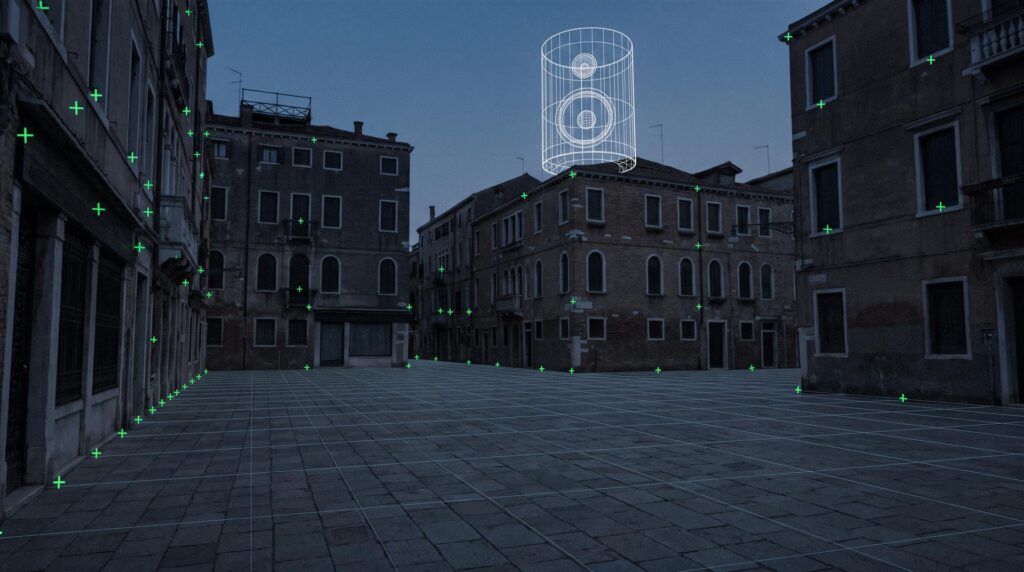
A FOOH video is a visual effects shot: real footage, a tracked camera, a 3D product, matched lighting and a composite. Here is the process in order.
-
Concept and storyboard. One idea, written in one sentence. Then a rough storyboard showing where the product appears, how big it is and what it does.
-
Plate footage. The real background shot. It can be filmed for the project or licensed as stock footage. Handheld phone footage reads as “real” on social, but it must be sharp and well exposed. Shoot vertical if the video is going to Reels or TikTok. Reframing a horizontal plate to 9:16 later is a new camera framing problem, not a free export.
-
Camera tracking. Software analyzes the footage and rebuilds the movement of the real camera in 3D, so the product stays locked to the building as the camera moves. Blender’s motion tracking tools are one example of how this works: 2D tracking points become a solved 3D camera.
-
The 3D product model. Built from your CAD file, or modeled from scratch from photos and drawings. This is where accuracy is won or lost. Your real logo and labels are applied as textures, not guessed.
-
Animation. The product moves, grows, opens or interacts with the scene. Small details like a building that shakes or a reflection in a window sell the effect.
-
Lighting match. The product is lit to match the time of day, the sun direction and the color of the real sky. Shadows have to fall where the real shadows fall.
-
Compositing and finishing. The render is layered into the footage, with matching grain, lens blur, motion blur and color grade. Then sound design, which matters more than most brands expect.
The 3D part is often the smaller part of the frame. Padgham told Marketing Brew that only about 10% of a video should be 3D animation. The real footage carries the believability. The 3D product carries the brand.
What you actually get: one asset, many uses
A FOOH built from your CAD gives you a production-ready 3D product model that keeps working after the stunt. That is the business case most brands miss.
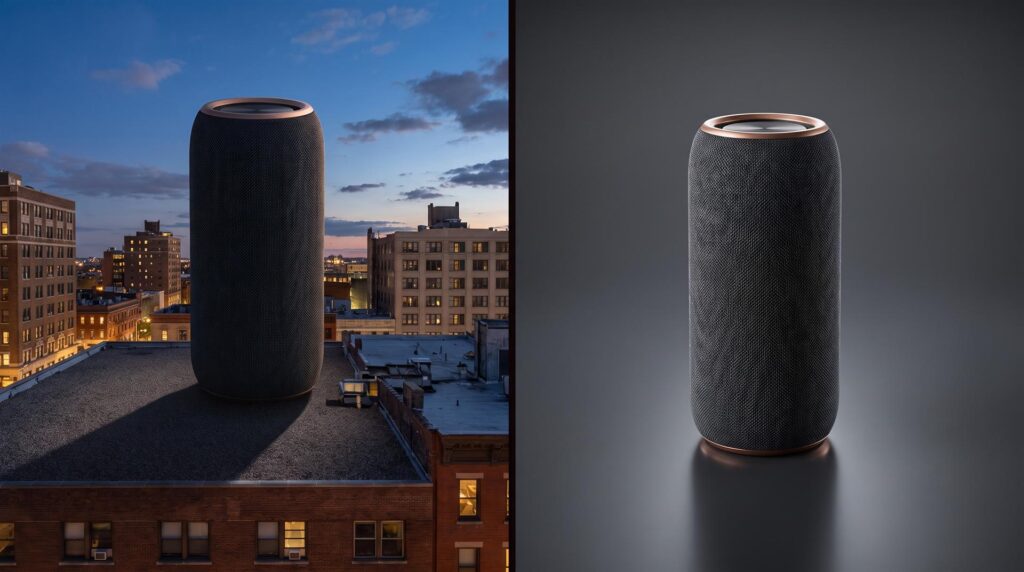
The same model can be used for product stills, a launch animation, regular paid social ads on Meta and TikTok, color variants and future campaigns. The FOOH video is the loud part. The model is the long term value.
One warning: owning the finished video does not mean you own the 3D scene and model files. If you want to reuse the model, agree on file delivery before the project starts.
CGI vs AI-generated FOOH
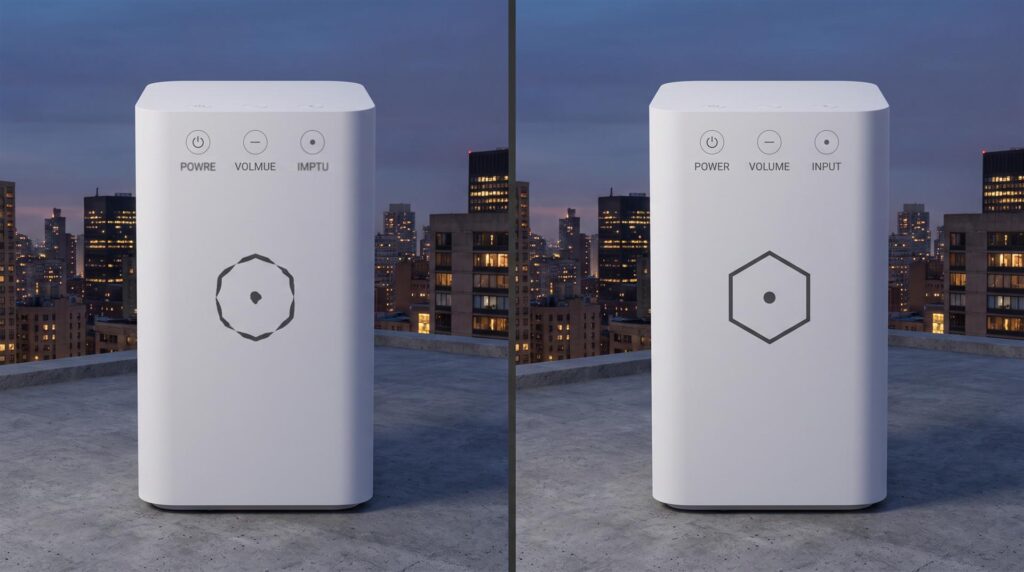
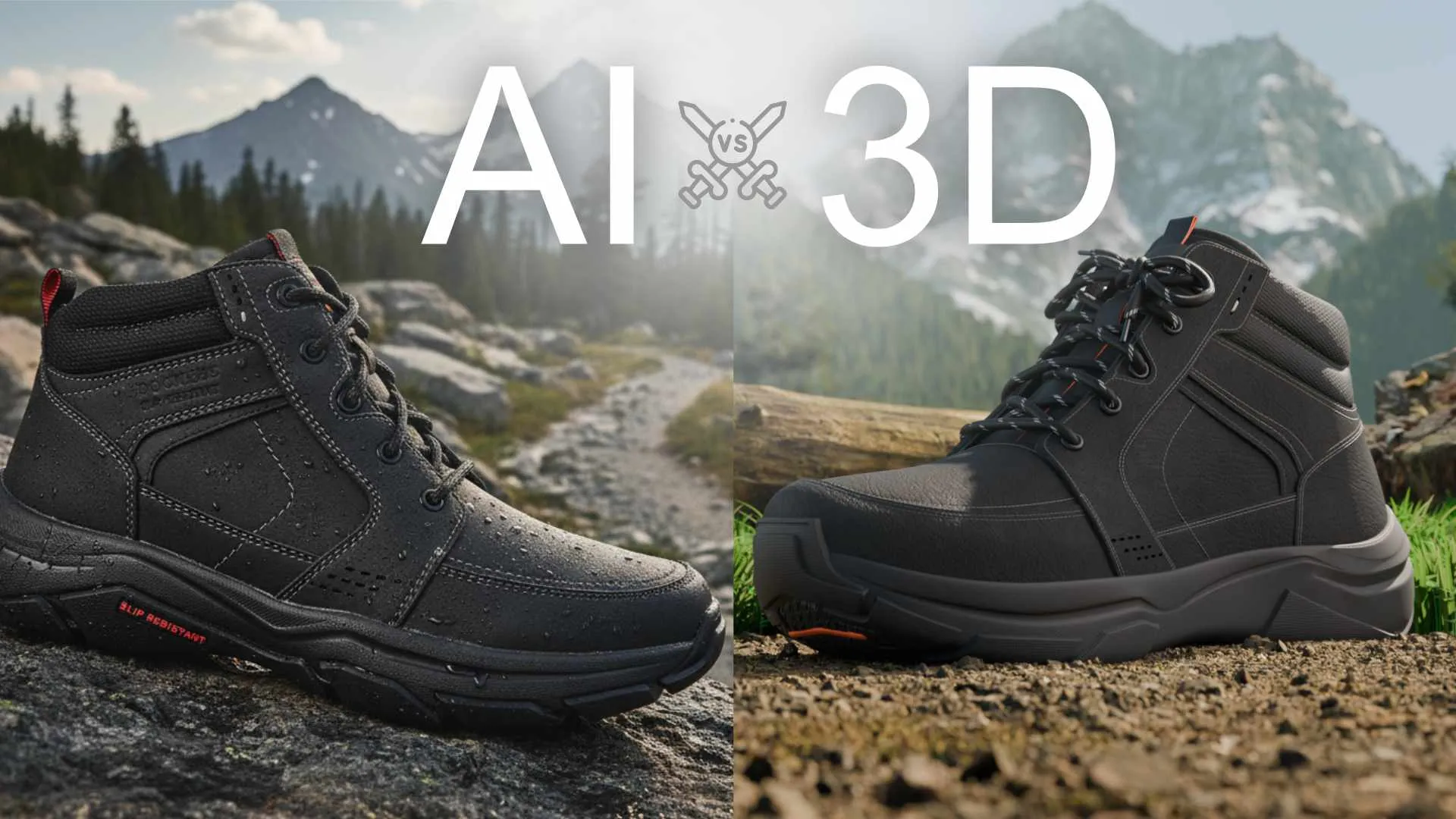
AI video tools can make a FOOH-style clip quickly, but they guess at your product, while CGI built from CAD shows the real one. For a stunt about a generic object, AI may be fine. For a product people will buy, the details are the point.
| CGI FOOH from CAD | AI-generated FOOH | Real stunt (actual OOH) | |
|---|---|---|---|
| Product accuracy | Exact shape, materials, logo, labels | Approximate. Logos and text often drift between frames | Exact |
| Control over camera and timing | Full | Limited, depends on the prompt and retries | Limited by location and permits |
| Consistency across a series | Same model in every video | Hard to keep identical | Same, but every new stunt is a new build |
| Reusable assets afterwards | 3D model for stills, ads, animation | Clips only | Photos and footage of the event |
| Typical risk | Cost and schedule | Off-brand product, platform AI labels | Budget, permits, weather |
AI-made clips also face platform rules. YouTube asks creators to disclose realistic content that is generated or meaningfully altered with AI, and its examples include realistic scenes in real places that did not happen. Meta has said it labels AI-generated images on Facebook, Instagram and Threads. We compare the two routes in more depth in CGI vs AI product visuals.
How much does a FOOH video cost and how long does it take?
FOOH cost depends mostly on three things: whether a usable 3D model of your product exists, how much of the shot is CGI, and whether the plate footage has to be filmed. There is no standard price, and public figures from other studios vary too widely to be useful.
Here is how the pieces line up on our own pricing calculator, which has no FOOH line of its own:
| Cost driver | What it means | Our calculator |
|---|---|---|
| 3D model from your CAD | We prepare your file for rendering | $200 |
| 3D model from scratch | No CAD, modeled from photos and drawings | $400 to $2,000 by complexity |
| Video length 10-30 seconds | Most FOOH clips fit here | $500 |
| Detailed VFX environment | Our top background tier, closest to a full FOOH scene | $5,000 |
| 9:16 vertical version | For Reels, TikTok and Shorts | $250 |
| Filmed plate, tracking and compositing | Depends on the shot | Quoted per project |
Having CAD is the biggest saving. It removes most of the modeling cost and the accuracy risk in one step.
Timeline. For reference, a standard animation of about 30 seconds from your CAD takes us about 10 to 15 days. A FOOH adds finding or filming the plate, tracking and compositing, so plan for more than that and ask for a schedule in the quote.
Disclosure: do you need to say it is CGI?
Possibly, and it depends on the market, the platform and what the video implies. This is not legal advice. Ask a lawyer who knows advertising law in your markets.
What we can point to:
-
In the US, the FTC’s position is that ads must be truthful and not misleading. A FOOH that shows an impossible stunt is clearly fantasy. A FOOH that shows how the product performs is a product claim and should be accurate.
-
In the UK, ads are covered by the ASA’s CAP Code, which also covers misleading content in marketing on brands’ own social channels.
-
Platforms have their own AI and synthetic media rules, covered above.
In practice, many brands simply say it in the caption or replies. Padgham’s advice to Marketing Brew was not to try to convince people it is real, because that backfires when they find out.
Common mistakes
-
Making the product inaccurate. A wrong button layout or a smeared logo turns a brand video into a meme about the wrong thing.
-
Too many ideas in one clip. The giant product, the explosion, the drone and the dancing building. Pick one.
-
Bad plate footage. Shaky, blurry or overexposed footage cannot be fixed by good CGI.
-
Shooting horizontal for a vertical feed. Decide the format before the plate is shot.
-
Mismatched light. A product lit for noon on a street filmed at dusk looks fake in the worst way.
-
Showing product performance that is not true. A fantasy scale is fine. A fantasy feature is a claim.
-
Not keeping the model. The model is the reusable part. Get the files.
What to send a studio for a FOOH quote
-
CAD file (STEP, IGES, SolidWorks or similar) or KeyShot scene, if you have one
-
Brand artwork for logos and labels, as vector files
-
The one-sentence idea, plus any reference videos you like
-
Location: a city, a type of street, or footage you already own
-
Platforms and formats (9:16, 1:1, 16:9)
-
Launch date and how many versions you need
FAQ
What does FOOH mean?
FOOH means “fake out-of-home.” It is a CGI video that looks like a real outdoor ad or stunt, such as a giant product on a building, but exists only online.
How much does a FOOH video cost?
It depends on whether a 3D model of the product exists, how complex the shot is and whether footage has to be filmed. With your CAD file, the model on our calculator is $200. The full shot is quoted per project.
Can FOOH be made with AI?
Yes, AI tools can make FOOH-style clips. They struggle to keep the exact product shape, logo and labels consistent, and platforms like YouTube ask for AI disclosure on realistic scenes. For a real product, CGI from CAD is more accurate.
Do I need a 3D model or CAD file of my product?
You need a 3D model. A CAD file is the fastest and most accurate start. Without one, the product is modeled from photos and drawings, which costs more and takes longer.
Do FOOH ads need to be labeled as CGI?
It depends on the country, the platform and whether the video makes a product claim. Ask an advertising lawyer. Many brands mention it in the caption anyway.
Want to try a FOOH with your product?
If you have a CAD file and an idea, send both. We will tell you which route fits, including a simple product animation or an Apple-style 3D product film if FOOH turns out to be the wrong tool.
Send us the file
Related Articles
3D Product Animation Trends in 2026: What Brands Are Doing Now
Your Product Renders Are Sitting in a Folder. Here Is How to Turn Them Into Ads That Convert on Meta and TikTok
It Is 2026, Apple Puts AI in Every Device, and It Still Launched Its New Hardware With 3D Animation
CGI vs AI for Product Visuals: Key Differences, Cost and When to Use Each (2026)
3D Product Explainer Videos: Examples, Cost and How They Are Made (2026)
You Made a Product Image with AI. Here Is Why It Cannot Become Your Product Video.

 Rachel A